A quiet creative revival is underway in Almaty, Kazakhstan's largest city, where a generation of designers and artists is digging into the country's nomadic heritage — felt, myth, mosaic and clay — and giving it a contemporary spin. For travellers, it means the city is suddenly one of Central Asia's most interesting places to browse studios, boutiques and cafes with a story to tell.
The inspiration is the steppe: the vast grasslands where Turkic tribes roamed for millennia, living in felt-covered yurts and worshipping Tengri, the sky deity at the heart of the animist belief system known as Tengrism. That world was shattered by Soviet collectivization and the famine of the 1930s, which killed or displaced over a third of Kazakhs, and nomadic traditions nearly vanished. Now younger Kazakhs are reclaiming them.
Fashion designer Alina Aitzhanova's label Al Basty — named for an ancient Turkic female spirit, once a hearth protector later recast as a bogeyman — turns myth into avant-garde streetwear, from a liver-shaped 'Bayur' bag to a white wool coat inspired by Aqqu, the sacred swan of Kazakh legend. Across town in Tuzdybastau, artist Laila Zharkyn is reviving handmade felt, the centuries-old technique behind tekemets, the patterned wool carpets that once carried symbols like koshkar muiz (ram horns), a marker of wealth and fertility. Her ethno-minimalist panels have moved from family homes into galleries; in 2024 she made a pixelated felt installation for the Central State Museum. Her work, sold at the Korkem boutique or via her appointment-only studio, doubles as a mission — she's teaching the craft to her sister and nieces so it doesn't die out.
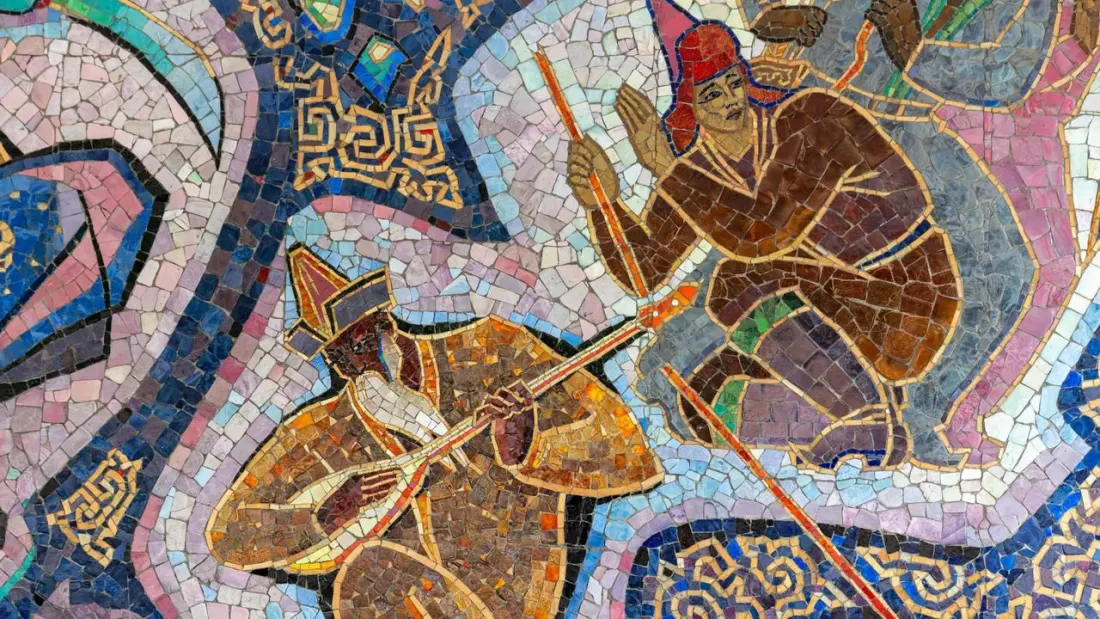
There's also a nostalgia wave rolling through the city. Soviet-era mosaics, once dismantled or left to crumble, are being recreated by Gen Z obsessives: Daria Zaitova's studio Art Oskolok runs daily mosaic masterclasses and restored the swallow mosaics in the reopened 1960s cafe Qarlygash, while the retro cafe Aqqu draws crowds for wafers with condensed milk. Over at the Union of Artists building, ceramicist Altynay Baizhan — granddaughter of painter Issatay Issabayev — sculpts large-format works honouring female nomadic warriors, at a time when gender equality remains a live debate in Kazakhstan.
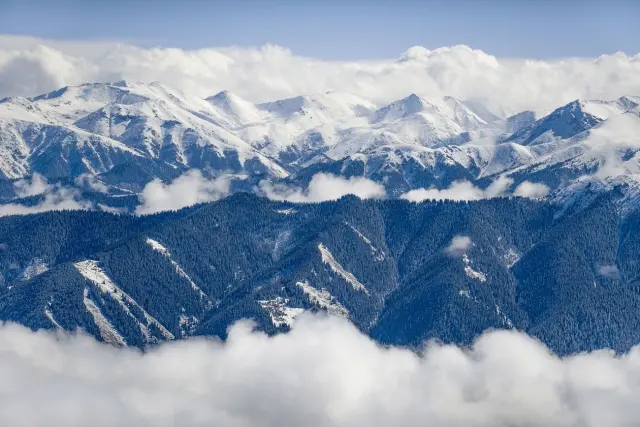
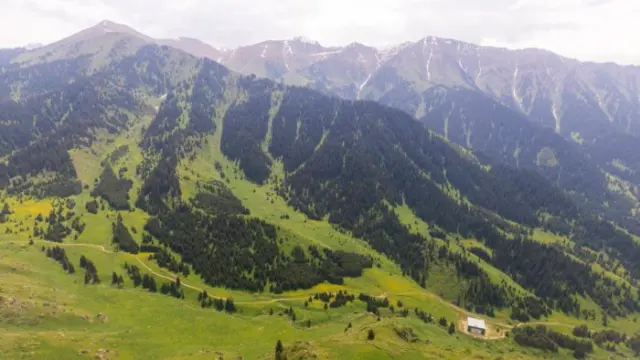
Visitors can anchor themselves in the Golden Square, five blocks of restaurants, boutiques and pedestrian alleys, with the Tian Shan mountains looming over it all. Between studio visits, eat the way locals do: beshbarmak (slow-boiled meat over noodles), baursaq fried dough, salty kurt cheese and endless tea — the essentials of dastarkhan hospitality. For a design-focused city break with mountains on the horizon and craft at every turn, Almaty is having a moment.