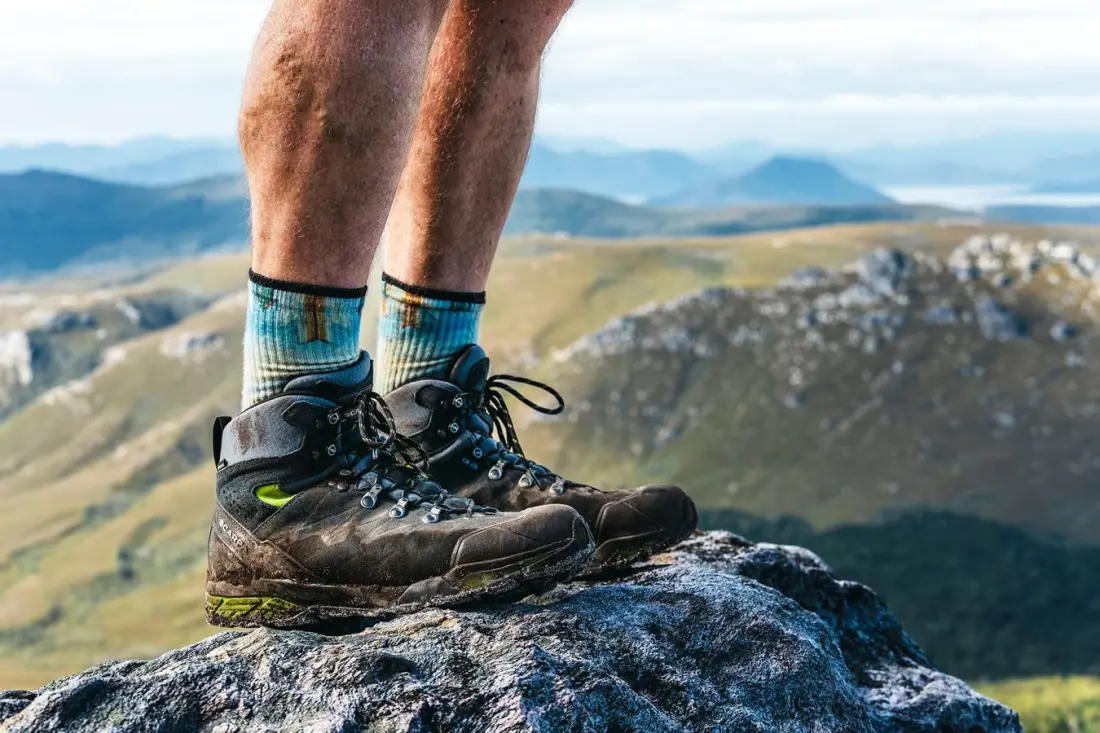
A bad pair of hiking boots can sink a trip faster than bad weather. Australian Geographic has published a detailed buyer's guide to general hiking boots, and it's full of the kind of practical detail worth knowing before you hand over serious money.
The first decision is what kind of walker you are. Boots fall into four broad camps: lightweight hiking shoes, standard hiking boots, backpacking boots and mountaineering boots. Hiking shoes suit day walks with a light load — even saving 20–30 grams per boot adds up over thousands of steps. Standard hiking boots add a higher cut for ankle support and protection. Backpacking boots go higher and tougher still, built to carry heavy loads, at the cost of extra weight. Mountaineering boots are the stiffest of all, crampon-compatible, insulated, and in some cases fitted with removable liners for icy conditions.
Underfoot technology matters more than most shoppers realise. A nylon shank stiffens the sole so you can plant your foot on sharp rocks and scree without wincing, while tread patterns and rubber compounds are engineered for grip across mud, wet rock and everything between. The big name here is Vibram, the Italian sole maker founded after a 1937 alpine tragedy, when climber Vitale Bramani developed the first vulcanised rubber mountain sole using tyre-making techniques borrowed from Pirelli. One catch worth knowing: not all Vibram soles are equal — manufacturers spec better-quality rubber for pricier boots.
On materials, leather wins for durability and water resistance, especially with a one-piece upper (seams let water in), while synthetics are lighter and breathe better. A waterproof-breathable liner such as Gore-Tex helps in wet country, but no boot stays dry forever — water eventually gets in over the top, and a lined boot runs warmer, a consideration if you mostly hike in heat.
The guide's strongest advice is about fit. Get your feet measured on a Brannock device for both length and width, try boots in the afternoon when feet are slightly swollen, and wear the hiking socks you'll actually use on trail. Your toes shouldn't touch the front when laced, and you should be able to slip an index finger behind your heel when unlaced. If you're between sizes, size up — feet swell on the trail, and insoles can fine-tune the fit. Then wear the boots in close to home rather than discovering problems mid-hike. And don't ruin good boots with cheap socks; quality hiking socks wick moisture and add padding where it counts.
For anyone planning a walking holiday — whether it's day hikes or a multi-day trek with a full pack — this is the kind of gear grounding that pays for itself. Boots are the one piece of kit you can't afford to get wrong, and an hour of homework beats a week of blisters.