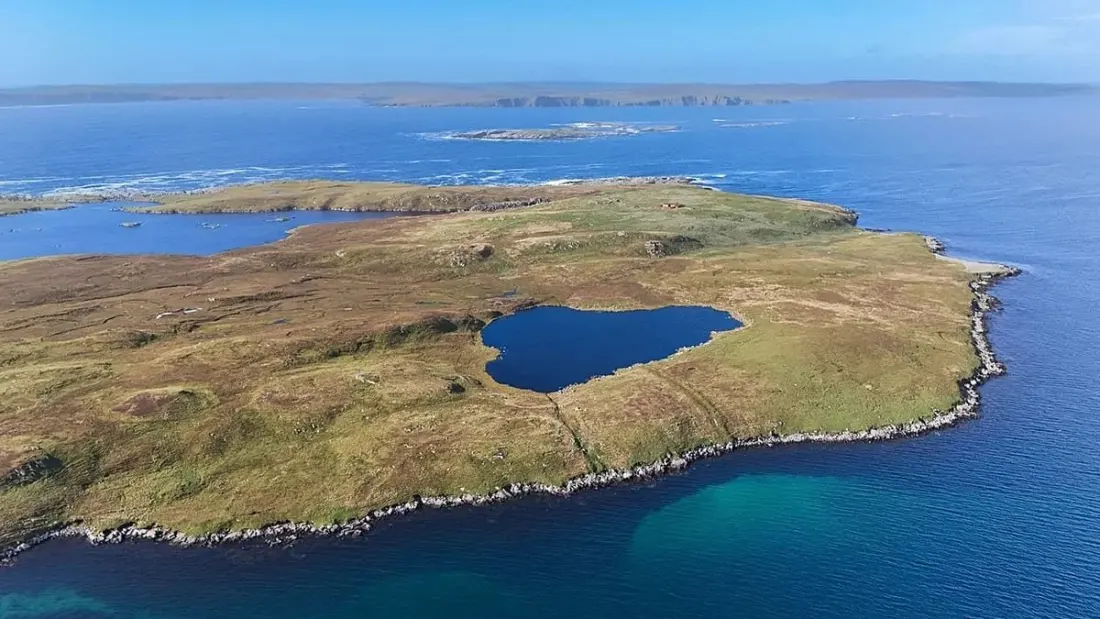
If you've ever fancied being your own laird, here's your chance. Hildasay, a 110-hectare island off Shetland's west coast, has hit the market for £350,000 (around €414,000) – roughly the price of a decent London flat, minus the neighbours, because there aren't any.
The island has been uninhabited since the 19th century, when a small community lived there. These days the only structures are a traditional stone bothy and a small pier, and the only way in or out is by boat. That's the deal: total solitude, but no mains electricity either. Previous owners made do with a small wind turbine and a diesel generator, and whoever buys it next will need to sort out their own power arrangements. So a wind turbine or solar array would be a sensible first purchase.
The bothy itself is basic but liveable. There's a living room with a solid-fuel stove, an open-plan sleeping area up a level, and a bathroom with a shower, basin and toilets. Want to build something grander? You'll need planning permission and a string of other consents, so this is really a project for anyone happy to live simply.
What you get in exchange is hard to put a price on. Hildasay has a rugged coastline, two freshwater lochs and birdlife that shifts with the seasons – a proper draw for walkers, birders and anyone chasing genuine silence. You also get a dose of recent fame: the island featured in "Finding Hildasay", the book by Chris Lewis, who spent three months there during the pandemic after walking the UK's coastline. A crowdfunding campaign was floated to help him buy the island, but it was shelved, according to the Shetland Times.
It's an extreme version of the off-grid trend that's been gathering pace – phone-free retreats are booming as more people look to switch off for their mental health. Most of us will stick with a weekend cabin or a digital detox hotel. But for someone with the budget and the appetite for remoteness, Hildasay is about as unplugged as it gets.
Who's it for? Self-sufficiency types, conservation-minded buyers, or anyone who's looked at their inbox and thought "no, permanently". Just remember that owning an island is a commitment – access depends on the weather, supplies come by boat, and Shetland winters are not for the faint-hearted.