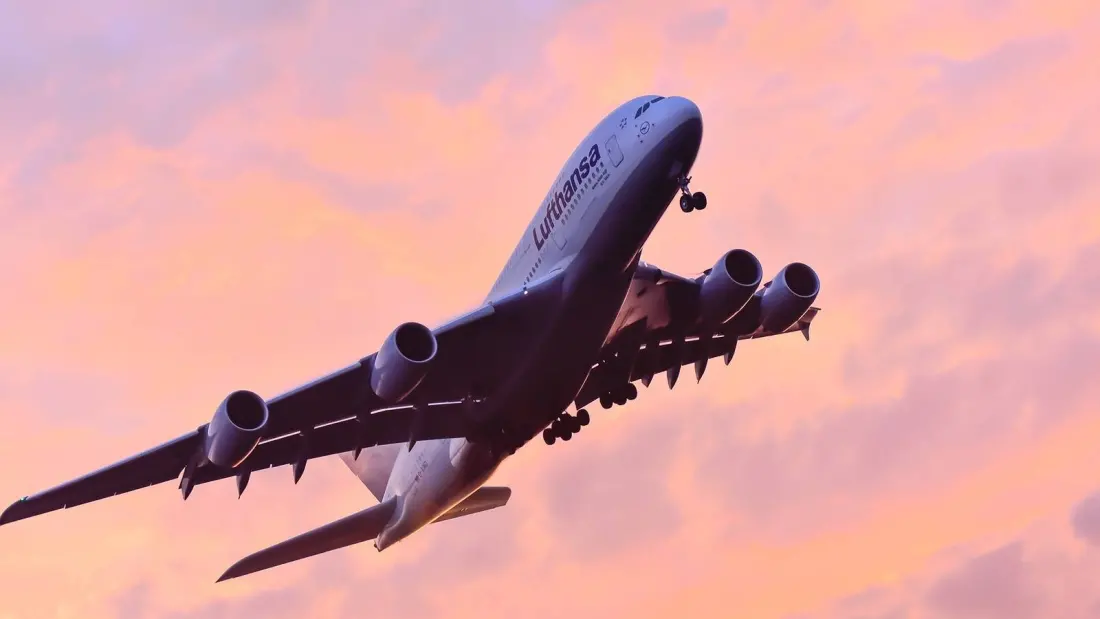
The US Federal Aviation Administration has told operators of the world's biggest passenger jet to swap out critical engine parts, after one A380 suffered an engine failure dramatic enough to force an aborted takeoff. The airworthiness directive, issued on October 8 and effective from October 23, targets interstage seals inside the Engine Alliance GP7200-series engines that power a portion of the global A380 fleet.
The trigger was an uncontained failure of one of these seals on an A380 fitted with GP7270 engines. 'Uncontained' is the worrying kind: debris escaped the engine's protective casing, which risks damage to other parts of the aircraft. The flight crew shut the engine down and abandoned the takeoff. The FAA hasn't named the airline, the aircraft or the date, but manufacturer investigators believe cracking developed where the seal meets the shaft, and found that relative rotation of the seal — known as 'clocking' — was a contributing factor.
One detail stands out: the movement appears possible in engines that have been reassembled during overhaul, the scheduled process where engines are removed, disassembled, cleaned, inspected and rebuilt to manufacturer standards. That suggests the issue may trace back to maintenance procedures rather than a design flaw, though the root cause is still under investigation.
The FAA has ordered the 15 seals with the highest number of flight cycles removed first, with the most urgent replacements due within 50 flight cycles or 30 days. The reasoning is blunt: another failure could cause an engine fire and damage the aircraft. The directive covers the whole GP7200 family — the GP7270 (70,000 lbf, standard passenger variants), GP7272 (72,000 lbf, hotter climates) and GP7277 (up to 80,290 lbf, heavy-duty configs) — a joint GE Aerospace and Pratt & Whitney product sharing a GE90-derived core and a 116-inch swept titanium fan.
Because the FAA judged the risk imminent, the rule was adopted without public consultation and is described as an interim step, with further rulemaking possible once the root cause is pinned down. Operators must replace the seals with parts under the Engine Alliance service bulletin. The bill isn't trivial: roughly $528,150 per affected engine, about $527,300 of that in parts alone.
No US-registered aircraft are affected, since no American airline flies the A380. The jets in question belong to the 11 operators still flying the type: Emirates, British Airways, Qantas, Singapore Airlines, Lufthansa, Air France rival Qatar Airways, Etihad, Korean Air, Asiana, ANA and startup Global Airlines. The FAA hasn't said how many aircraft are affected in total.
For travellers, the practical takeaway is modest: if you're booked on an A380 route — think Emirates to Dubai, Qantas to Sydney or BA to London — there's a small chance of equipment swaps or schedule tweaks as carriers cycle engines through maintenance. The aircraft itself remains in service, and directives like this are routine safety housekeeping rather than a red flag. Still, with the A380 now out of production since 2021 and fleets shrinking, each maintenance storyline is a reminder that the superjumbo's future depends on keeping its ageing fleet in top condition. (Source: Simple Flying)