Back in 2017, when Hurricane Irma slammed into St. Thomas, around 40 guests were still staying at the Margaritaville resort there. The hotel never lost power, because it had its own 1.8-megawatt generating plant built by Pennsylvania firm E-Finity Distributed Generation. That storm survival story was the company's first Caribbean project — and it turned out to be the start of something much bigger.
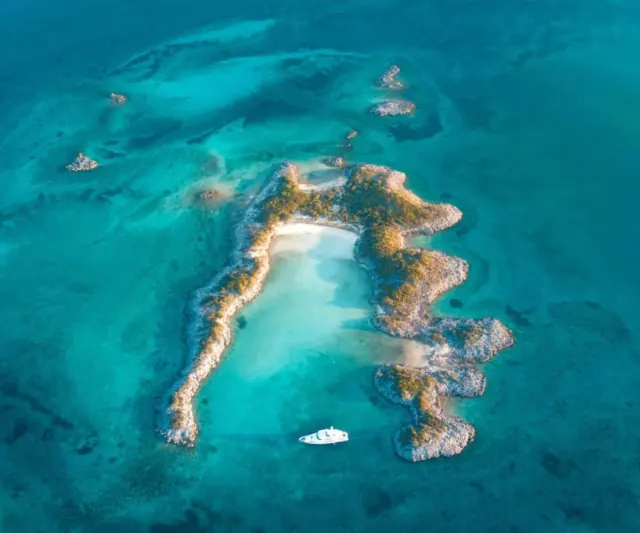
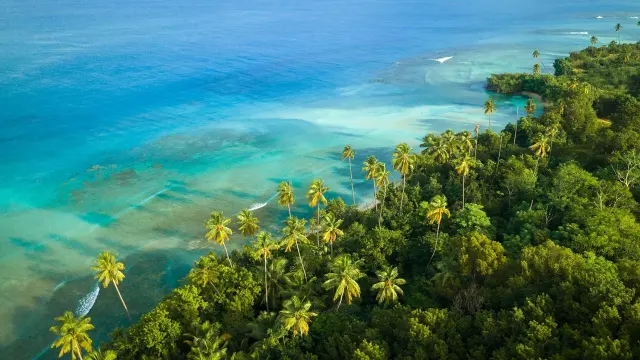
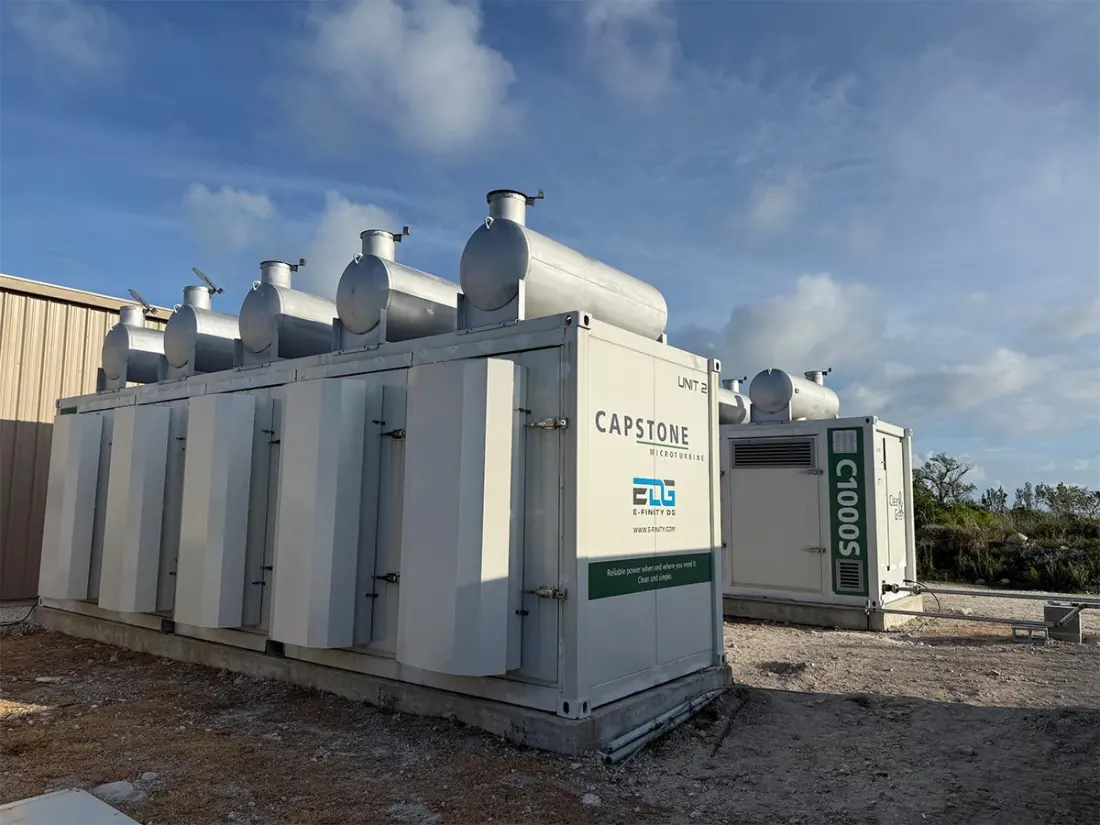
Fast-forward to today, and E-Finity's equipment is supplying all the electricity on Walker's Cay, a private island in the Abacos in The Bahamas. Since April 2026, the island's 2-megawatt plant — two 1-megawatt Capstone microturbine packages — has covered the full power demand of a development that includes a marina, restaurants and villas. The system runs on liquefied natural gas, backed by 30,000 gallons of on-island fuel storage, with extra fuel containers delivered ahead of hurricanes to stretch the reserves. Compared with the diesel plant it replaced, the company projects roughly 44 percent lower carbon emissions and 99 percent lower nitrogen oxide emissions. And because the setup is modular, capacity can grow as the island does.
The clever part for hotels is what happens to the waste heat. Turbine exhaust can drive absorption chillers for air conditioning and heat water for rooms, kitchens and laundries — three daily essentials from one fuel source. In the Caribbean, where cooling never stops and hot water demand goes well beyond the guest rooms, that adds up. E-Finity estimates an illustrative Jamaican resort running electricity, cooling and hot water this way could cut carbon emissions by about 20 percent.
The company's regional footprint now spans roughly 11.5 megawatts across eight projects. That includes a 2.4-megawatt plant at Frenchman's Reef on St. Thomas, a microgrid combining turbines, batteries and solar at a Magens Bay housing project, and a 1-megawatt system at a St. Croix supermarket. In Jamaica, Couples Tower Isle in Ocho Rios runs an 800-kilowatt system feeding a 200-ton chiller and hot water equipment, with upgrades planned so the resort can run independently during grid failures. Dreams Rose Hall in Montego Bay is getting a reconfigured 1-megawatt system expected to cover its entire cooling and hot water load by early 2027. In Barbados, two more 1-megawatt packages will power a utility water pumping station.
Why should travellers care? Because reliable power is the invisible backbone of every island holiday — the reason your air conditioning hums through a tropical night, the kitchen stays cold and the dive boats still fill their tanks when the grid fails. Resorts and destinations investing in their own resilient, lower-emission power are the ones better placed to keep your trip on track when a storm passes through. For anyone watching the rise of self-sufficient private-island resorts in the Bahamas and beyond, Walker's Cay is a useful signal of where the region is heading.