Hot, still summer days with barely a breath of wind seem useless for sailing — until the sea breeze kicks in. Yachting World's meteorologist Simon Rowell has broken down the science behind these reliable afternoon winds, and the mechanics are simpler than you'd think.
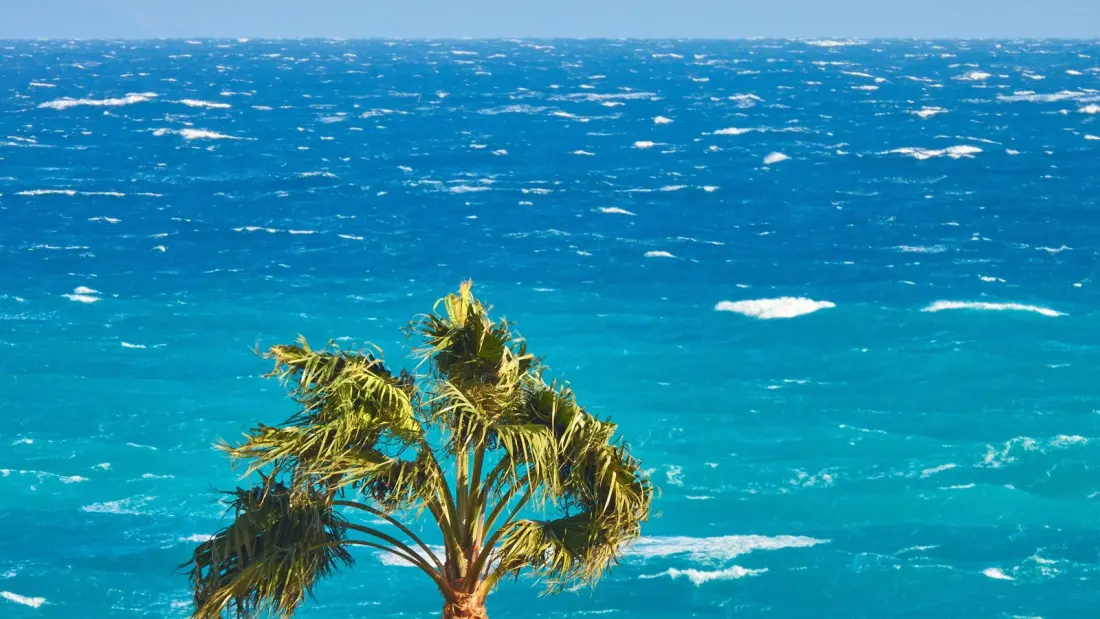
It starts with uneven heating. Land warms faster than water because the sun's energy only penetrates the top metre of solid ground, while the sea spreads the heat through its depth. Once the land is running roughly 3-4°C warmer than the sea surface, the air above it expands and drifts up and out to sea, leaving a small pocket of low pressure along the shore. That air cools over the water and sinks back, creating a circular cell that pushes cool, breezy air back onto the beach. The result: wind on a day the forecast promised none.
Timing and clouds are your best clues. Look for small fair-weather cumulus bubbling up over land from late morning; by noon the breeze usually arrives, with its own cloud line building just inshore. Those clouds peak in size around 1400 local time — when the breeze is strongest — and when they start shrinking in the afternoon, the wind is about to fade. Rowell notes the cell can reach surprisingly far offshore, reported mid-Channel off southern England and up to 100 miles out in the Red Sea, but it always strengthens as it nears the coast.
Direction has its own logic. The breeze usually arrives perpendicular to the shoreline, then the Coriolis effect makes it veer right in the northern hemisphere and back left in the south — with headlands and bays tweaking the final angle. During the peak hours of roughly 1400 to 1700, watch for a slow oscillation: Rowell recorded swings of 40 degrees over 15-20 minutes in Rio de Janeiro's harbour, useful knowledge if you're racing and maddening if you're not expecting it. Enclosed bays add another layer, as the local thermal breeze around the bay's edge gets overtaken by the main flow off the open coast — something he saw daily at the 49er Europeans in Thessaloniki in June 2025, where land temperatures hit the 30s.
Why should a holidaymaker care? Because this explains one of the great free perks of a beach break: the dependable afternoon wind that turns a sweltering, glassy morning into perfect conditions for dinghy sailing, windsurfing, kitesurfing or simply cooling off. If you're booking a sailing course or planning to rent a boat, the sunny, high-pressure days that look boring on the forecast are often the ones with the best breeze. Arrive at the water by late morning, watch the cloud line form inland, and you'll know roughly when the fun starts — and, courtesy of those shrinking clouds, when it's time to head back for a sundowner.