Hanoi and Ho Chi Minh City have been getting a steady delivery of European flavour: aged Asiago cheese and French cured meats are being showcased across the country as part of an EU-backed push to win over Vietnamese palates.
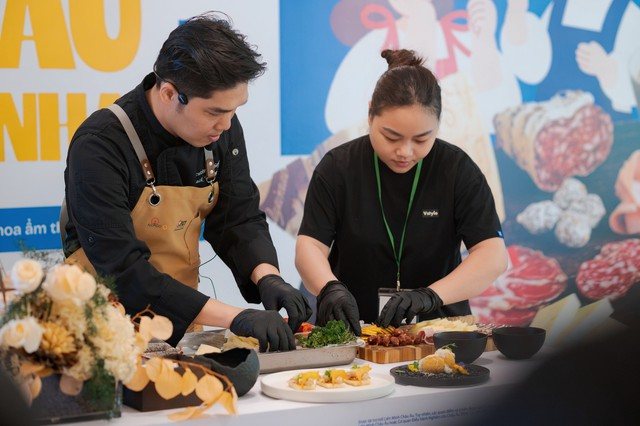
The three-year campaign, called Europe, Be My Guest, runs from September 2025 to August 2028 and is co-funded by the European Union. Its job is to introduce premium European food products to new Asian markets — Vietnam, South Korea and Chinese Taipei — while building lasting relationships with importers, retailers and food service businesses. In its second year in Vietnam, the programme has already included a business-matching event in Ho Chi Minh City and hands-on workshops for chefs in both HCMC and Hanoi, where cooks experimented with the ingredients and their applications in professional kitchens.
Two products are front and centre. Asiago PDO, protected by Italy's strictest quality label, must be produced entirely within a designated Alpine region, from raw milk to finished wheel. The Consortium overseeing it has guarded the name since 1979. The cheese is made from just milk, rennet and salt, and comes in fresh and aged versions, each with a distinct character. On the French side, the charcuterie federation FICT represents more than 310 companies producing over 450 specialities — dry-cured hams, saucisson, pâtés, terrines and rillettes — many of which are slowly air-dried under carefully controlled conditions.
Why does this matter beyond the cheese board? The campaign leans heavily on the EU's PDO and PGI certification system, which ties products to specific regions, traditional methods and traceability standards covering animal welfare, labelling and sustainability. Asiago matures gradually in specialised cellars; French hams dry over time rather than being rushed. It's traditional craftsmanship being packaged as a premium import story — and Vietnamese consumers, whose interest in European food has been growing, are the target audience.
For travellers, the payoff is practical: European staples are increasingly visible on Vietnamese restaurant menus and in upscale supermarkets, and the chef workshops suggest more creative Euro-Asian cooking will show up in hotels and dining rooms in Hanoi and HCMC over the next few years. If you're a food-loving visitor to Vietnam, your charcuterie fix no longer requires a layover in Paris.
Story reported by Vietnam News Life.