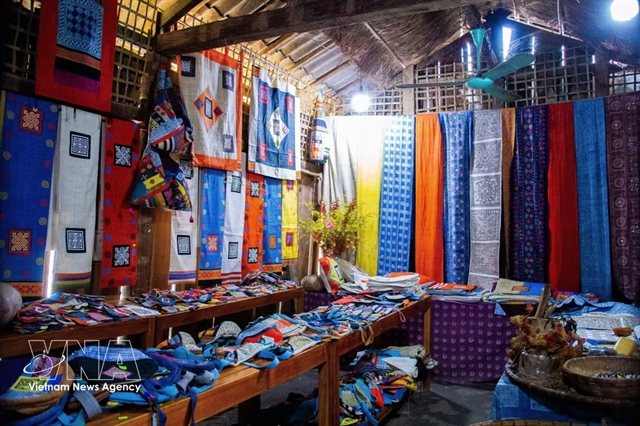
In Lùng Tám Commune, high in the northern Vietnamese province of Tuyên Quang, the fabric on sale in the village square starts life as a plant. Flax is spun into linen by hand, dyed deep indigo, patterned with painted beeswax and finished with embroidery — and it has quietly become this Mông ethnic minority village's biggest tourism draw.
The woman behind much of it is artisan Vàng Thị Mai, who founded the Lùng Tám Linen Cooperative back in 2001 with just over ten members. That was a hard sell at first: collective work by women was an unfamiliar idea in many local households, and Mai spent years persuading families that a woman earning her own income lifts the whole household. The cooperative now sells linen products — bags, scarves, wallets, traditional garments — to domestic and international buyers, and trains younger women in skills once passed down mainly within families.
What makes it interesting for travellers is the setup itself. Visitors don't just buy a finished souvenir; they can watch the whole process unfold in the same space, from raw flax through weaving, beeswax design and indigo dyeing, and even try their hand at steps like embroidery under an artisan's guidance. Buy a scarf after seeing how it's made, and you understand the price — and take home a story instead of a trinket. Artisans get something too: direct feedback on which designs visitors actually want.
Linen weaving sits alongside the commune's other attractions: Mông cuisine, traditional dress, folk games and community customs. Local officials, including commune chairman Hà Văn Chung, back the approach, arguing that heritage survives only when locals take pride in it and earn from it — which is exactly the model the cooperative has built. Mai herself is clear about what the craft needs next: a new generation of successors and reliable channels to market, with craft tourism doing double duty as both income and apprenticeship.
For anyone considering the region, this is a good example of community-based tourism done for the right reasons. The experience is hands-on rather than staged, your money goes straight to the women who made the fabric, and the visit helps keep a centuries-old skill viable for the daughters and granddaughters who might otherwise leave for the cities. If you're heading to Vietnam's northern mountains — Sapa, Hà Giang, or less-visited Tuyên Quang — adding a craft village like Lùng Tám turns a scenic drive into something you'll remember for longer.
— Vietnam News Life