When news broke that Biljana Plavšić had died on 1 October 2026, barely a month after Ratko Mladić's death on 27 August, it moved quickly through WhatsApp groups and Facebook feeds in Qatar's Bosnian community. For most of the world, it was a footnote about two convicted war criminals. For Bosniaks living in Doha, it reopened very personal wounds from the 1992–1995 war in Bosnia and Herzegovina.
Mladić, the former Bosnian Serb army commander, was serving a life sentence for genocide over the 1995 Srebrenica massacre, in which more than 8,000 Bosniak men and boys were murdered in a UN-declared safe area — Europe's worst atrocity since the Second World War. His forces also besieged Sarajevo, killing around 10,000 people. Plavšić, a former Bosnian Serb political leader, was sentenced to 11 years in 2003 after admitting persecution of non-Serbs across 37 municipalities. Overall, the war killed more than 100,000 people, roughly 80% of them Bosniaks, and displaced over two million.
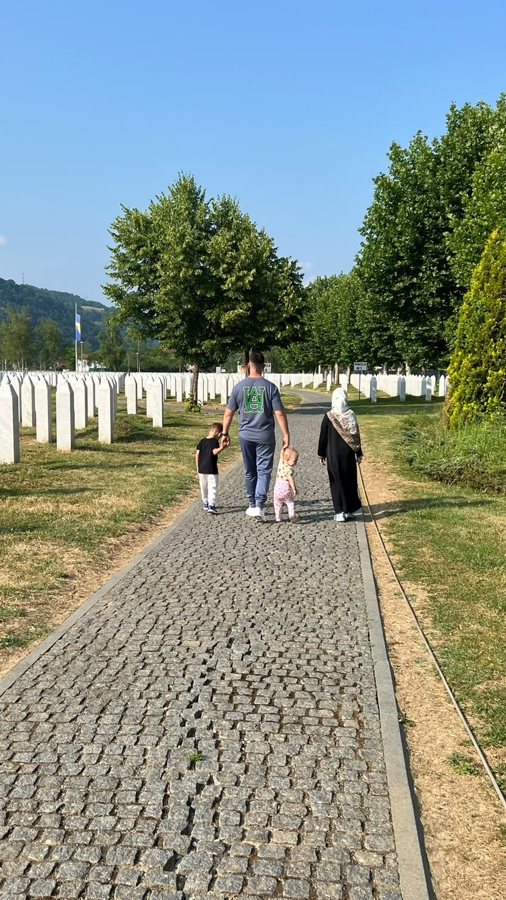
The Doha News report follows two survivors now raising families in Qatar. Ramo Smajić fled eastern Bosnia aged five; his father left a bus in Tuzla to help defend Srebrenica and never returned. In 2002, an envelope with a red cross confirmed his remains had been found in a mass grave in Kamenica — one of thirteen there. Today Ramo takes his three children to the Potočari Memorial Centre every summer, where they pray together at their grandfather's grave. Lajla Pjanić left Sarajevo at three in the final Red Cross convoy, spent years as a refugee in Croatia separated from her parents, and waited five years to see her mother again. Neither felt closure at the deaths.
What makes the story striking is how memory is being handed on. Every Saturday, Bosniak children attend the Bosnian School in Doha to learn the language, culture, history — and the facts of the genocide. Several of them carry the names of killed relatives. Their teacher, Anida Višća, insists the children be taught that the ideology behind the killings persists, but that the community seeks justice, not revenge.
Why does this matter to travellers? Because places like the Potočari memorial near Srebrenica, and diaspora communities from Sarajevo to Doha, are living history, not just stops on an itinerary. Understanding what happened in Bosnia in the 1990s changes how you walk through Sarajevo, Tuzla or eastern Bosnia — and a visit to the Srebrenica memorials is one of the most sobering and educational experiences Europe offers.