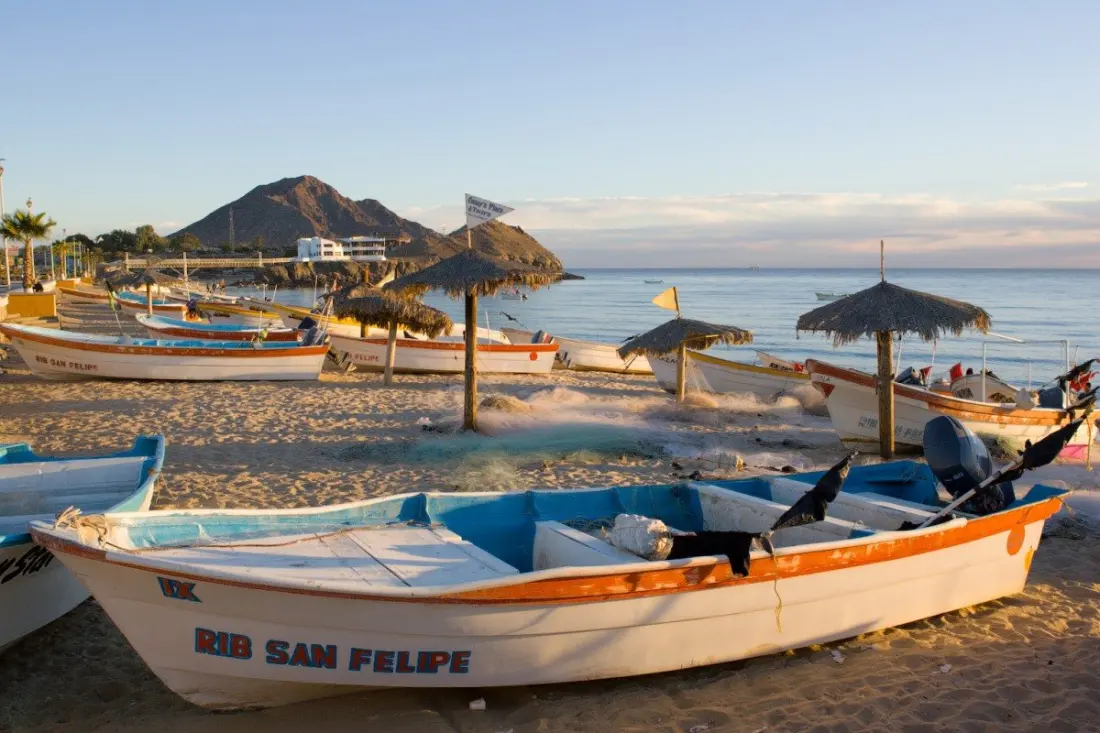
San Felipe was a shrimp-fishing village on the Sea of Cortez until two decades of investment turned it into one of northern Baja's fastest-growing expat and retirement towns. For travellers who daydream about owning a piece of coastline without US, Canadian or Western European prices, this stretch of desert-meets-sea is one of the last places where that's still realistic.
The town sits about 125 miles south of Mexicali on the US border — a two-hour drive that's central to its appeal. Americans can bring US-plated cars onto the Baja peninsula without the import permit required elsewhere in Mexico, and the peninsula's tight economic links to the States give it a hybrid feel: unmistakably Mexican, but easy to reach and navigate.
What draws people in? The climate is a big one. San Felipe averages 78F year-round, with winters dipping to a cool 38F at night and summers peaking in the mid-90s — when plenty of residents decamp north until September. The cost of living is moderate by expat-Mexico standards, and the local economy now runs on tourism, retirement communities and real estate rather than fishing alone.
One angle that sets San Felipe apart is eco-homes. Affordable, off-grid land parcels are being set aside for energy-efficient builds — self-contained homes handling their own heat, light, water and sewerage — with plots available for under US$20,000. Beachfront and sea-view land, increasingly out of reach elsewhere in North America, remains genuinely affordable here.
Real estate surged from the late 1990s to 2007, and while prices rose sharply, they never matched Los Cabos-level highs. A recent modest correction means bargains exist for long-term buyers. Most property sells directly through developers — beachfront homes, lots and condos along the coast north and south of town — with a couple of local agencies handling resales. Renters should note there's no reliable rental agency; most properties are listed by owners or developers online.
Practical infrastructure is surprisingly solid for a town of 15,000 (which swells by up to 40% each winter). There's a small clinic offering US-standard outpatient care, with fuller private services in Mexicali and Tijuana. FONATUR, Mexico's tourism development agency, has put multi-million-dollar investment into the area, and road, air and ferry links — plus marinas for boat owners — keep it connected.
Who's this for? Part-timers wanting a winter base, retirees stretching a fixed income, and the growing crowd who want to build an off-grid home by the sea. If you're considering a scouting trip, the cooler months between November and February double as the best time to see the town at its liveliest — and judge whether the desert coast lifestyle fits.
Article based on Mexperience.