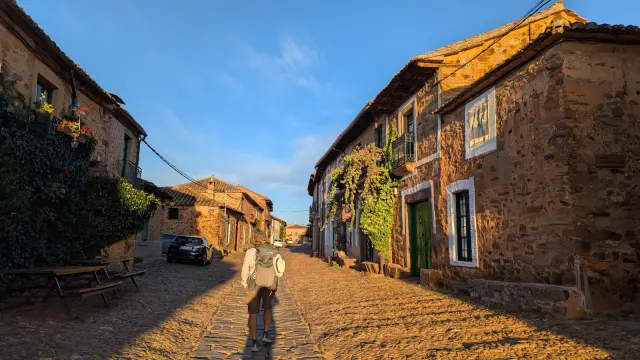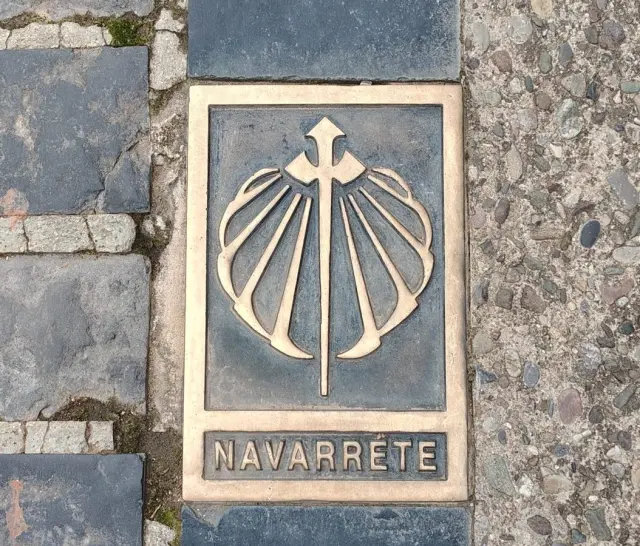
Day 14 of a Camino de Santiago pilgrimage, and day seven of actual walking, delivered the kind of mix that keeps people coming back to this route: pre-dawn starlight, vineyard grapes stolen straight from the vine, and a municipal albergue queue thirty pilgrims deep.
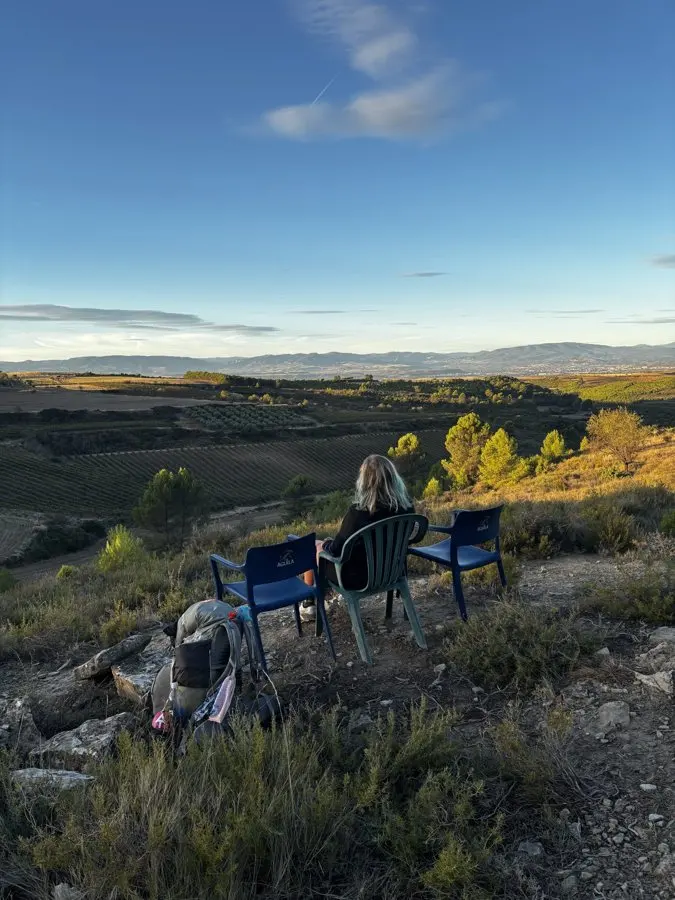
The writer, Marley "Chill Out" Kreiser, set out from the dark fields outside Los Arcos before sunrise, navigating by the Milky Way. By the time the sun came up, the sky had shifted into full colour, and the trail climbed and dipped through Rioja wine country — where a handful of grapes from a passing vineyard made an impromptu energy snack. The day finished with pine groves, the scent of crushed needles, and the long paved approach into Logroño, the capital of La Rioja.
One detail from the city's history gives the entry its charm: legend has it a local woman named Mari used to sit by a fig tree at the town entrance to greet arriving pilgrims. Centuries later, the welcome survives in a different form — graffiti and tunnels scrawled with "Buen Camino!" along the path into town.
Logroño, it turns out, can be a tough bed to find. A Spanish national holiday had the city packed, and even arriving before the Albergue Municipal de Peregrinos opened its doors, the writer found thirty backpacks already lined up in the courtyard, each marking a pilgrim's place in the queue. Securing a bed here is less about luck than timing — and knowing that big mileage days plus public holidays equal competition.
The social side of the Camino comes through just as strongly. After the longest day yet, dinner was a cheap kebab with an Italian friend and a pair of fathers, and the evening ended with budget grocery-store wine shared with a new acquaintance from Argentina in the albergue courtyard. The writer switched between Spanish, English and Italian over the course of the night — a small marker of how quickly the trail reshapes people.
Why does this matter to a traveller? Because the Camino is less a hiking challenge than a moving village. You don't need to be religious to feel the pull — the writer framed it as finding the divine in three places: the countryside by day, the churches and cathedrals by night, and the people met in between. The practical lessons are equally transferable: municipal albergues fill up fast in busy season, arriving early with your pack in hand is the ticket, and the trail itself is forgiving enough that tired legs still get you to the next glass of Rioja.
If you're considering the Camino Francés, days like this one — Los Arcos to Logroño, roughly 25 kilometres of farmland and vineyards — are exactly what you're signing up for: modest effort, big reward, and hospitality that hasn't changed much since the fig tree days.