The seats are coming out of Bengaluru's Urvashi Cinema, once a 1,200-seat movie palace where audiences whistled, cheered and threw money at the screen. It's the latest loss in a quiet national reckoning: researchers estimate India had around 14,000 single-screen cinemas in the 1980s. Today, roughly 2,000 survive.
For photographer and former Bollywood cinematographer Hemant Chaturvedi, the decline demanded documenting. Over seven years he has photographed 1,350 single-screen halls across 1,000 towns, capturing ornate facades, faded signage and cavernous, crumbling auditoriums — a record of a building type that once made going to the movies the event itself.
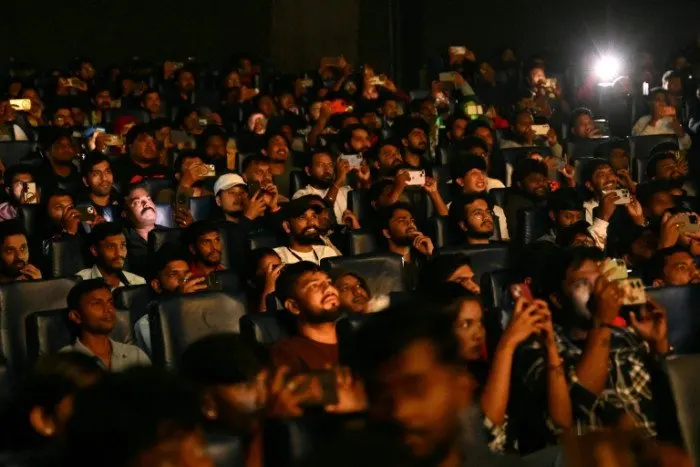
What's being lost isn't just architecture. Old single-screens held around a thousand people at a time, and the experience was loud and communal. Fans applauded the hero's entrance, clapped along to romantic numbers and shouted at plot twists. Manjunath, who runs a snack shop opposite the Urvashi, remembers the pre-show rush that kept his counter packed; now he says he has a lot of free time.
The culprits are familiar: multiplexes, streaming, soaring property costs and the expense of keeping ageing buildings and projectors alive. The replacement experience is undeniably comfortable — air conditioning, reclining seats, food delivered to your chair — but Chaturvedi calls multiplexes "a generic, cold experience" compared with the old ecosystem.
Yet the story isn't over. In Bengaluru, Mukunda Cinemas, now in its third generation of family ownership, still packs hundreds in for dawn screenings — recent 6am shows of a new Yash release drew queues before sunrise, with fireworks going off outside. Owner Veerain Reddy admits inflation and competition make survival hard, but says passionate audiences keep these halls worth fighting for. In Mumbai, the Regal Cinema — an Art Deco hall dating to 1933 — has fans who find modern multiplexes artificial by comparison.
For travellers, this is a genuine reason to change your itinerary. If you're visiting an Indian city, an evening at a surviving single-screen — Bengaluru's Mukunda, Mumbai's Regal, or countless others still trading — is one of the most immersive cultural experiences on offer: cheering crowds, whistles at the hero's entrance, intermission snacks, and often a building worth admiring in its own right. These halls are disappearing fast, and a ticket now doubles as a way to see living history before it closes. Film fans with deeper time might also seek out Chaturvedi's documentation work, which doubles as an offbeat architectural map of small-town India.
Go while the whistles still echo.
Bangkok Post Life