Singapore's sky has gone that familiar dull grey again — not rain, but haze drifting in from regional forest fires. For anyone travelling to or living in the city-state during haze season, the fine PM2.5 particles in the smog are a genuine health concern, linked to respiratory issues including chronic asthma with long exposure. N95 masks help outdoors, but since most of us spend hours indoors in hotels, apartments and malls, an air purifier is the practical line of defence. A good one clears odours, dander, pollen and invisible particles, and most on the market use HEPA filters that trap around 99.95% of particles down to 0.3 micrometres — including many airborne viruses.
Before buying, the numbers matter more than the branding. Check the Clean Air Delivery Rate (CADR): a rough rule is to pick a purifier with a CADR about two-thirds of your room's square footage — so an 80 CADR unit suits a 120 sq ft room. Air Changes Per Hour (ACH) matters for larger spaces, and filter type is key: HEPA catches fine particles, activated carbon handles odours and VOCs, and UV light kills bacteria and viruses. One universal tip: shut the windows and doors while it runs, or you'll just be fighting an endless stream of unfiltered air.
The current Singapore market has options at every price point. At the budget end, IKEA's UPPÅTVIND costs just S$49.90, weighs around 2kg and removes about 99.5% of small airborne particles. The Levoit Core Mini (S$69) is bedside-table sized, near-silent on low, and doubles as an aromatherapy diffuser with an aroma pad for essential oils. The AirFree P Series (S$109, down from S$249) takes a different approach entirely — it's a filterless steriliser from Portugal that destroys microorganisms with 200°C heat, runs on about 50W, works in silence and needs zero filter maintenance.
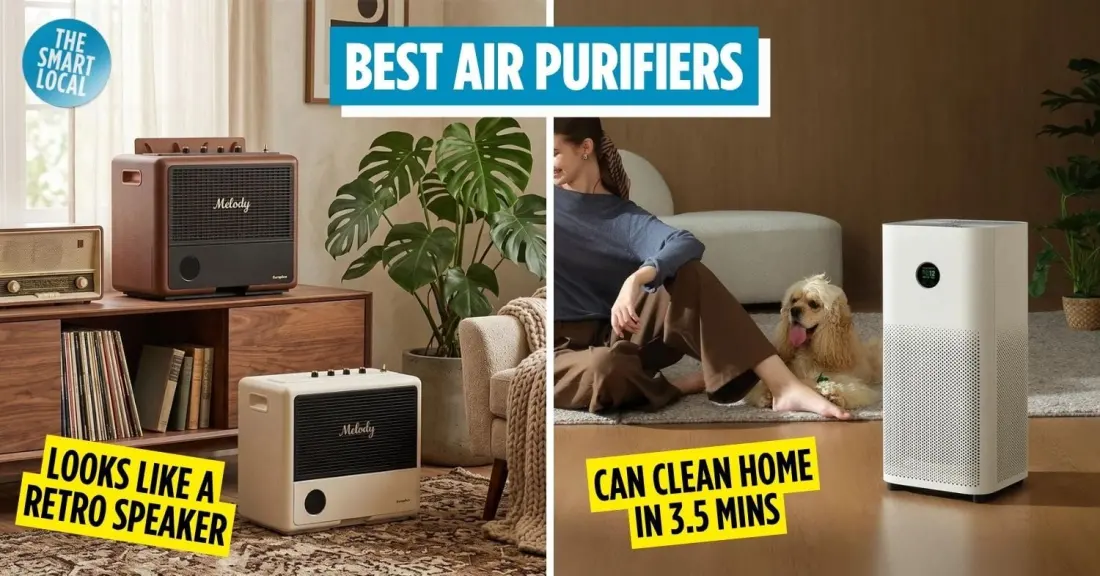
Mid-range and premium picks add smarts. Xiaomi's Mijia Smart Air Purifier 6 (about S$237) covers rooms up to 50m², uses five sensors to track everything from PM1 particles to humidity, and according to lab tests clears 99.99% of H1N1 virus and roughly 98% of formaldehyde in an hour — useful in newly renovated flats. TruSens units (from S$149.90) use dual airflow to push clean air across the whole room and offer swap-in filters for allergies, pets or cooking smells, with models covering up to 70m². The Fellowes Aeramax Pro AM 2 (S$972) detects room occupancy and adjusts automatically, while the EuropAce Melody Smart Dehumidifier (S$449) combines purification with a dehumidifier in a retro speaker-style shell. For on-the-go protection, the Air Supply Personal Ionic purifier (S$59) hangs around your neck and runs up to 50 hours on a charge.
Why should travellers care? If you're visiting Singapore between roughly June and October — peak southwest monsoon haze months — indoor air quality can make or break your trip, especially with kids or asthma. Knowing which purifier to pack, buy on arrival, or request in accommodation is genuinely useful. And the sizing logic (CADR, room area, filter types) applies anywhere in Southeast Asia facing haze.
Story via The Smart Local