A first-time thru-hiker heading into Te Araroa — New Zealand's roughly 3,000km end-to-end walking route — has shared a full breakdown of what's going in the pack, and it's a useful reality check for anyone eyeing the trail. The list is neither ultralight nor budget-crazy. It's a deliberate middle path: a few lighter items used to offset heavier comforts like a proper down jacket and generous stakes and guylines.
The philosophy behind it is interesting in itself. The hiker spent a year and a half in New Zealand before the walk, kitting out almost entirely from Facebook Marketplace and op shops for short trips. That worked for weekends, but the packs were heavy, so a serious upgrade followed — though second-hand was still the default where possible. The Sea to Summit Spark sleeping bag, despite being barely used, was found pre-owned on Facebook and still became the most expensive item in the kit at under 500 grams. A used Garmin InReach came the same way. The Uniqlo puffy? Fifteen dollars from a charity shop. The matching fleece? Four dollars, a different shop, a different day — pure coincidence.
The star of the list is a pack most international hikers won't know: the Aarn Mountain Magic 50 Pro. Aarn is a New Zealand brand built around front-mounted 'balance pockets' that shift weight forward, letting you stand more upright and lean on your hips rather than shoulders. The hiker tested it against an Osprey with 15kg in each and found the difference immediately obvious. At over a kilo, it's no featherweight, but the verdict is that a pack that carries weight well beats a lighter one that doesn't.
Shelter is a Durston X-Mid 1, bought new after a used one slipped through their fingers and a Big Agnes Fly Creek 1 proved too cramped. Extras matter in New Zealand's wind: 12 stakes instead of the standard 8, plus spare guylines, added after a sleepless night in a gale ended with an emergency relocation to a packed hut floor. The groundsheet is homemade from window insulation plastic — cheap, apparently tougher than it looks.
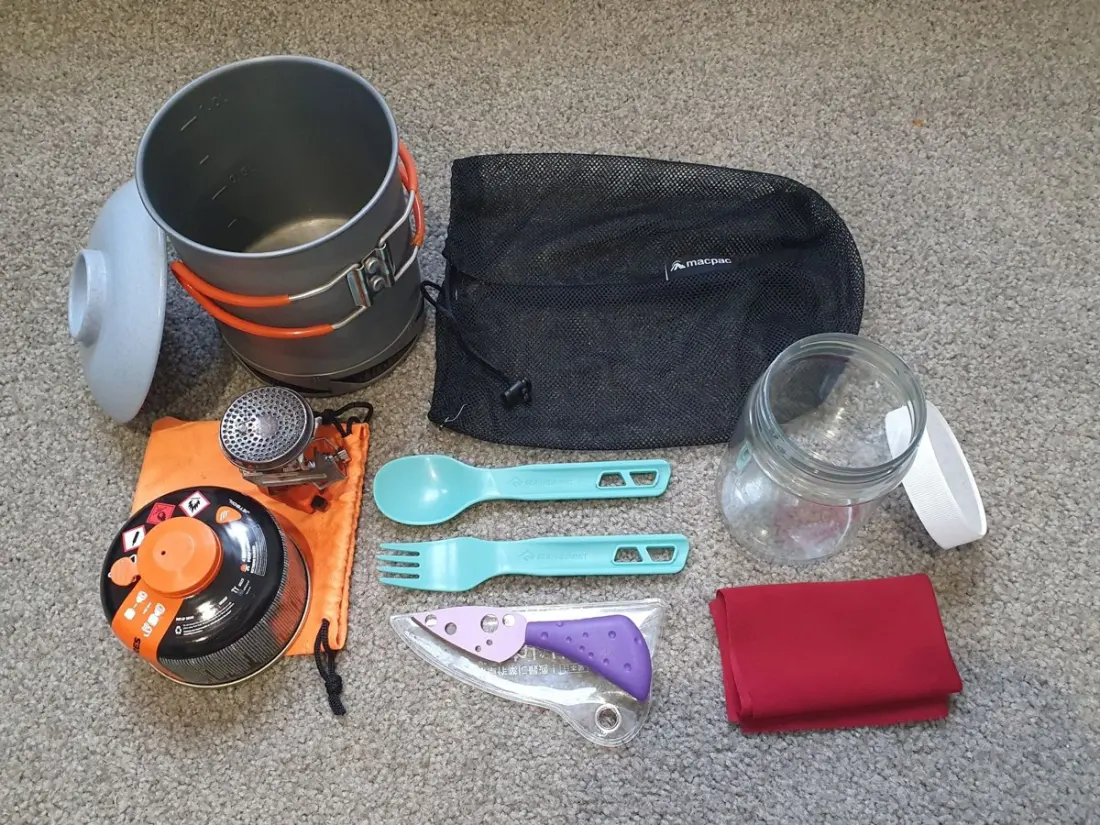
Other notable choices: aluminium Leki poles (the X-Mid pitches with trekking poles, so durability trumps grams), a heavier Outdoor Research Aspire rain jacket justified by New Zealand weather, budget Mountain Warehouse rain pants picked partly for laundry-day usefulness, and zip-off trousers, redeemed after the hiker had previously dismissed them as silly — New Zealand's 10-degree-plus day-to-night swings changed their mind. Sleep kit rounds out with a Rab Ultrasphere mat, liner, and Sea to Summit pillow; cooking runs on a JetBoil Mighty Mo with a Macpac pot.
Why care if you're not walking the country? Because this list doubles as a practical primer on what New Zealand's terrain and climate actually demand — serious wind, big temperature swings, lots of rain, ankle-busting ground — and it shows how far second-hand sourcing can stretch a thru-hike budget. Anyone planning Te Araroa (or any long walk) gets a grounded, non-ultralight benchmark to measure their own choices against. Credit: The Trek.