Brussels just gained a serious cultural heavyweight. On 28 November, Kanal-Centre Pompidou flung open its doors as the city's first major museum dedicated to modern and contemporary art and architecture — and at 40,000 square metres, it's being billed as the largest museum development in Europe.
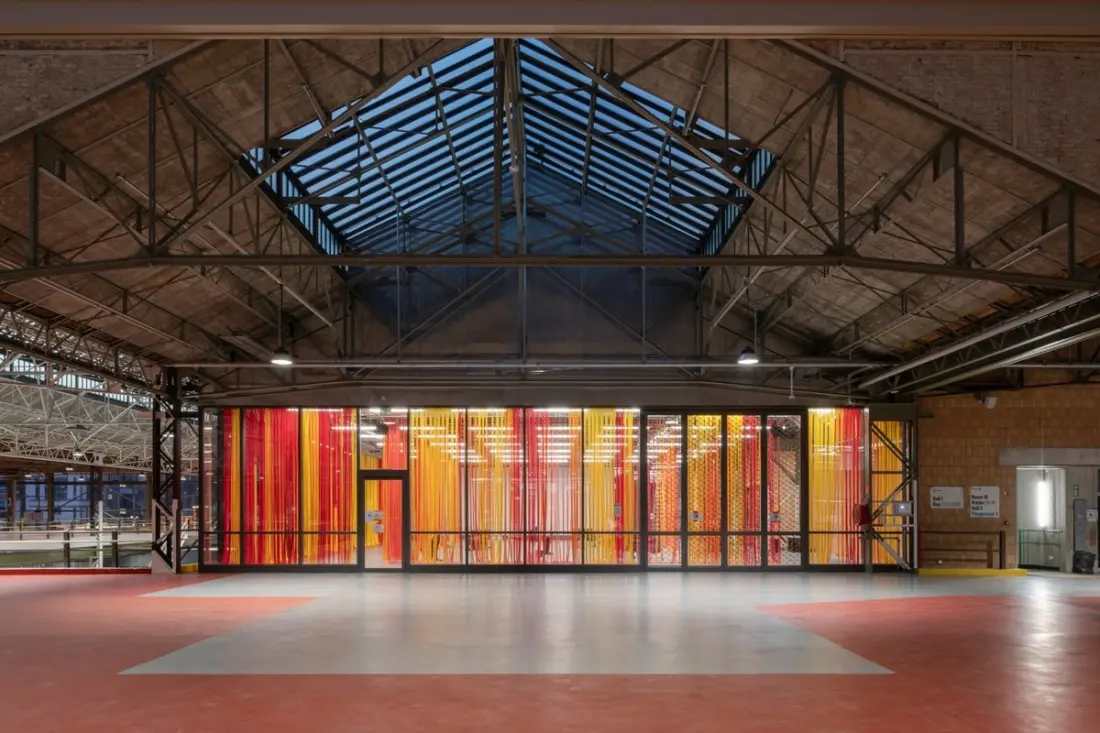
The building itself is half the story. The museum occupies a vast former Citroën garage on the banks of the Charleroi-Brussels Canal, reimagined by Atelier Kanal, an international architecture consortium, who restored the original structure and added three new buildings. Calling it a museum undersells it: alongside galleries there are performance spaces and cinemas, a library, a research centre, restaurants, a rooftop bar, an in-house bakery, a shop, an indoor playground and free-to-enter public areas. The idea is a "living" civic space — somewhere locals might come to study, work or loaf as much as to look at art.
A partnership with Paris's Centre Pompidou gives Kanal long-term access to one of the world's leading collections of modern and contemporary art, a significant coup for a city that has long punched below its weight on this front. The opening programme sets an ambitious tone: "An infinite woman" examines how artists of African descent have reclaimed and subverted imagery of Mangbetu women from the Congo, while "NO SHOW" asks the cheeky question "can a museum entertain?", with artist duo Deborah Bowmann, musician Maoupa Mazzocchetti and 20 Brussels artists responding.
The public response has been emphatic. During the opening week, nearly 5,000 schoolchildren from 27 neighbourhood schools get free access, and 30,000 free exhibition tickets were snapped up within a single day. If you missed out on tickets, there's still plenty to see — the museum is running a free programme of live performances alongside the ticketed shows.
CEO Yves Goldstein framed it as a decade-long effort to put Brussels at the centre of Europe's cultural agenda, and for travellers it changes the city's equation. Brussels already offered the Magritte Museum, great beer, art nouveau streets and easy rail links — now it has a reason for art lovers to plan a whole weekend around, or even a day trip from Paris, London or Amsterdam by train. The canal-side location in the Molenbeek area also nudges visitors beyond the Grand Place into a less-touristy, more local quarter.
Practical tip: even with free tickets gone, the building — architecture, rooftop, public spaces and performances — is largely accessible without an exhibition pass. Go early, see the shows if you can, then spend the afternoon eating your way through the surrounding neighbourhoods.