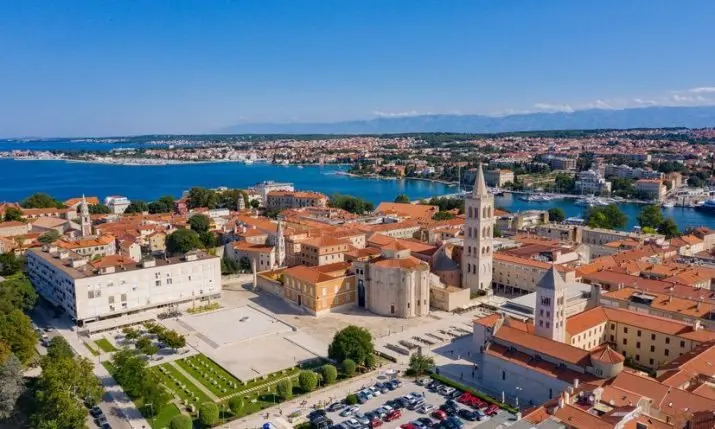
Zadar, the Dalmatian city famous for its Roman ruins and the wave-powered Sea Organ on its waterfront, has unveiled one of its largest housing plans in years. On Zadar Day (24 November), Mayor Šime Erlić announced that 50 hectares of state-owned land in the Novi Bokanjac area will be earmarked for a new affordable housing district — an area roughly twice the size of Zadar's entire historic peninsula.
This isn't just about dropping apartment blocks on empty ground. City officials say the plan covers full urban planning and supporting infrastructure, with the aim of building genuine new neighbourhoods and improving prospects for younger residents who increasingly struggle to live where they work.
There are shorter-term projects too. Spatial Planning and State Assets Minister Branko Bačić confirmed plans for 130 apartments in Smiljevac and another 40 in Vidikovac, with work at three locations expected to start next year.
The backdrop is familiar to anyone who has watched Adriatic property prices climb. Tourism demand and the pull of coastal living have squeezed housing markets in Croatian cities like Zadar, where short-term rentals and holiday homes compete with locals for space. The city's response is part of a wider national push to keep housing within reach for people who want to stay and work there, rather than watch their neighbourhoods turn into seasonal rentals.
For travellers, the news is a signal rather than a spectacle: Zadar is growing fast and investing in its future as a year-round city, not just a summer stop. It remains one of the Adriatic's more rewarding bases — a compact old town built on Roman foundations, two UNESCO-listed attractions nearby in the Sea Organ and Sun Salutation installations, and easy access to Kornati islands, Plitvice Lakes and Paklenica national park. If you've been tempted by Split or Dubrovnik but put off by the crowds and prices, Zadar continues to offer a calmer, cheaper take on the Dalmatian coast.
The new districts themselves won't appear overnight, and they'll sit well outside the tourist core. But if Zadar's plan works, it could become a useful test case for how Croatia's coastal cities balance tourism success with actually being liveable — which, in the long run, is what keeps destinations worth visiting.