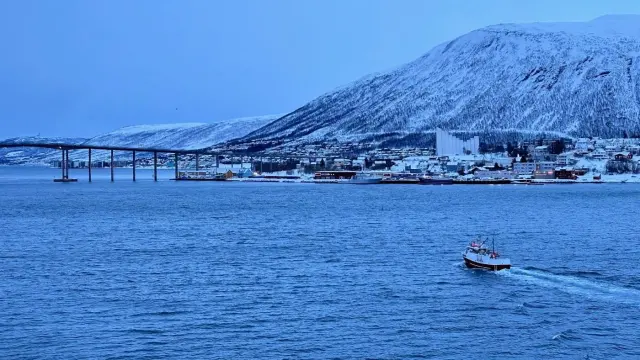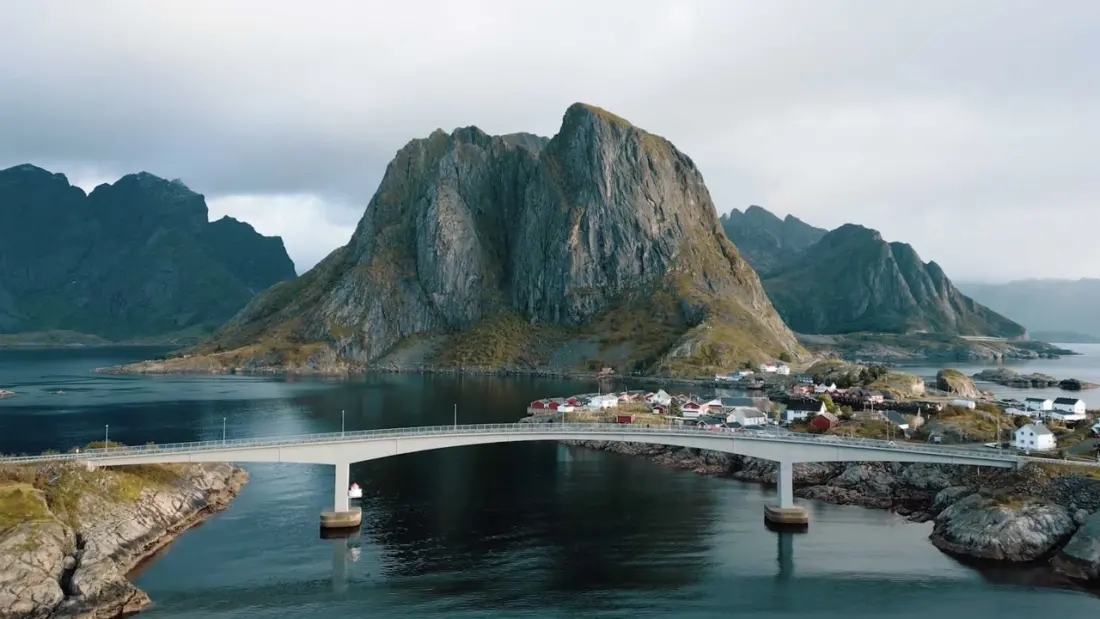
Wind, rain and nearly 2,000 feet of Norwegian rock: that's how one recent visit to the Lofoten Islands began, before the real point of the trip revealed itself at sea level. The archipelago, which sits at 68 degrees north and draws close to a million visitors a year, has long been a summer draw for climbers and campers chasing its endless daylight. But this was a food story — one unfolding at a converted cod factory on stilts in the village of Sørvågen.
That property is Holmen Lofoten, a hotel and culinary destination made up of traditional rorbuer fishing cabins, some with grass-topped roofs, connected by walkways over the water. Ingunn Rasmussen, a fisherman's daughter who grew up on the site, took it over in 2001 and runs it with her son Håvar Holmen after a careful restoration that kept the original structures intact.
Since 2018, Holmen has hosted Kitchen on the Edge of the World, a multi-day culinary gathering held four times a year that pairs acclaimed chefs with guests, live-fire cooking, foraging walks and the Arctic elements themselves. The 30th edition, in late September, was led by Matt Orlando — a California-born, Copenhagen-based chef whose restaurant Esse picked up a Michelin star within months of opening. Over four days, he and Holmen's own international kitchen team served the likes of reindeer ribs from Sámi herders, fishbone noodles pressure-cooked into a slippery purée, and grilled hedgehog mushrooms with a Lofoten chimichurri — even the Negroni-style cocktails leaned local, infused with foraged blackcurrant leaves and yarrow.
Sourcing is the whole point. The kitchen uses Geographical Indication-protected Lofotlam lamb, local cheeses, and ceramics by area potter Gunvor Tangrand. An hour north in the village of Napp, the women-led Lofoten Seaweed Company hand-harvests seven types of seaweed from strong tidal straits, supplying seasonings to Holmen as well as Copenhagen's Noma and Geranium. Then there's skrei, the Arctic cod whose January migration has sustained the islands for over a thousand years — its wooden drying racks still dot the terrain.
For travellers, Kitchen on the Edge is a genuinely different way to experience the far north: intimate (guests share close quarters over four days, from geologists to retirees), seasonal (autumn editions bring moody weather, harvest moons and a chance of Northern Lights), and rooted in the land rather than staged around it. If fine dining on the edge of the Norwegian Sea sounds like your kind of holiday, this is one of the most remote tables you'll find.
Story via Condé Nast Traveler.