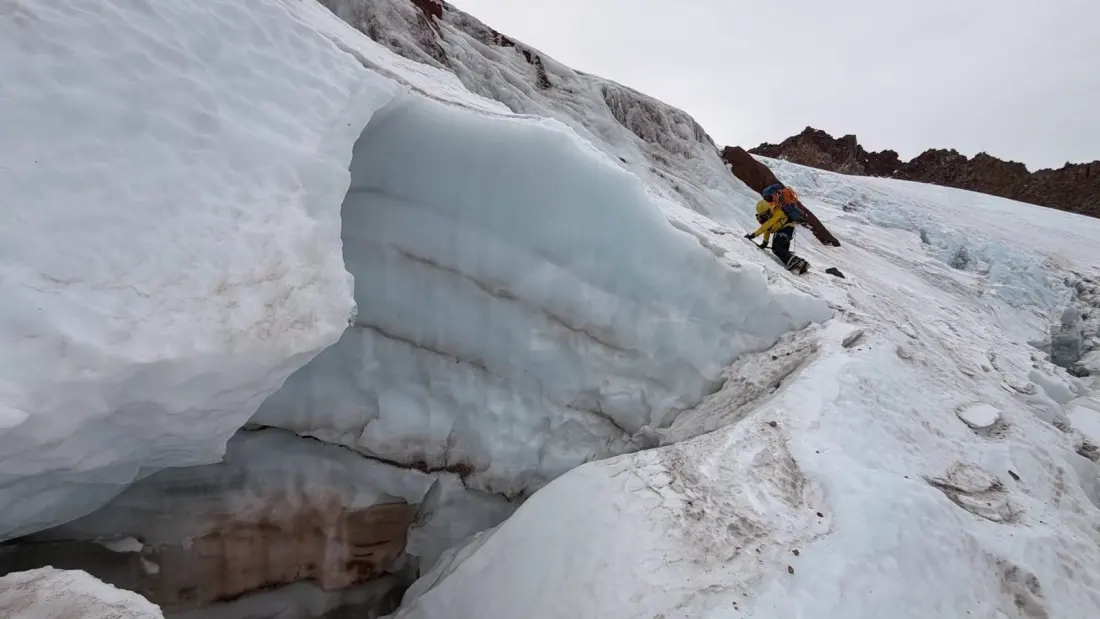
A Florida man in sweatpants and a hoodie spent two nights at 12,000 feet on Mount Shasta after a snowbridge collapsed on the Whitney Glacier, dropping him into a crevasse. He was the 19th rescue on the Northern California peak in 2026 — a figure that has search-and-rescue teams openly worried.
The 14,179-foot volcano looks deceptively accessible. Its main route, Avalanche Gulch, starts just 12 miles from the town of Mount Shasta, and the summit is a 20-minute drive from the nearest highway. Between 5,000 and 6,000 people attempt it each year, and only about half make the top. But the route gains roughly 7,000 feet of elevation and requires crampons, an ice axe and a helmet for much of the year — hardly a day-hike proposition.
Nearly every 2026 rescue shared common threads, according to the Siskiyou County Sheriff's Office: young, underprepared climbers who started late and blew past the mountain's golden rule — if you're not on the summit by noon, turn around. One San Jose climber summited at 7:30 P.M., seven hours late, then slid 500 feet and crawled through the night on injured feet. Two hikers, 19 and 20, were lost for 36 hours in October. A 71-year-old woman spent nearly a week missing in late September. In August, three men who summited at 7 P.M. and wandered off route in the dark admitted they'd planned the climb with AI — which produced a drastically wrong route.
That AI angle is new, and officials are flagging it. Climbing rangers report more people generating trip plans and even custom route maps with chatbots, without checking official sources. When Outside asked Google Gemini if Shasta is a beginner mountain, it called it one of the best beginner mountaineering peaks in North America — technically true for late spring, but misleading for anyone heading up in autumn.
Timing is everything on Shasta. Avalanche Gulch is dependable in late spring and early summer; by July, snowmelt makes footing sketchy and rockfall risk climbs. Guiding companies like Alpenglow Expeditions typically stop operating around August, once the snow goes — yet climbers kept heading up well into October 2026, helped by unusually mild weather. USFS data shows 11 rescues in 2022, 10 in 2023, 9 in 2024 and 12 in 2025 (including two deaths), so this year's tally is a real spike — and an unusually late-season one.
Phones are part of the problem too. In several rescues, a dead phone battery left climbers stranded with no map, no backup GPS and no way to call. Rescuers say a physical map and a power bank are non-negotiable, and that technology only helps when you know how to use it.
None of this means Shasta should be off your list — it's a genuinely rewarding first big mountaineering objective, and rescuers stress they don't want to scare people off the backcountry. It just demands respect: start at midnight or earlier, carry real gear, honour the noon turnaround, and treat it as a climb, not a hike.