With over 500 recorded species packed into a country that stretches from farmland in the south to High Arctic tundra, Norway punches well above its weight for birdwatching. BirdLife Norge's list stood at 537 species by the end of 2024, though only around 235 breed there regularly — the rest are rare visitors blown off course.
What makes Norway special is the sheer variety of habitats within one trip: a long coastline, deep fjords, forests, wetlands and Arctic islands. You don't need to disappear into the wilderness either — seabirds show up in city harbours, and forests and lakes sit close to most towns.
**When to go.** Winter is quieter inland, but the coast fills with ducks and gulls, and white-tailed eagles stay year-round. The far northeast is actually a winter highlight: Varanger is one of Europe's best places to look for Steller's eider. Spring brings the migrants back — some from as far as Africa — and by early summer the country is at its busiest, with breeding colonies everywhere and nearly endless daylight. In Northern Norway you can birdwatch under the midnight sun. Autumn reverses the flow, with waders and ducks pausing at coastal wetlands on their way south.
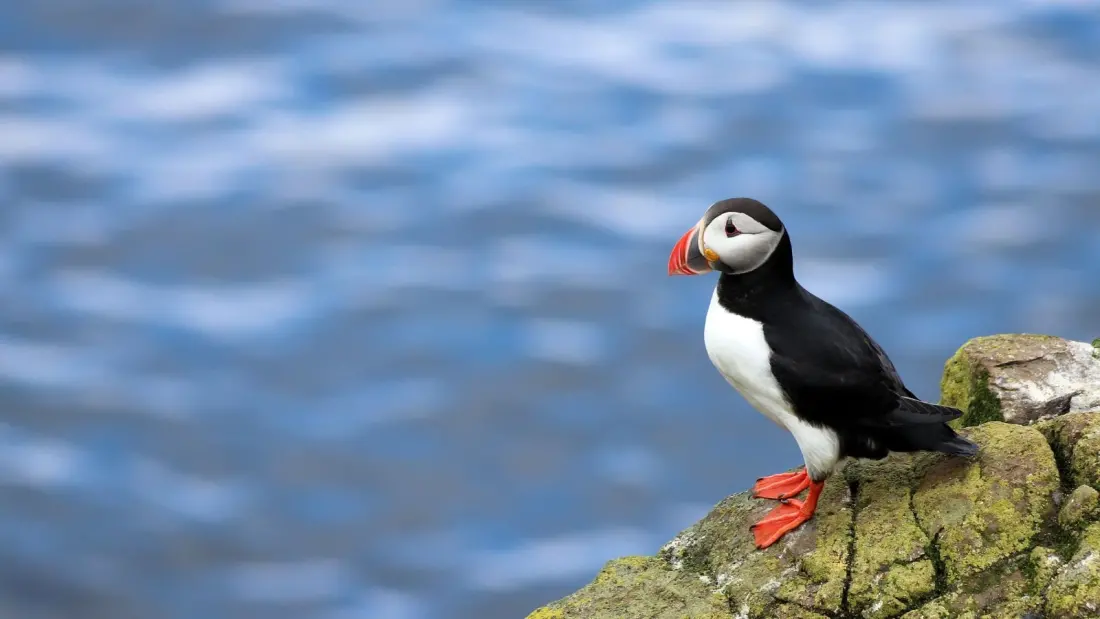
**The headline species.** The Atlantic puffin (lunde) is the icon, breeding from Rogaland up to Varanger. Top spots include Runde island near Ålesund, Røst in Lofoten, Lovund on the Helgeland coast and Hornøya near Vardø. There's a sobering side: the puffin is now classed as endangered on the mainland, and the once-mighty Røst colony has collapsed — a good reason to keep a respectful distance.
The white-tailed eagle is the opposite story: a genuine comeback. Europe's one of largest birds of prey has reclaimed former territory and is regularly seen around Lofoten, Vesterålen and Helgeland — watch the sky from ferries and coastal ships.
For something rarer, the ivory gull lives its life around sea ice and breeds only in remote parts of Svalbard, on Spitsbergen, Kong Karls Land and Nordaustlandet. Don't expect one on a weekend trip to Longyearbyen; this is a target for serious Arctic birders.
Other characters worth learning: the common eider, with its down-harvesting tradition in northern island communities (now vulnerable on the mainland); the willow ptarmigan, whose plumage switches from brown to white with the seasons; mute swans, which surprisingly favour sheltered coastal bays; and the grey heron, lurking at fjord edges nationwide.
**Where to base yourself.** Varanger is the standout for dedicated birders — tundra, wetlands and Barents Sea coastline, plus purpose-built hides and the easily reached bird cliff of Hornøya, home to puffins, guillemots, razorbills, shags and kittiwakes. Runde offers marked hiking trails to cliff viewpoints with puffins, gannets and shags despite recent declines. Røst has recorded nearly 300 species thanks to its remote position.
Even casual walkers will find that a forest stroll or lakeside wander in Norway turns into impromptu birdwatching. Just give nesting birds and colonies plenty of space — several populations are under real pressure, and the 2021 Norwegian Red List tells a concerning story.