Kyrgyzstan marked its Road Transport and Road Maintenance Workers' Day with a big show of investment in the country's roads — and for anyone dreaming of a Central Asia road trip, that's genuinely good news.
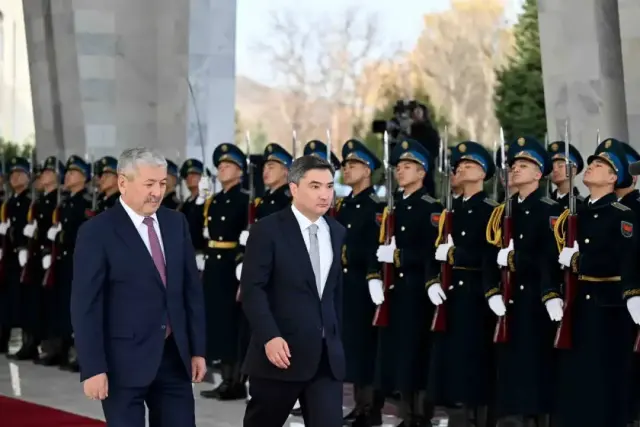
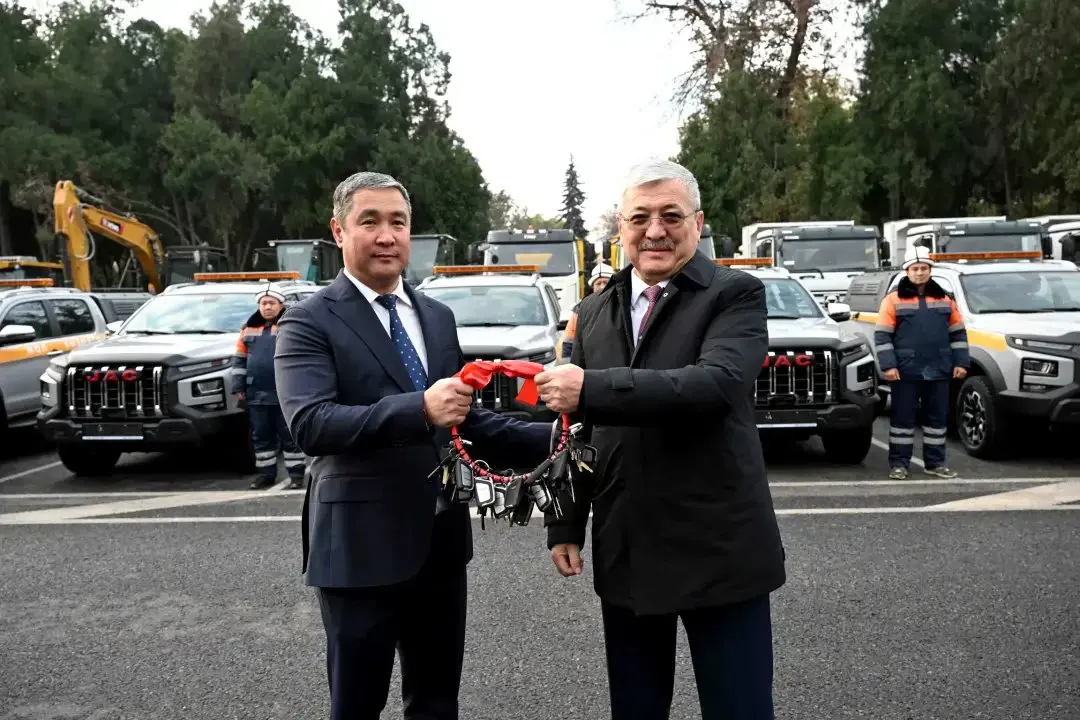
At a ceremony in Bishkek's Turdakun Usubaliev Square, Cabinet Chairman Adylbek Kasymaliev handed the Ministry of Transport and Communications keys to more than 50 new specialist vehicles, including dump trucks, motor graders and loaders. It's part of a wider spending push: the government says 1,344 vehicles were bought for the road sector between 2022 and 2026, more than double the 648 purchased across the entire previous decade from 2010 to 2020.
The money has scaled up too. Annual funding for roads used to sit around 2 billion soms; in recent years it has climbed to roughly 60 billion soms. The practical result: 1,545 kilometres of roads were asphalted in 2025, and officials expect the figure to pass 1,700 kilometres this year. Several newly built and renovated regional roads were even opened remotely during the event.
Kasymaliev also flagged the long-discussed China–Kyrgyzstan–Uzbekistan railway as central to the country's logistics and economic plans — a project that, if completed, would further knit this mountainous, landlocked country into regional trade routes.
Why should travellers care? Kyrgyzstan is one of Central Asia's great outdoor destinations — alpine lakes like Issyk-Kul, dramatic passes along the ancient Silk Road, yurt stays and some of the best horse-trekking and hiking on the continent. But it's a country where the journey is often the hardest part. Many intercity routes have long been rough, potholed or slow, which limits how much ground independent travellers can realistically cover. A serious national resurfacing programme means shorter transfer times, safer mountain driving and easier access to remoter spots like Song-Kul, the Naryn valley or the far shores of Issyk-Kul.
It also matters for the growing van-life and overlanding crowd, for whom Kyrgyzstan has become a favourite thanks to easy visa rules and cheap camping. Better roads reduce wear on rental vehicles and open up self-drive itineraries that previously demanded a 4x4 and a lot of patience.
The railway project, meanwhile, points to future overland connections — a properly linked China–Kyrgyzstan–Uzbekistan line would eventually make multi-country Central Asian rail trips far more practical than today's patchwork of shared taxis and marshrutka minibuses.
None of this turns Kyrgyzstan into a highway paradise overnight, and mountain routes will always demand care. But the direction of travel — literally — is clear, and the window to experience the country's raw, off-grid charm while enjoying steadily improving infrastructure is a compelling one.