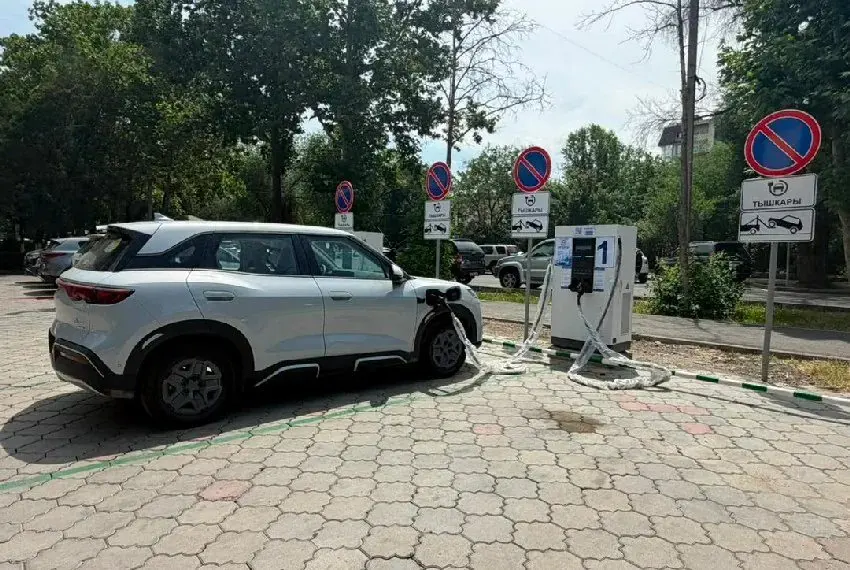
Kyrgyzstan wants to build its own electric cars — and its president says the clock is already ticking. Speaking at a public meeting in Jalal-Abad region, in the country's south, President Sadyr Japarov confirmed that an electric vehicle plant is under construction and should start operating by the end of this year, or by March–April at the latest.
The plant, assembling vehicles under the national BARS brand, sits on a 15-hectare site and is expected to create around 100 jobs. Capacity is pencilled in at roughly 10,000 vehicles a year, ranging from passenger cars to larger vehicles. Notably, the Ministry of Economy has not said who is behind the project or what it costs — so take the timeline with a pinch of salt.
The plan goes beyond one factory. Japarov said a long-term state programme will gradually phase out petrol and diesel vehicles, starting with the government fleet, over a 15–20 year horizon. "This is a matter of the future," he told residents of Tash-Kumyr and Kara-Kul.
The push came from the ground up, in a way. A Tash-Kumyr resident asked the president for five or six electric buses for the town, pointing out that local public transport is ancient — some buses are 20 to 30 years old — and expensive to run with fuel prices what they are.
Why should travellers care? Kyrgyzstan has become one of Central Asia's most appealing destinations for trekkers and road-trippers: Song-Kul's yurt camps, the towering peaks around Karakol, the Alay Valley. Most visitors get around with hired 4x4s, shared taxis or marshrutkas, all diesel-guzzlers at the moment. If this transition actually happens, it could mean cleaner air in Bishkek, quieter roads through the mountains and eventually greener public transport in regional towns. It would also give the country a point of difference in a region still heavily reliant on Soviet-era vehicles.
For now, though, don't expect to charge an EV on a mountain pass. The plant hasn't opened, funding details are murky, and the rollout is measured in decades, not seasons. Anyone travelling in the next couple of years should still plan around fuel-based transport and the charming unpredictability of Central Asian bus timetables. But as a signal of where the country is heading — and a reason to revisit in a decade — it's a genuinely interesting development.
Reported by Kyrgyzstan: 24.kg.