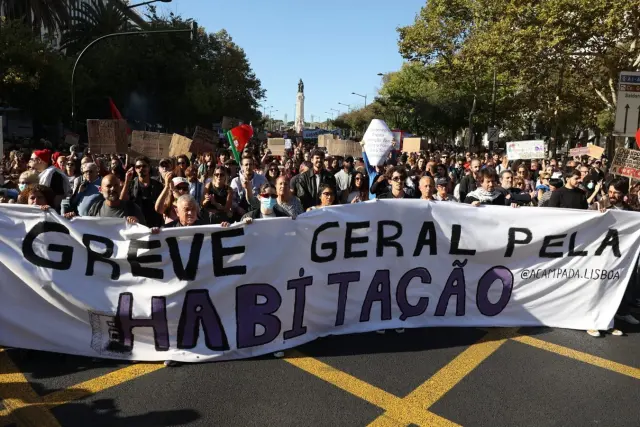
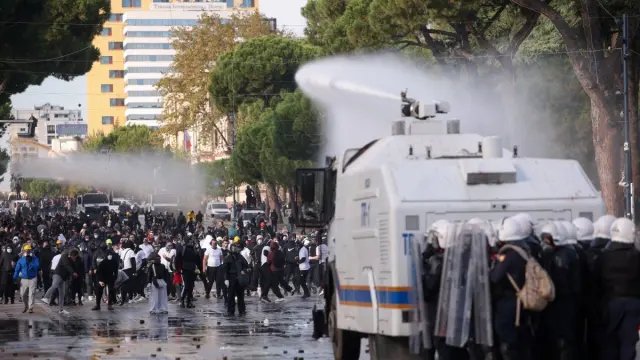
Large right-to-housing demonstrations are rolling through Portuguese cities, and anyone with a trip to Lisbon or Porto in the diary should be aware that central streets may be temporarily closed on protest days. The PSP, Portugal's public security police, has deployed officers across the country to monitor the gatherings, with the heaviest presence in the two biggest cities. So far, the force reports that events have unfolded peacefully.
The demonstrations, organised by a loose collection of civic movements, began in Porto roughly two weeks before this latest national wave and organisers have pledged to stay on the streets until the government withdraws a new rent law. Their demands read as a checklist of the country's housing frustrations: an end to evictions without rehousing (and to demolitions of illegal homes), a ban on property purchases by real estate funds, more social housing, rent caps, and converting empty buildings into homes. Broader cost-of-living grievances underpin the movement too.
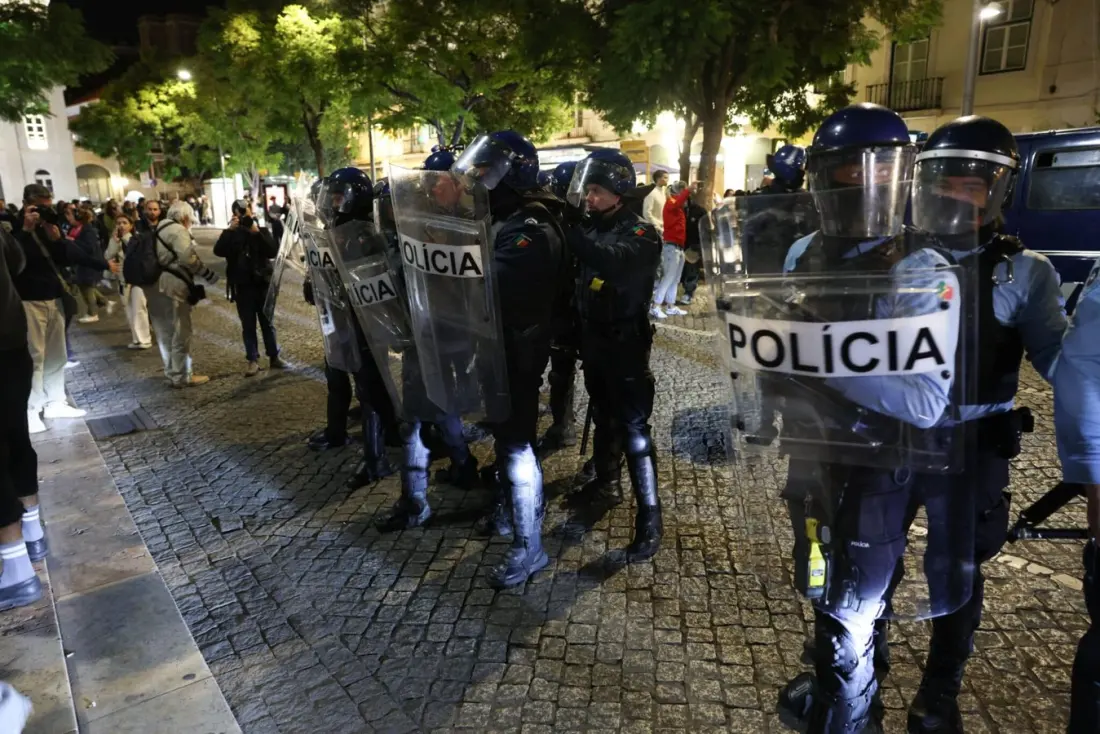
For its part, the PSP says its priority is guaranteeing the right to assemble while keeping events safe, and that its approach leans on dialogue, communication and mediation rather than confrontation. Traffic units are managing road restrictions, rapid response teams are on hand, and the Special Police Unit — including the Intervention Corps and a canine support group — is on standby. Police are also tracking open-source and online information to anticipate how the protests might develop, and adjusting deployments as they go.
What does this mean if you are travelling? Demonstrations in Lisbon and Porto typically concentrate on central squares and main avenues, which can snarl trams, buses and metro-adjacent streets for a few hours. The PSP's traffic units are specifically managing diversions, so disruptions are generally short-lived rather than trip-ruining. The practical move is simple: keep an eye on local news or your accommodation's front desk on days when marches are announced, build some slack into any airport transfer, and treat a protest as a spectacle to observe from a respectful distance rather than a route block.
There is also context worth understanding as a visitor. Portugal's housing crunch — driven by surging rents, tourism pressure and investor buying — is a live political issue that shapes daily life in exactly the neighbourhoods travellers love to explore. Seeing the debate play out peacefully on city streets is part of understanding the modern country, and the police's dialogue-first stance so far suggests visitors have little to worry about beyond the odd closed road.
In short: no need to change plans, just stay informed on demonstration days and enjoy two of Europe's most rewarding cities.
Source: Portugal Resident
Housing protests sweep Lisbon and Porto: what travellers should know
Originally reported by
Portugal Resident.
This is an independent curation by click.holiday — see the source for the full story.
Drafted by our editorial model from the source above and checked automatically for accuracy against it and for originality. How we work