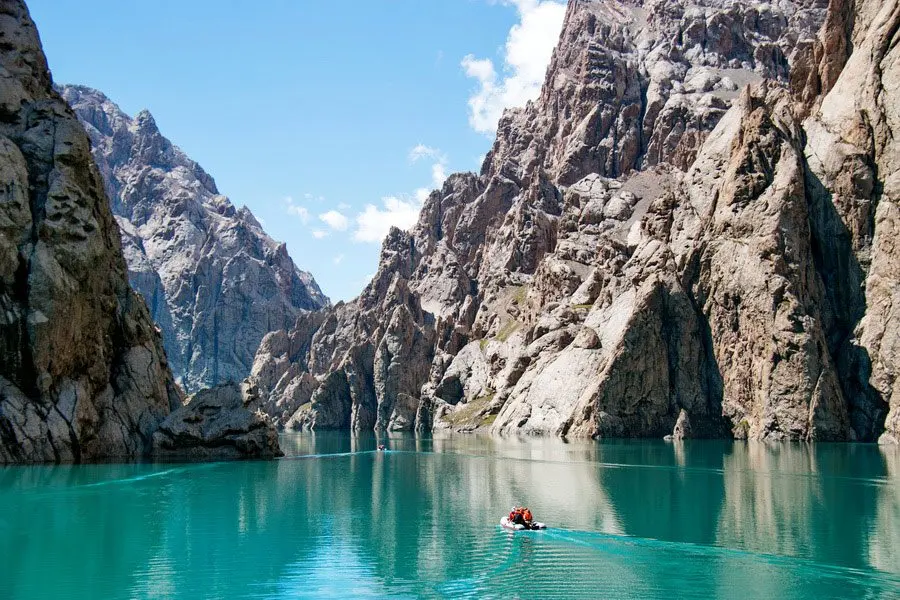
Kyrgyzstan is quietly having a moment. New figures show 5.3 million people used tourism services in the country in 2025 — a jump of 45.2% on the previous year — and the money is following the crowds.
The numbers, compiled by Finprom from national statistics, count everyone from hotel and travel agency customers to guests at private guesthouses, which make up nearly a third of the total. Within the organised sector, about 3.7 million people used formal tourism services: 2.9 million Kyrgyz nationals and 770,000 foreign visitors. That foreign tally rose 30.5% year on year, with Kazakhstan, Uzbekistan and Russia the biggest source markets.
The economic footprint is growing too. Tourism's share of GDP has climbed from 3.2% in 2021 to 3.8% in 2025, and the government wants it at 7% by 2030. Gross output in the sector hit 136.8 billion soms (about $1.56 billion), up 26.8% in a single year, while exports of tourism services approached $1.1 billion. One caveat for travellers budgeting a trip: prices for tourism services rose 7.6% in 2025, so some of that growth reflects higher costs rather than purely more visitors.
Where is the money going? Mostly to Issyk-Kul, the vast alpine lake that anchors Kyrgyzstan's beach-and-ski ambitions. Foreign investment in tourism construction reached $87.8 million in 2025 — the highest in recent years — with Dutch investors behind $63.9 million of it. Big projects on the slate include the Ramada by Wyndham Issyk-Kul sports and hotel complex, the Ala-Too Resort ski area in the Ak-Suu district, and the Mövenpick Ak Keme Issyk-Kul Resort. Getting there is getting easier as well: Asman Airlines and FlyArystan launched direct summer flights between Issyk-Kul and Almaty in 2025, with four weekly services planned in peak season.
The sector now counts around 20,700 registered tourism businesses, up from 14,600 in 2021 — good news for anyone who remembers when travelling outside Bishkek meant improvising. Beyond Issyk-Kul, the Osh and Chuy regions are also flagged as contributors to the national offering.
So who should care? Anyone eyeing Central Asia beyond the obvious Uzbekistan silk-road circuit. Kyrgyzstan still offers horse-trekking, yurt stays and genuinely wild mountain scenery, but it's now adding international-brand hotels and a ski scene that's attracting real capital. Going in the next couple of years means you get the improved infrastructure while the country remains affordable and uncrowded by Alpine standards. Watch Issyk-Kul especially — it's positioning itself as a year-round lake-and-slopes destination, and the summer flight link from Almaty makes a two-country Central Asia trip far simpler to plan.