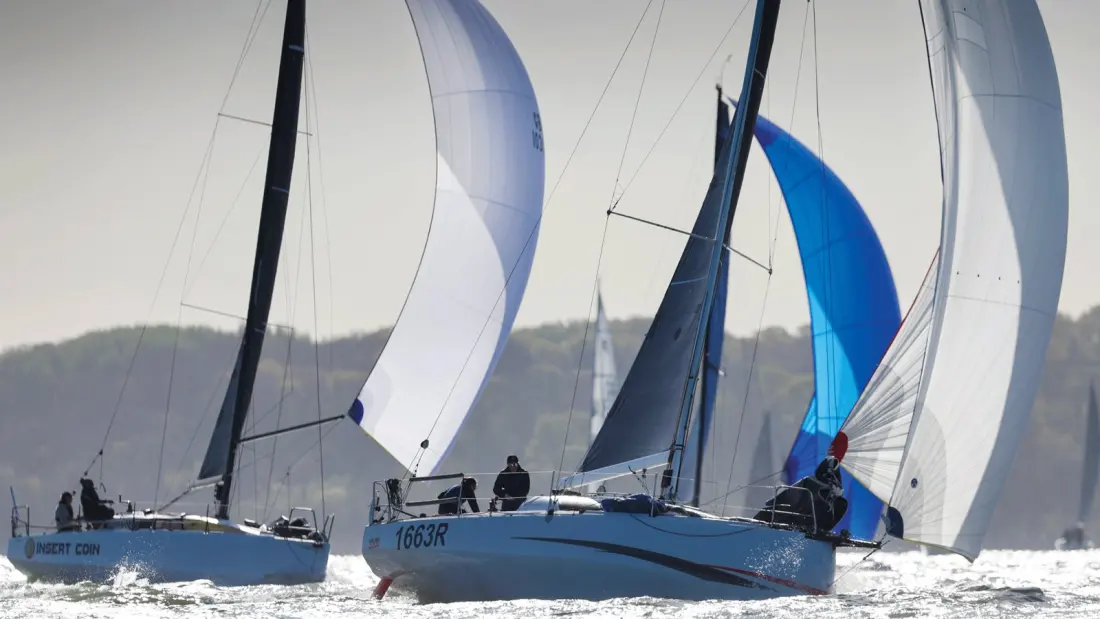
A 32-foot racer that wins offshore races on Saturday and takes the kids to the Channel Islands the following weekend sounds like a compromise too far. But the UK's short-handed sailing scene has quietly become one of the most accessible and sociable corners of the sport — and a well-chosen used boat can get you into it for the price of a family car.
Brokers report the category booming since Covid, when short-handed racing was the only game in town and newcomer numbers exploded. Race calendars across the SORC, JOG, the UK Double-Handed Series and RORC events are now better attended than ever, and many entrants have downsized from bigger boats, discovering they'd rather be fully engaged with a small yacht than parked at the wheel of a large one.
The appeal is practical as much as competitive. A smaller boat means less maintenance, fewer systems to fail and lower running costs — more actual sailing, less pontoon time. The Sun Fast 3200 is the poster child: designed for one or two crew, yet with two proper aft cabins, a heads and a galley, it works as a genuine family weekender. Owner Matt Smith dry-sails his on the Solent from Nottingham, races it competitively in RORC offshore events, and cruises it with his kids. His all-in figure: about £75,000 including new race sails. Entry-level used boats start nearer £30-40,000, with newer designs from £80,000 up.
You don't need a boutique brand, either. While JPKs have an enviable record — Alexis Loison won the Fastnet overall double-handed in 2013 and 2025 — race entries also feature modified Archambaults, X-332s and Dufours holding their own. J/Boats fans point to a strong owner community and designs that stay fast for decades, with 20-year-old J/109s still winning at this year's IRC Europeans.
Two pieces of buyer's wisdom stand out. First, keep it simple: Pogo Structures actively encourages customers to spec the least complicated boat possible, on the grounds that fewer systems means more enjoyment. Second, insurance needs planning. Most mainstream insurers balk at short-handed or racing use, so a specialist broker is essential. Expect underwriters to want a sailing CV — qualifications, offshore miles, named races — and note that most policies cap solo passages at 14-18 hours, while big events like the Fastnet must be declared separately at extra cost.
For travellers, the hook is the destination-racing format itself: sail somewhere like Poole, the Channel Islands or northern France, enjoy a decent dinner ashore with fellow competitors, then race home. Boats that can do both jobs — and do them well — are cheaper and easier to own than most people assume. — Yachting World