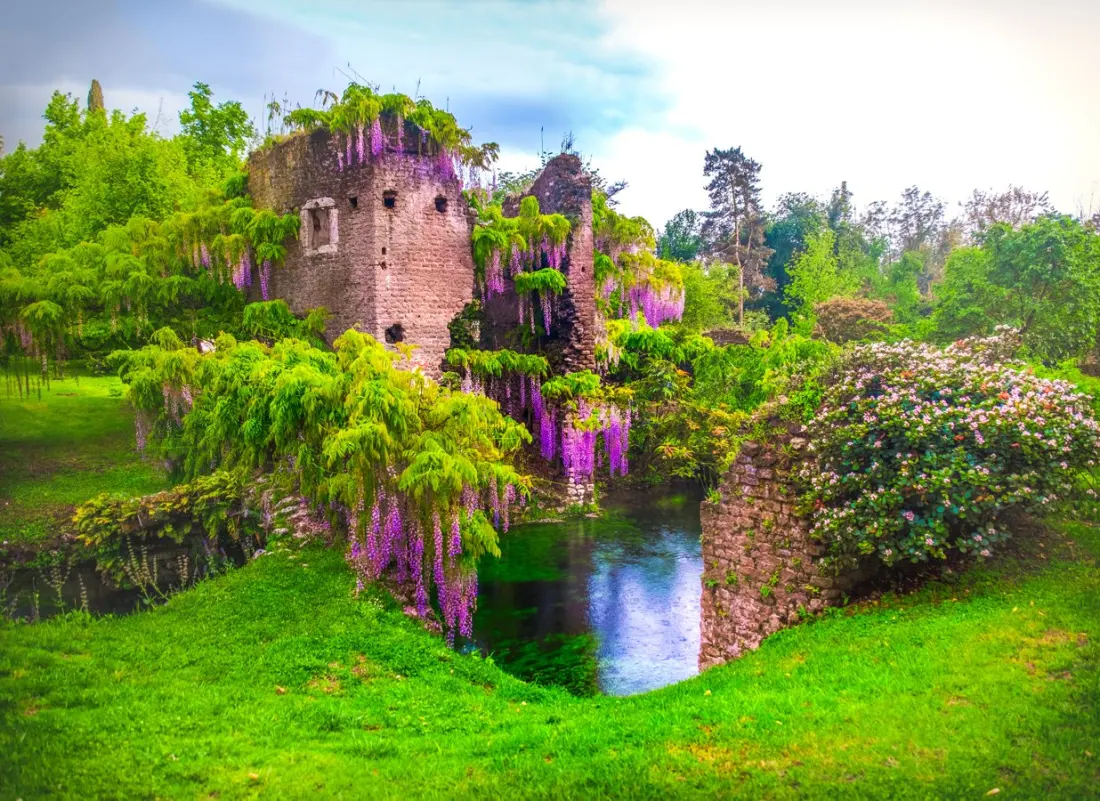
About 45 miles south of Rome, in the Lazio countryside near Cisterna di Latina, lies Ninfa — a village that died and came back as a garden. Once a thriving medieval settlement, it was worn down by civil war and malaria until only ruins remained. In 1921, nobleman Gelasio Caetani inherited the overgrown estate and, together with his mother Ada Bootle-Wilbraham, began planting an English-style garden among the crumbling walls, using seeds gathered on his travels.
What they created is now widely considered one of the most romantic gardens in the world. Climbing roses spill over medieval stonework, wisteria drapes the ruins, and a natural spring-fed stream runs past magnolias, cherry trees, water lilies and a small bamboo grove. The name Ninfa comes from a Roman temple on a nearby lake dedicated to water nymphs, and water is still the garden's lifeblood — springs keep it noticeably cooler and calmer than the surrounding terrain, a genuine oasis in summer.
Today the Roffredo Caetani Foundation runs the site, and access is deliberately restricted: entry is by guided tour only, on a fixed path, with advance online booking required. That protection is part of the charm. Tours last about an hour and build in time at vantage points overlooking cascading waterfalls, blooms and the castle ruins, plus Ninfa doubles as a bird sanctuary — herons, lapwings and mallards all live here. Admission is €15 per adult (€15.75 online), with children under 12 free.
One catch to plan around: Ninfa is not open daily. It opens on selected dates from March to November, with timed entries, and in high summer visits shift to sunset hours. There's no direct public transport, so you'll need a car or taxi; free parking is available on site.
For anyone doing the Rome circuit, Ninfa is a perfect pressure-release valve — a couple of hours of soft colour and birdsong after the chaos of the city. Even if you're not a plant obsessive, walking a ruined medieval town that's been surrendered entirely to flowers is an experience few places anywhere can match. Time it for late April or early May and you'll catch the roses and wisteria at their peak.