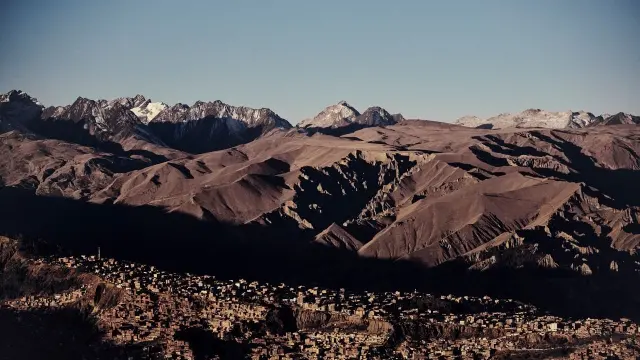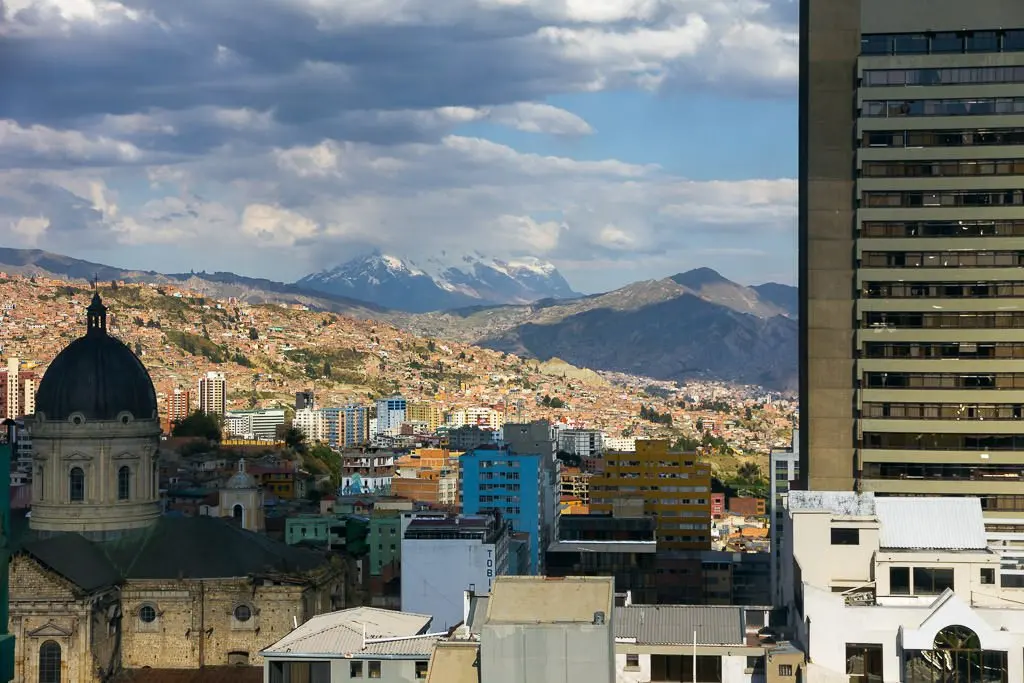
La Paz shouldn't really work. The city sits in a bowl at nearly 4,000 metres, ringed by the glacial peaks of Illimani, Huayna Potosí and Mururata, with its sprawling sister city El Alto perched even higher at 4,000m. Nights drop below freezing, the air is thin and the traffic is chaotic — and yet it's one of the most fascinating places you can wander in South America.
The first thing to plan for is the altitude, known locally as soroche. Dizziness, nausea and breathlessness on hills are normal for the first few days, so structure your arrival around slow activities: museums, miradors, gentle strolls. The Aymara have remedies refined over centuries — chew coca leaves the traditional way, or drink them as tea; there are even coca-infused soft drinks on sale everywhere.
Politics can also rumble. The city, whose name means 'The Peace', saw an attempted coup in 2024 and blockades as recently as early 2026. These rarely threaten tourists directly, but protests can disrupt buses and airport runs, so check the news before a connection.
Once settled in, the city rewards curiosity. The Witches' Market is a quiet shopping street with unquiet contents: dried llama foetuses hung like soft toys, buried under new buildings for luck, alongside love potions and remedies for everything from hair loss to heartbreak. San Francisco Basilica, rebuilt in 1748 after snow destroyed the original, hides bullet-marked stained glass from the 1952 revolution, and its Baroque facade quietly weaves in indigenous Aymara, Inca and Tiwanaku faces — a carved act of resistance. For a dollar or so you can climb its belltower.
The real showstopper, though, is free of charge: the city built a metro in the sky. The Mi Teleférico cable car network offers hours of 360-degree views for about $0.25 a ride, with the Yellow and Red lines linking La Paz to El Alto for the best sunset vistas. Up in El Alto itself, newly wealthy locals compete to build ever more flamboyant 'Cholets' — mansions echoing Wayne Manor and the Statue of Liberty — and on Thursdays and Sundays the Mercado 16 de Julio sprawls across 400 blocks.
For a Thursday evening, add Cholita wrestling: Aymara women in layered traditional skirts throwing slaps, hair-pulls and rugby tackles in front of devoted local crowds. Quieter pleasures include the Ethnography Museum's masks, textiles and 600 varieties of potato (Bolivia claims the spud as its own), and the Museo de Metales Preciosos, whose 2,000-plus gold pieces survived the Spanish furnaces.
Getting there: fly in from elsewhere in South America, cross from Peru via Copacabana and Lake Titicaca with a ferry crossing at the Strait of Tiquina, or take an overnight bus — from Uyuni you can fly in about an hour, at a price.
La Paz asks a lot of your body on day one, then pays it back in full. Source: Indie Traveller.