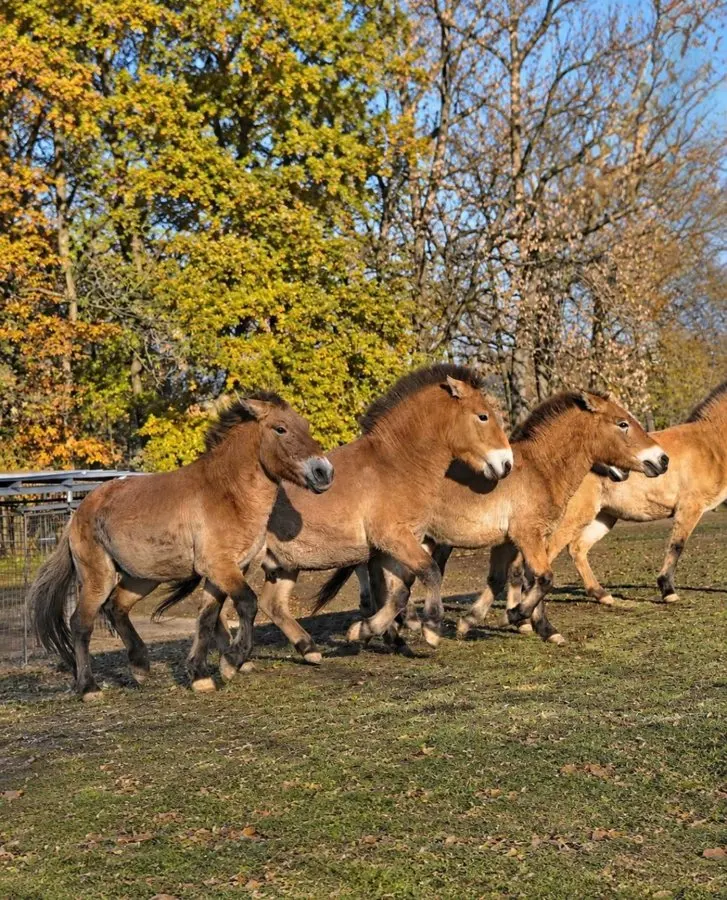
A young stallion named Bruno has checked into a pre-departure training programme that could end with him galloping across the Kazakh steppe. The 1.5-year-old horse was moved from Sweden's Nordens Ark zoo to an acclimatization centre run with Prague Zoo, where he's now living among a group of stallions being primed for a possible transfer to Kazakhstan in 2027. His spot on the transport isn't guaranteed yet, but he's in the running.
The horse-in-waiting is part of a broader effort to bring Przewalski's horses back to a country where they once roamed wild before disappearing. Selection and acclimatization start months ahead of any relocation, and Kazakhstan's Ministry of Ecology and Natural Resources confirmed the preparations are moving forward as planned.
This isn't the project's first rodeo. The reintroduction programme kicked off in 2024, when the first group of horses arrived from Europe. By May this year, those animals had finished their acclimatization period and were released into the wild at the Altyn Dala State Nature Reserve, a vast protected area in the country's steppe. The endgame is a self-sustaining population of the world's last truly wild horse in its historical habitat.
Why should a traveller care? Because Altyn Dala is quietly becoming one of Central Asia's most compelling wildlife stories. Przewalski's horses are a big deal: heavy-set, dun-coloured, with a mohawk-style mane, they're the only surviving species of wild horse and were once extinct in the wild. Seeing them roam free again on the open steppe — against a backdrop that stretches to the horizon — is the kind of sighting most people associate with African plains, not Kazakhstan.
The project also signals a wider shift. Kazakhstan has been restoring its steppe ecosystems, most famously with the saiga antelope, and wildlife tourism is slowly following. Altyn Dala remains remote and low-key: this is not a safari park with marked drives, and visits typically require planning through local operators or conservation bodies. But that rawness is part of the appeal for travellers who like their nature encounters without crowds.
Practical notes for anyone tempted: the horses released so far are wild animals adjusting to life on the steppe, so sightings are never guaranteed and should be approached with a guide and a respectful distance. As the population grows through the 2027 transfer and beyond, so do the odds of spotting one. For now, following the programme's progress is half the fun — and Bruno, currently acclimatising in the Czech countryside, is one to watch.
The bigger picture is a country putting serious weight behind rewilding, and few destinations let you witness that in real time. If the steppe isn't on your list yet, the return of its most iconic resident is a good reason to add it.
Story reported by The Astana Times.