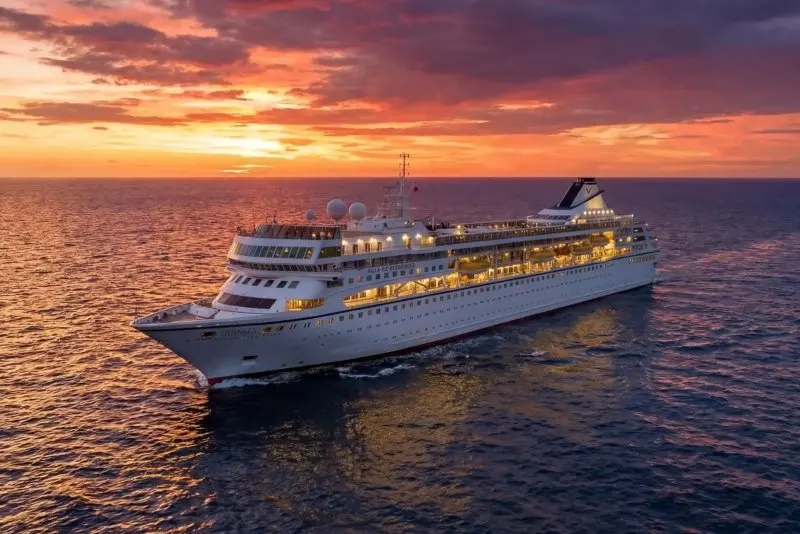
The floating-home dream aboard Villa Vie Residences' Odyssey has hit a very hard patch of water. The ship's operations were suspended in late October and residents were put ashore in Cambodia, and now a US law firm is investigating whether people who bought cabins — or paid deposits — were told the whole truth about the company's finances.
The firm in question is Migliaccio & Rathod, a Washington-based practice that has publicly asked anyone who purchased a cabin on the Odyssey or put money down to get in touch. Its stated focus: whether buyers were fully informed about Villa Vie's financial condition and its ability to honour long-term commitments before they handed over what were, in many cases, very large sums — cabin prices on the residential ship reportedly ran to several hundred thousand dollars.
The timeline matters here. According to CEO Mikael Petterson, fuel costs spiked after the war involving Iran began in late February, and a few days after passengers were landed in Cambodia, he announced the company intends to file for Chapter 11 bankruptcy. Migliaccio & Rathod points to news reports suggesting Villa Vie was struggling financially even before the shutdown, which — the firm argues — raises questions about what prospective buyers were actually told at the point of sale.
The potential claims the firm has flagged give a sense of where this could go: consumer protection violations, false or misleading advertising, fraudulent misrepresentation or omission, breach of contract, and unjust enrichment. In plain terms, buyers may argue they were sold a permanent lifestyle at sea by a company that couldn't realistically deliver it.
Why should travellers care, even those who never considered buying a cabin? First, if you or someone you know paid a deposit or instalment to Villa Vie, this investigation is the most concrete avenue so far for recovering money — the firm is actively soliciting affected customers. Second, it's a cautionary tale for the growing residential-cruise niche, where 'buy your home at sea' schemes ask for life-changing sums up front, often with limited protection if the operator folds. Traditional cruise bookings come with refunds, insurance and regulation; a six-figure cabin purchase on a startup residential line may not.
Anyone caught up in this should keep every contract, invoice and marketing email — documentation of what was promised versus what was disclosed will be central to any claim. And anyone considering a similar residential-cruise purchase elsewhere would be wise to ask hard questions about the operator's financials, escrow arrangements and what happens to deposits if the company fails.
The Odyssey's residents, meanwhile, are the immediate human story: people who treated a ship as their home, now ashore in Cambodia waiting to see what a bankruptcy filing means for their money and their lifestyle.
Credit: Cruise Industry News