Long before 'Hallelujah' made him a household name, Leonard Cohen was a young Canadian poet scratching out prose in a London flat on Hampstead High Street. That address in north London is where he worked on 'The Favourite Game', his first novel, and it has become a quiet point of interest for fans tracing the singer-songwriter's early years.
Cohen arrived in London in 1959 on a Canada Council grant — a stipend meant to let him write without distraction. Hampstead made sense for him then as it does now: the area has drawn writers, poets and artists for well over a century, from the Bloomsbury-adjacent set to George Orwell and D.H. Lawrence. Cohen's bedsit-era London was cheap and drizzly, and the flat above the High Street gave him a base between the bookshops and pubs that still anchor the neighbourhood today.
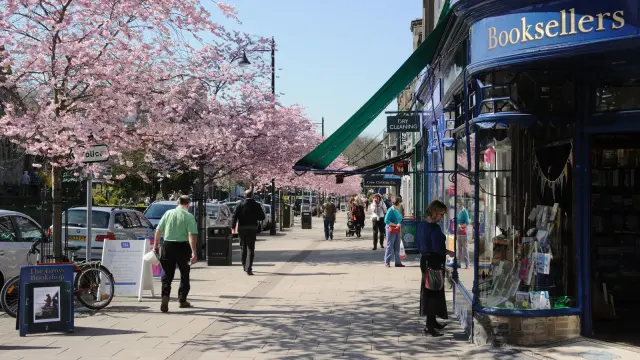
For travellers, this is a good excuse to spend a day in Hampstead rather than just passing through. The High Street itself is one of the more attractive high streets in London — low-slung Georgian and Victorian buildings, independent shops, and pubs like the Holly Bush and the Spaniards Inn, the latter a 16th-century inn where Dickens and Keats drank and which appears in 'The Pickwick Papers'.
Pair the Cohen connection with Hampstead's other literary pulls: Keats House, where the poet lived from 1818 to 1820 and wrote much of his best-known work; Kenwood House on the edge of the Heath, with its art collection and free entry; and the burials of Hampstead Parish Churchyard, where the painter John Constable lies. Round it off with a walk up to Parliament Hill for one of the best free skyline views over central London.
Why it matters: most visitors tick off Camden Market and the Heath and leave. Knowing the Cohen story gives you a route through the village streets — the High Street, Flask Walk, Well Walk — with an actual thread to follow. It's a self-guided afternoon that costs nothing and shows a side of London most tourists never see.