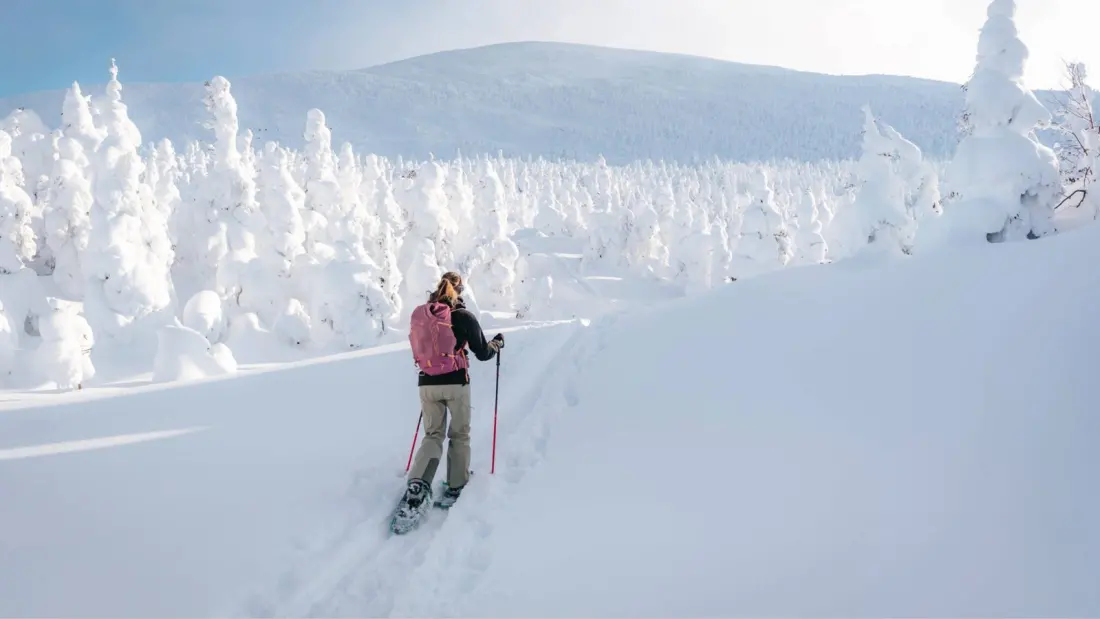
Ninety-two percent of Québec is public land, and when winter buries those millions of acres in snow, the province turns into one of North America's most accessible cold-season playgrounds. Unlike much of the continent, where backcountry terrain requires serious logistics, Québec has spent decades building infrastructure that lets you ski, skin, or snowshoe deep into the woods without giving up plumbing, signage, or a woodstove at the end of the day.
The numbers back it up. The province runs 28 national parks, dozens of Nordic and cross-country centres, and a scatter of grassroots backcountry ski areas with trail maps and marked runs. These sites sit somewhere between sidecountry and full-on backcountry: there's no avalanche mitigation, so you still need proper training, safety gear, and awareness, but parking, signposting, and basic facilities remove most of the friction. Travellers who'd rather go with an expert can book operators certified through Aventure Écotourisme Québec's Quality-Safety programme, which sets standards for guide training and risk management.
For a mix of everything, Vallée Bras-du-Nord is the standout example: an all-season adventure centre pairing groomed cross-country trails with designated backcountry slopes, plus a stock of yurts and cabins that make it a genuine ski-in, ski-out stay. Prefer something quieter? Sommets du Fjord, a blues-and-blacks ski zone just outside the village of Petite-Saguenay, sits at the edge of Saguenay Fjord National Park — handy if you want to combine ski touring with snowshoeing in the same trip.
The real draw, though, is the multiday option. Hut systems in parks like Mont-Tremblant and Monts-Valins make it straightforward to link refuges by Nordic ski or snowshoe, cooking dinner and drying gear by a woodstove before setting off again. In the Laurentians, village-to-village routes along Les Routes Blanches let you fold in local food, drink, and small-town culture between legs of the trip.
Winter travel here isn't a modern invention, either — Indigenous peoples were moving through this territory on snowshoes long before it became recreation, and that heritage shapes a province where getting around on snow is simply part of life. Add in welcoming villages, cozy inns, and a strong local food-and-brew scene, and you have a rare thing: a wilderness destination that doesn't feel punishing.
If you've been eyeing hut-to-hut touring in Europe but balking at the cost, or want a first step into backcountry touring without full expedition logistics, Québec is an unusually easy entry point. Fly in, rent gear, pick a park, and you can be eating dinner in a trail-side refuge within hours of landing.