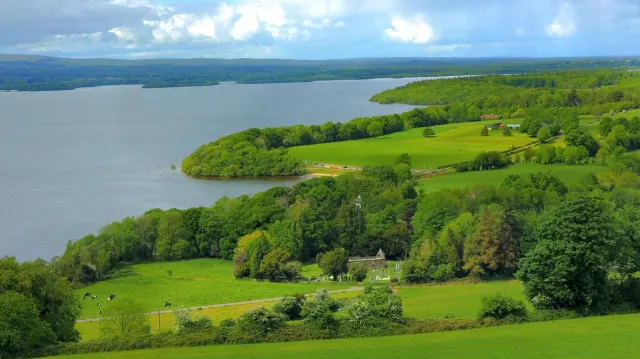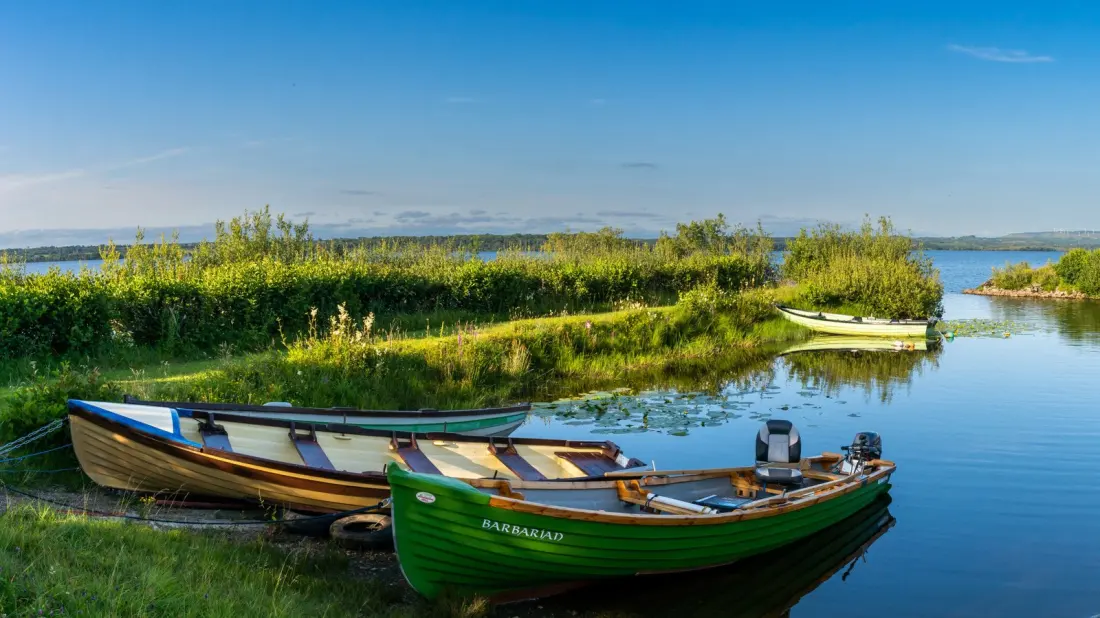
Straddling the border between Northern Ireland's County Fermanagh and County Leitrim in the Republic, Lough Melvin is a 5,428-acre glacial lake where anglers can catch two trout species that exist natively nowhere else. The sonaghan and gillaroo colonised the lough when meltwater filled it around 13,000 years ago, and they remain genetically distinct to this day — a living quirk of evolution you can hook from a wooden boat.
The gillaroo is the odder of the two: golden-scaled with red spots, it has evolved an unusually muscular stomach to crush snails, and it hunts in the shallows. The sonaghan, black-speckled and reaching about 2.5 pounds, chases water fleas in open water and has a reputation among locals for fighting hard. Neither grows huge, but that's not really the point. The lake also holds ferox trout up to 15 pounds, standard brown trout, Arctic char in the cool depths, and Atlantic salmon that run from February 1 to September 30.
The fishing is exceptional largely because the water is so clean. Limestone throughout the basin filters the water as it percolates through, keeping the lough remarkably clear and preventing the algae blooms that plague less pristine lakes. Northern Ireland's environment department specifically highlights its lack of pollution.
Timing matters. June and July are prime months for gillaroo and sonaghan, while April and May suit the early trout season. Base yourself in one of the angling villages on the shore — Garrison, Rossinver, or Kinlough — where places like Melvin Country House overlook the water and host competitors in the annual Lough Melvin Open Trout Angling Championships.
The border cuts through the lake, which creates the trip's main administrative wrinkle: you may need licences from the Republic, from Northern Ireland, or from both, depending on where you cast. Around a third of the lough is managed by the Rossinver Fishery, which offers the best fly fishing for salmon, and Garrison waters require permits from Garrison Anglers. The easiest fix is hiring a "gillie" — a local guide who sorts permits, knows where the fish hold, and can arrange a boat. Inland Fisheries Ireland publishes a list of local gillies. Boats are available to rent in all three villages, and they're part of the appeal: traditional wooden craft lacquered in rich colours. Shore fishing is possible in spots, but you'll get far more from the lake afloat.
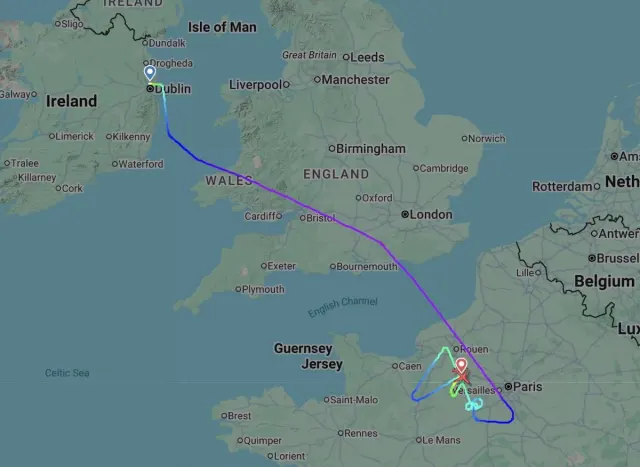
Lough Melvin sits a few hours from Dublin Airport by car, so renting a vehicle is the practical option for international visitors. If you're building a longer angling trip, the source suggests adding Pollaphuca Reservoir, Ireland's largest artificial lake, which combines fishing with hiking and mountain scenery.
This one is for anglers first — the chance to catch fish with a 13,000-year story attached is genuinely rare — but the surrounding fens, hills, and quiet villages also suit anyone after a slow, scenic corner of northwest Ireland that most tourists drive past.