A routine Dublin-to-Rome hop turned into a nearly 12-hour odyssey that ended right back where it started — and sparked a fight between European pilots and military authorities that could have lasting consequences for how bomb threats are handled.
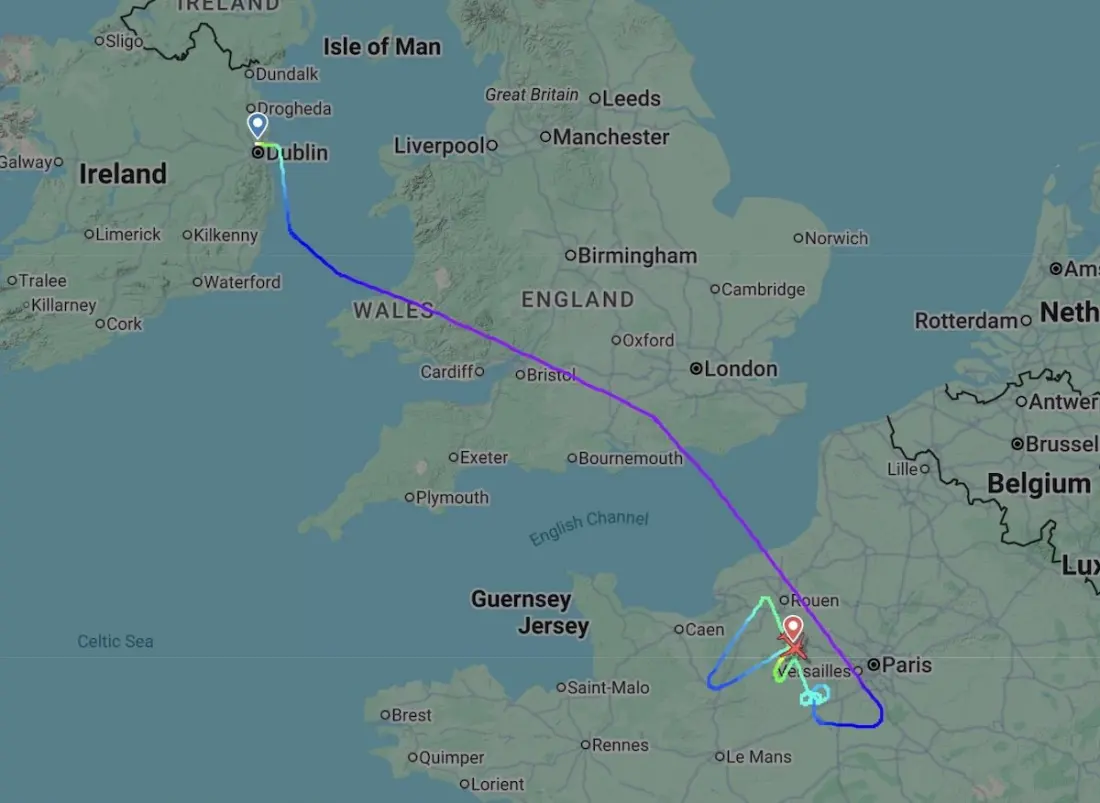
On Thursday, November 5, an Aer Lingus Airbus A320 operating flight EI402 from Dublin to Rome was just past Paris when French fighter jets intercepted it and ordered it to divert to Évreux-Fauville Air Base, a military field in Normandy. The aircraft was one of dozens caught up in a wave of hoax bomb threats that swept Europe that week, forcing diversions and cancellations across the continent.
The A320 landed at the Normandy base at 10:05AM, roughly two and a half hours after leaving Dublin — ironically about the same flight time it would have needed to reach Rome, thanks to a lengthy holding pattern. Later that day the plane flew back to Dublin, so passengers spent close to 12 hours in the air or onboard and never got to Italy. On an A320 with no Wi-Fi and no power ports, that's a grim day out.
What makes this incident different from an ordinary diversion is what happened before landing. According to the European Cockpit Association, which represents more than 44,000 pilots across Europe, the Aer Lingus crew didn't want to land at Évreux-Fauville at all. They had no aeronautical charts or operational information for the military airfield and didn't consider it safe. They asked for an alternative airport instead — and were refused. Worse, the union says the pilots were threatened with criminal prosecution if they didn't comply.
The ECA, together with the Irish and French pilot unions IALPA and SNPL, is now publicly sounding the alarm. Their argument is straightforward: the captain is the person best placed to judge whether a diversion airport is actually workable, weighing aircraft performance, charts, airport suitability and ground support. Threatening criminal charges against pilots acting to protect their passengers, the unions warn, risks undermining aviation safety and the cooperation between flight crews and authorities that safety depends on.
For travellers, this is more than an aviation-industry squabble. Hoax threats are expensive and exhausting for passengers — in this case a lost day and a return to square one — and it's worth knowing that even under military escort, crews may be pushed toward airports they consider unsafe. Whether the pendulum should swing toward military command or the captain's judgement is now the question the unions want answered, and it will likely shape how the next wave of threats gets handled.