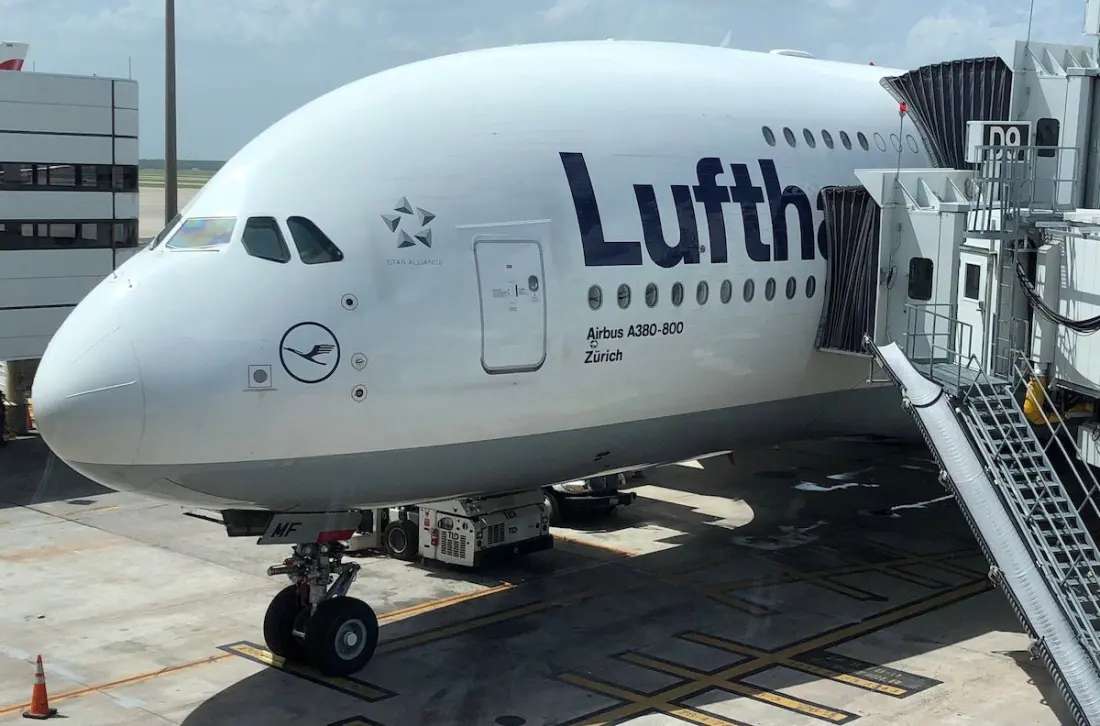
A routine departure out of San Francisco turned into an air traffic control debate after the crew of a Lufthansa Airbus A380 complained — on frequency and in writing — about a 17-minute wait for takeoff clearance.
The incident involved Lufthansa flight LH459, scheduled from San Francisco (SFO) to Munich (MUC) with the A380 registered D-AIMM, on October 9. Because aircraft were landing at the same time the jet was ready to depart, the plane had to hold short of the runway until a gap opened between arrivals. That gap took 17 minutes to materialise — long enough for the crew to ask the tower how much more delay to expect, and later to press the departure controller on whether approach and tower were coordinating departures at all.
The exchange, captured in ATC audio, got pointed. The pilots noted that a 17-minute hold for the world's largest passenger airliner "costs tons of fuel" and said they would file an official report to get it "clarified for future takeoffs." The departure controller, for her part, was largely unmoved, suggesting the crew take the matter up with the tower next time before handing them off to Oakland center.
So is the complaint fair? Both sides have something going for them. Holding a super-heavy jet at the runway for a quarter of an hour does burn significant fuel, and tight coordination between approach and tower can genuinely reduce those waits. On the other hand, at a busy US airport during peak periods, short holds are the norm rather than the exception — and spacing arriving traffic is a constant balancing act. Creating gaps for departures has its own costs, whether in fuel burned by aircraft holding elsewhere, longer routings, or reduced runway throughput. A 17-minute wait, while annoying, is hardly an outlier.
There's also a cultural read here that's hard to ignore: a German flag carrier crew, accustomed to slot-driven European operations, pushing back against the more improvisational American approach to sequencing. The counterpoint is that Europe's system isn't exactly frictionless either — miss a departure slot there by a couple of minutes and you can find yourself waiting hours for the next one.
For travellers, the practical takeaway is modest but useful: don't be alarmed if your flight sits near the runway for 15 or 20 minutes at a busy US hub like SFO. It's routine sequencing, not a mechanical or safety issue, and it doesn't mean your connection is doomed — though tight connections at peak hours are always worth padding.
Whether Lufthansa's report leads to any change in how SFO coordinates departures remains to be seen. Most likely it'll end up as another entry in the long-running conversation about how US air traffic control could run more efficiently — a debate that won't be settled by one frustrated A380 crew, however politely they made their case.