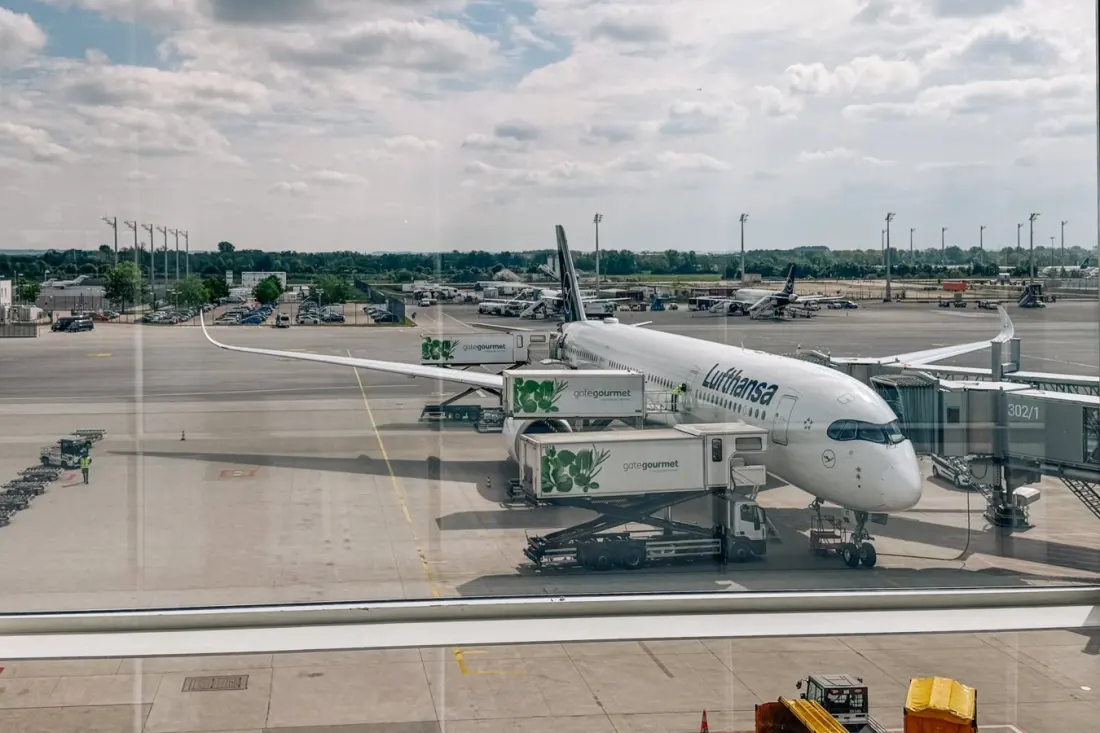
Phoenix is getting its first-ever Lufthansa route. From August 3, 2027, the German carrier will run nonstop flights between Phoenix Sky Harbor (PHX) and Munich (MUC) three times a week — Tuesdays, Fridays and Sundays — using an Airbus A350-900. It's the first time the airline has served Arizona, and it gives Phoenix travellers a direct gateway to Bavaria plus easy connections across Europe and beyond through one of Lufthansa's biggest hubs.
The A350-900 on this route will be configured with 48 business class suites, 21 premium economy seats and 224 economy seats. One caveat for those who chase the newest products: the aircraft won't have Lufthansa's updated Allegris interiors, so business class will be the previous-generation suite rather than the flashy new one rolled out on other routes.
The Phoenix announcement came just a day after Lufthansa revealed another first: a nonstop from Columbus, Ohio, to Europe. Combined with its sister carriers across the group, Lufthansa will now serve 26 U.S. destinations. Seattle is also changing — Lufthansa's Seattle-Munich and Seattle-Frankfurt flights move to Discover Airlines, the group's leisure subsidiary, on an Airbus A330 with the same weekly schedule. Note that Discover isn't in Star Alliance, so loyalty perks, including earning and status benefits for United MileagePlus members, aren't guaranteed on those flights.
Phoenix is part of a broader pattern. Air France, British Airways, Iberia, KLM and the Lufthansa group have all been pushing into smaller and mid-sized U.S. cities — Minneapolis, Nashville, Pittsburgh, Raleigh-Durham, St. Louis and San Diego have all recently landed new transatlantic routes. Fuel-efficient jets like the A321XLR and Boeing 787 make these routes profitable without needing a jumbo jet's worth of demand, airport incentive deals sweeten the math, and Americans keep booking Europe in record numbers. The big European carriers can also lean on their U.S. joint venture partners — Delta for Air France-KLM, American for British Airways and Iberia, United for Lufthansa — to fill connecting traffic. U.S. carriers themselves have announced their own Europe expansions for 2027, so competition on these routes should keep fares reasonable.
For Phoenix-based travellers, the route removes a long-standing pain point: until now, getting to Europe usually meant a connection through Dallas, Los Angeles, Denver or the East Coast. A direct Munich flight puts central Europe within one hop — Munich itself for beer gardens and Alpine day trips, or onward connections to Italy, Central Europe and the Middle East. Return travellers from Europe get a convenient entry point to the American Southwest. Book early once tickets go on sale; new routes from secondary U.S. cities often launch with competitive introductory fares.