A powerful magnitude 7.6 earthquake struck central Panama on Friday morning, sending people running from buildings in the capital and triggering a tsunami warning that stretched along the Pacific coast from Guatemala to Ecuador.
The US Geological Survey put the epicentre around 10 kilometres southwest of Pitaloza Arriba, a remote community in Herrera province, at a shallow depth of just 10 kilometres. Shallow quakes like this one are typically felt more strongly at the surface.
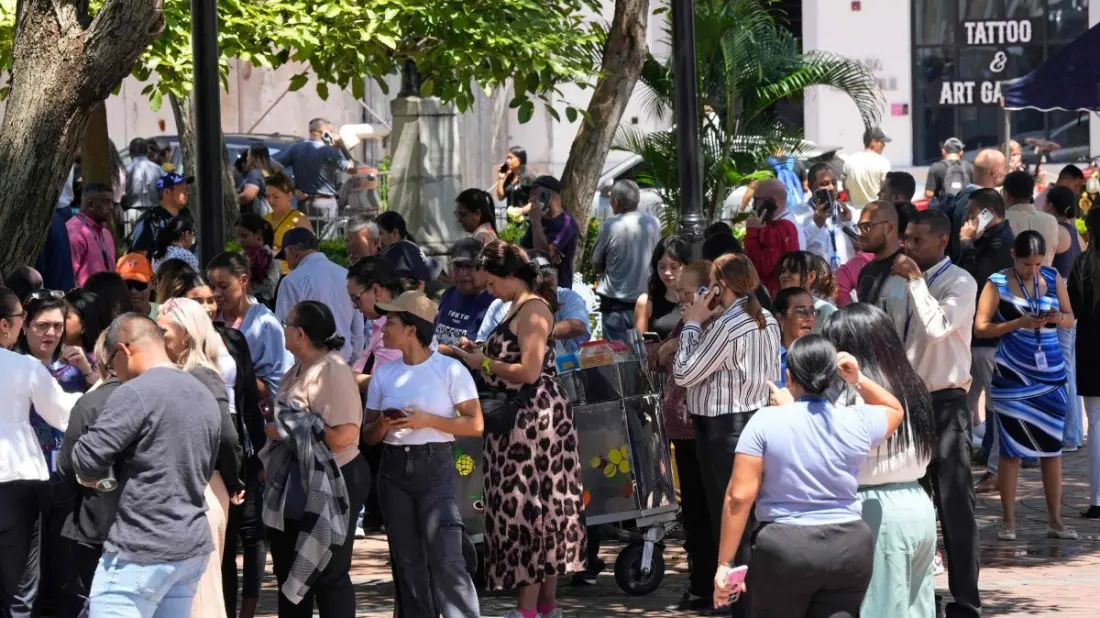
Panama City residents poured into the streets as buildings swayed, though the capital's skyscraper-heavy skyline appears to have come through unscathed. Omar Smith of the National Civil Protection Service said damage was concentrated in the central provinces of Veraguas, Herrera and Los Santos rather than in Panama City itself.
The most dramatic images came from Penonomé in Coclé province, where local broadcasters showed a Catholic cathedral collapsing and part of a hotel facade crashing onto a parked car. No casualties were reported in the immediate aftermath, though officials were still assessing the area near the epicentre. Aftershocks continued through the day.
Among those rattled was 60-year-old Rosendo Domínguez from Herrera province, who told the Associated Press the quake knocked items from his kitchen shelves and left everyone outside and frightened.
The National Weather Service issued a tsunami warning covering the coasts of Panama, Colombia, Ecuador, Nicaragua and Guatemala. President José Raúl Mulino moved quickly to calm nerves, posting on X that the event "should not be used to cause alarm or disorder."
Tremors crossed the border into Colombia, a reminder of how widely a quake of this size can be felt. Panama sits on the Pacific "Ring of Fire," the 40,000-kilometre arc of volcanoes and fault lines responsible for most of the world's earthquakes.
For travellers, the practical takeaway is that Panama's main tourist infrastructure — Panama City, the canal area, the Caribbean islands of Bocas del Toro — was not the zone of worst impact. The affected provinces are the country's quieter central interior, popular mainly with domestic visitors and road-trippers crossing the Azuero Peninsula. If you have trips booked to central Panama in the coming days, expect disrupted roads and possible aftershock activity, and keep an eye on official Civil Protection updates. Anyone on the Pacific coast should treat tsunami advisories seriously until they are formally lifted.