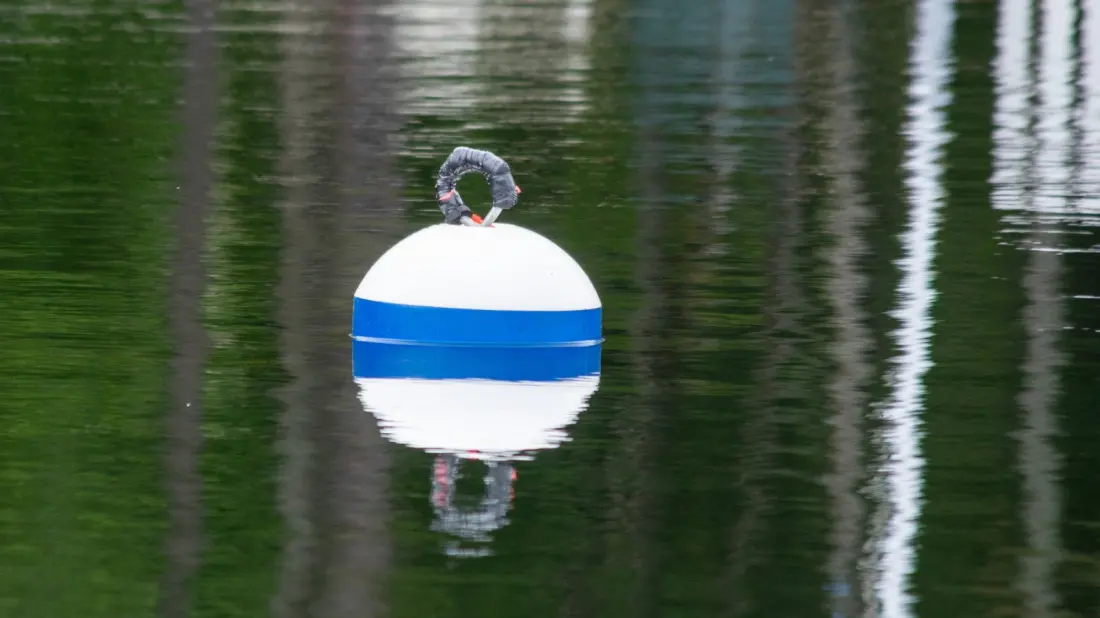
Spotting a white buoy with a horizontal blue band on US waters means one thing: this is where you can park your boat. Mooring buoys are the only buoys a vessel may legally tie off to in the United States — everything else on the water is there to direct traffic or warn you off, not to welcome you.
The system is simple but worth understanding before a sailing trip. In calm water, such as inside a marina, mooring buoys are usually ball-shaped; in rougher water they may be tapered or conical for stability. Each one is fixed to the seabed with a heavy chain and anchor, giving boaters a permanent, secure point to attach to instead of dropping their own anchor. That has two big benefits: it protects fragile seabed habitat such as coral reefs from repeated anchor damage and scraping, and it creates organised, safe parking in cramped or busy marinas.
A cluster of these buoys is called a mooring field, and approaching one takes care. Come in slowly at idle speed, reading wind and current as you go — there's a chain running from each buoy to the bottom, and stray lines can easily foul a propeller. In popular areas, swimmers and snorkellers often share the water, so keep the speed down and eyes up.
The etiquette around grabbing a buoy trips up newcomers. An empty buoy isn't automatically yours: some mooring fields are first-come, first-served, but many require reservations, so check with the harbormaster or marina office first. Once you have clearance, approach from downwind or downcurrent, and don't jump in and swim to the buoy. The standard move is to idle alongside, snag the buoy with a boat hook, run your mooring line through its eye, and cleat it off on your own boat.
One last thing for anyone planning a sailing holiday abroad: the white-and-blue scheme is a US convention. Other countries use different colours for their mooring buoys, so don't assume a blue band means the same thing everywhere. In US waters — whether you're hopping between coastal marinas or tackling a long route like America's Great Loop — you now know exactly what those blue-banded spheres are telling you.
Why should a holidaymaker care? If you're chartering a boat or joining a sailing trip, this is basic water literacy. Knowing which buoy to tie up to — and how to do it without wrapping a chain around your propeller or taking someone else's reserved spot — keeps you legal, safe, and on good terms with the harbormaster. Even if you never helm a vessel yourself, understanding the mooring field explains why your skipper circles slowly and why you shouldn't swim near those buoys with lines attached.