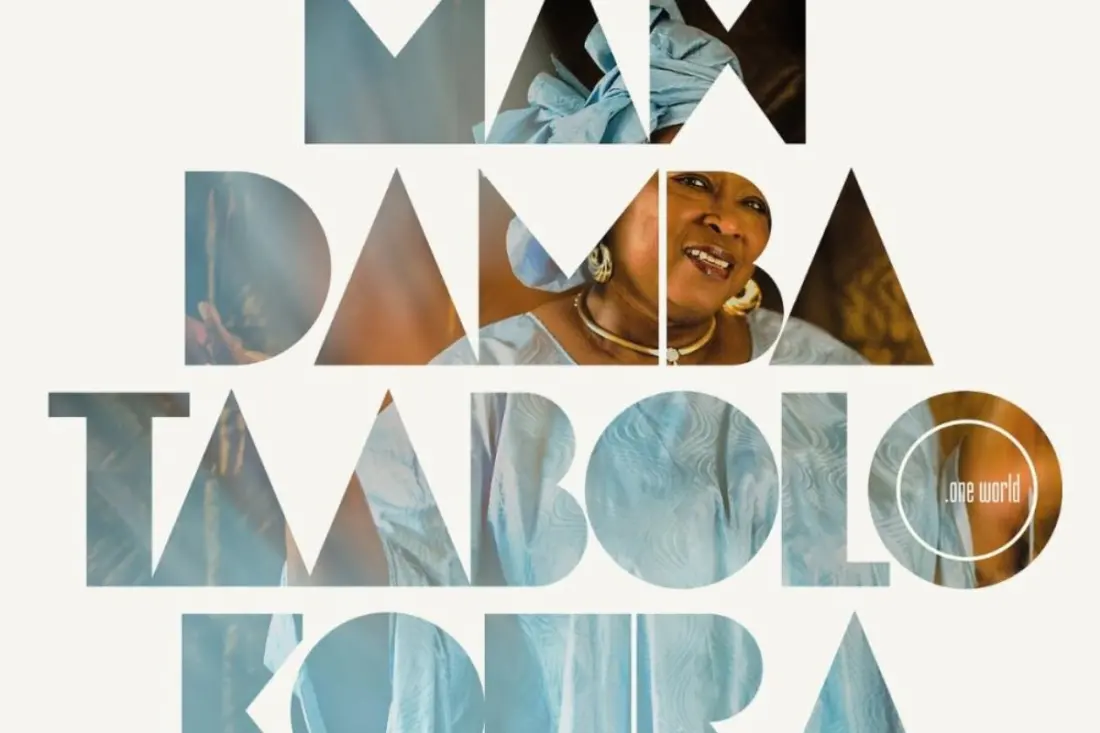
Mali has produced some of Africa's most celebrated musicians, yet one of its finest griot singers remains under the radar internationally. Mah Damba, born in 1965 and niece of the legendary Fanta Damba, spent years in the late Kassé Mady Diabaté's ensemble and led her own band with her husband, the ngoni player Mamaye Kouyaté, until his death in 2009. She then stepped back from performing for a quieter life in Paris. A new ensemble, assembled with producer and guitarist Thierry Fournier, has finally lured her back to the stage.
Her comeback album, Tabaa Kouro on the One World Records label, is already riding high on the World Music Charts. The sound is built on Malian tradition — ngoni, calabash, talking drums, acoustic and electric guitars — with the occasional accordion, an instrument her grandfather apparently favoured though it's rare in Malian music. There are terrific tracks, particularly the Arabic-flavoured Katakala and the melancholic Simbo, alongside slow burners that showcase her rich alto alongside call-and-response harmonies from her daughters and granddaughters, plus her son's guitar. The record is engineered by Jean Lamoot, who has worked with Mali's most famous musical export, Salif Keita.
Despite a long career, Damba has released just eight albums — possibly one reason she hasn't matched her aunt's international recognition. That looks set to change. For travellers, this is timely listening: griot music is an oral history tradition in the Bambara language, and understanding it deepens any visit to Mali's music-mad capital, Bamako, where live griot performance remains part of everyday life.
If West African music hooks you, the same column points to Smithsonian Folkways' reissue of the classic 2003 Blues Archive. It's a fine primer on the deep links between West African music and the blues, spanning styles from the Delta to St Louis, Texas and Chicago, with liner notes by Barry Lee Pearson. Highlights include Lead Belly, Sonny Terry and Brownie McGhee, Big Bill Broonzy, Lightnin' Hopkins and little-known gems from less famous musicians, newly available on vinyl and digitally after decades out of print.
Finally, a nod to the late Jay Maisel, the American photographer whose 50-year career produced some of jazz's most iconic images, including the well-known cover of Miles Davis's Kind of Blue. Maisel reportedly wanted the image sharper — as a concert photographer himself, he later lamented the softness — but the blur arguably adds to the mystique of one of jazz's greatest records.
For anyone planning a trip to Bamako or simply building a pre-trip playlist, Mah Damba's return is the perfect entry point into Mali's extraordinary musical heritage. Highly recommended, especially the track Koulouba Ya Maya.