
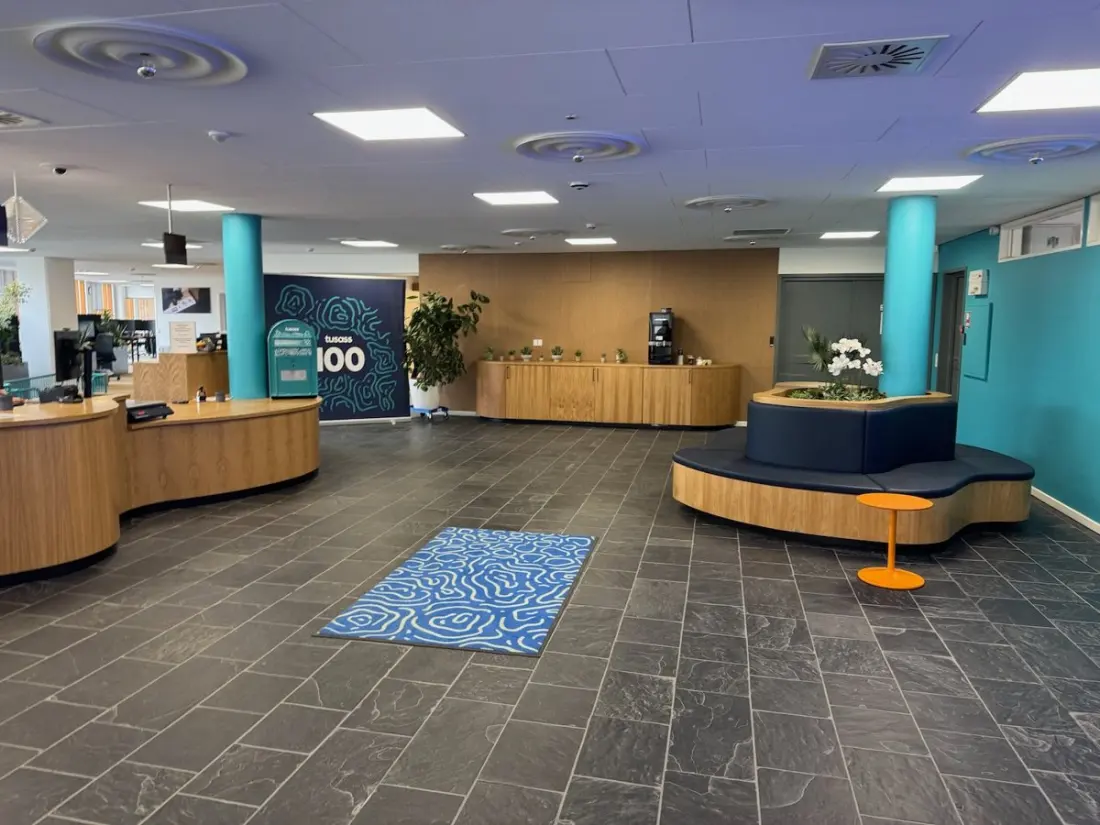
Sending a postcard home is one of those travel rituals that keeps slipping away — but in Greenland, it's still very much alive. A recent visitor to the capital, Nuuk, stopped by the post office on a final morning to mail two cards to the United States, and the experience turned out to be both a bargain-free education in Arctic logistics and a surprisingly painless errand.
The bill: 74 Danish kroner for two postcards, roughly $11.50. That works out to nearly six dollars a card, which stings a little until you remember that virtually everything leaving Greenland has to travel by air or sea across a very thin transport network. Island geography, even of the frozen kind, does not come cheap.
The mechanics were refreshingly simple. The post office opens at 9:00 am, and the process ran on a take-a-number system — slightly amusing when you're only the second customer of the day, but the wait was seconds. Payment was by contactless card, no cash needed, and no fumbling for stamps: the clerk simply took the cards, dropped them in a box, and the whole transaction wrapped in under a minute. No stamp was ever affixed.
The operation itself is run by Tusass, which doubles as Greenland's main telephone and internet provider. That makes the Nuuk post office less a standalone postal counter and more a hybrid service centre, where you can sort out telecom accounts alongside parcels and letters. It's an interesting model as post offices elsewhere shrink or get absorbed into supermarkets — in Greenland, the institution has broadened instead of disappearing.
For travellers, the takeaway is easy: if a physical memento appeals to you, budget a few extra dollars and a few spare minutes. A WhatsApp photo is instant and free; a postcard from the world's largest island takes its time and costs a small premium. But there's something fitting about that slowness when the place itself feels so far from everything else. Drop by the post office early in your Nuuk visit, bring a card, and your credit card — that's genuinely all you need.
This one's for the slow-travel crowd, the philatelists, and anyone who likes their souvenirs tangible rather than digital.