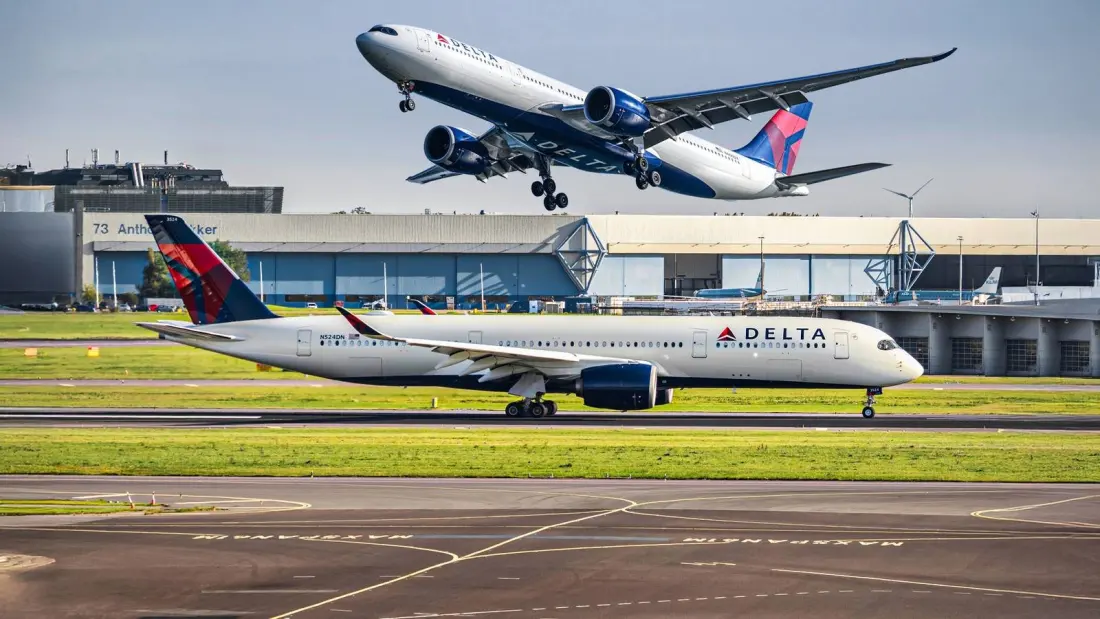
Delta Air Lines has quietly become the only US carrier operating both of Airbus' latest widebody families: the A350 and the A330neo. American, United and Hawaiian all once had orders for these jets — and all walked away. That leaves Delta in a unique position, one that will shape long-haul flying for US travellers for years.
The backstory is a series of strategic U-turns. American Airlines inherited 22 A350s when it merged with US Airways in 2013, but in April 2018 it cancelled the order and instead bought 47 Boeing 787s, betting on a simplified all-Boeing widebody fleet of 777s and 787s. Hawaiian Airlines swapped an A350-800 order for the A330-800neo in 2014, then scrapped that plan in 2018 in favour of ten Boeing 787-9s. United's saga is the messiest: it ordered 25 A350-900s in 2009, switched to the larger -1000, changed back in 2017 and grew the order to 45 jets — but deliveries have been repeatedly deferred, and by early 2026 the whole deal was clouded by a contractual dispute with Rolls-Royce, the A350's sole engine supplier.
Delta's Airbus roots go back to its 2008 merger with Northwest Airlines, completed in October that year. Northwest had flown A330s since 2004 on transatlantic and transpacific routes, handing Delta an established widebody platform it could build on. Delta later became North America's launch operator for the A330-900neo in 2019 and the first North American airline to fly the A350-900 in 2017.
Today the numbers are substantial: around 42 A350-900s (with 18 more on order), 39 A330-900neos, 31 A330-300s and 11 A330-200s. The A350-900, powered by Rolls-Royce Trent XWB engines, anchors Delta's transpacific expansion to markets like Seoul and Taipei, with four cabins from Delta One down to Main.
The next chapter arrives in early 2027, when Delta takes its first of 20 A350-1000s — ordered in January 2024 partly because of Boeing's delayed 777X. It will be the largest aircraft in Delta's fleet and the first A350-1000 flown by any North American airline. Delta says it burns over 20% less fuel per seat than the jets it replaces and will carry roughly 15% more premium seats, including a next-generation Delta One Suite with longer lie-flat beds.
For travellers, the plan is 'cascading upgauging': the biggest A350-1000s take the busiest international routes, freeing A350-900s to push into markets now served by ageing A330s and 767s. In practice that means more modern cabins, quieter cabins and better lie-flat premium options across Delta's long-haul network — especially to Asia and on transatlantic trunk routes — while rivals consolidate around Boeing.
If you're booking a long-haul trip in the coming years, checking the aircraft type before you book is worth a minute. On Delta, an A350-900 or -1000 tag now signals the airline's newest premium product; on American and United, you'll be flying a very different widebody experience.