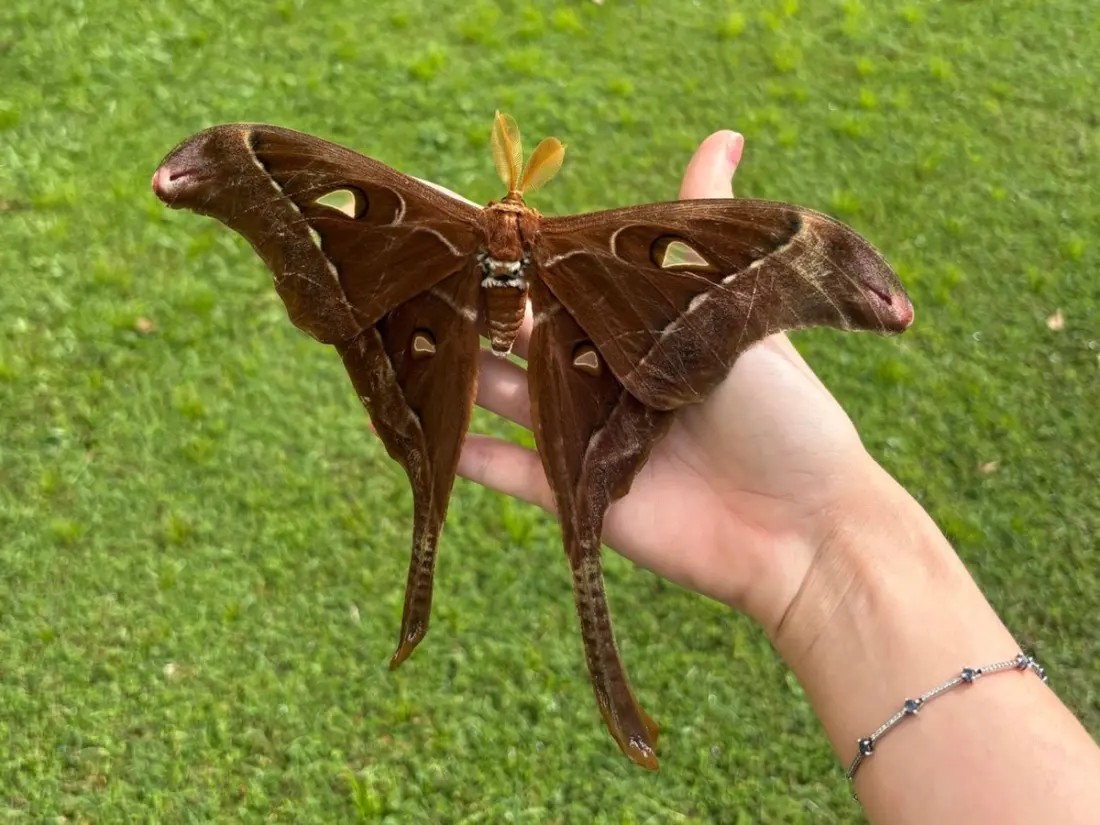
Some animal names oversell. This one doesn't. The Hercules moth (Coscinocera hercules), the biggest moth in Australia, spreads its wings to roughly 28cm across — about the size of a dinner plate — and it lives in the rainforests of Tropical North Queensland.
The story starts long before the wings, though. The caterpillar is a heavyweight in its own right, reaching around 10cm long, which puts it among the largest caterpillars on the planet. It spends about three months in that form, and nearly all of it is spent eating. The species isn't picky: it munches through a wide range of rainforest plants, moulting its exoskeleton six times as it grows — and eating that too.
Researchers think even its droppings play a role in the feast. Caterpillar frass may interfere with the chemical signals plants use to mount a defence against being eaten, potentially letting the caterpillars keep grazing without tripping the plant's alarm system. It's a neat example of how a rainforest food chain gets gamed.
All that size comes with risk, since a big, defenceless larva is an attractive meal. So the caterpillar hedges its bets. Fresh out of the egg it's pale, looking like something you wouldn't want to eat, then its colour shifts to match the foliage it lives on. Two large false eyes near its rear add another layer of confusion for predators. After the final moult, it seals itself in a pupa, its body is effectively dismantled and rebuilt, and out comes one of the largest moths in the world.
Even as an adult it plays defence with camouflage rather than muscle. The moth's colouring lets it press flat against tree bark and essentially vanish — a giant insect that survives by being sneaky rather than strong.
For travellers, this is a good reason to slow down in North Queensland's rainforests. Hercules moths are hard to spot precisely because they're so good at hiding, but they're there among the wet tropics between Cairns and the Daintree, and wildlife-focused lodges and butterfly sanctuaries in the region often showcase local species and their life cycles. Knowing what the caterpillar looks like — big, pale-to-leaf-green, with false eyes — turns a casual rainforest walk into a proper treasure hunt.
The takeaway? Australia's most impressive wildlife isn't all sharks and crocodiles. Sometimes it's a 28cm moth quietly impersonating a patch of tree bark while you walk right past it.
Story via Australian Geographic.