Most Brazil itineraries stop at Rio, the Amazon or the Pantanal. But the Guardian's travel writer has been trekking through Minas Gerais, a landlocked state bigger than mainland France and Switzerland combined, and it reads like one of the country's most rewarding journeys.
The hiking centrepiece is Santuário do Caraça, a 40-square-mile private nature reserve in rugged mountains. Guided by biologist Marcelo Vasconcelos, who has several new species to his name (including a cockroach named after him), the writer climbed Pico da Canjerana through cloud-draped grassland to find Drosera graminifolia, a rare carnivorous sundew, and spotted the rock tapaculo, a bird Vasconcelos himself discovered as a student. The lower slopes hold remnants of the Atlantic rainforest, once second in extent only to the Amazon and now roughly 85% felled. Morpho butterflies, marmosets and epiphyte-laden trees make what remains feel genuinely wild.
Caraça has an unusual origin: it began as a mission station around 1770 and is now a reserve where guests stay in a stone-built former seminary, cooking their own breakfasts on a huge wood-fired hotplate. The signature moment, though, happens at dusk, when wild maned wolves come to be fed at the chapel door — the writer calls it one of the finest wildlife encounters going.
The trip doesn't shy away from the state's darker side. Mining built Minas Gerais — its gold financed Britain's Industrial Revolution — but two catastrophic dam failures at Mariana in 2015 and Brumadinho in 2019 killed nearly 300 people and buried river valleys in toxic red mud. Tourism is one of the few economic counterweights, and the writer visits alternatives: Inhotim, a celebrated arts centre and botanic garden, a bee sanctuary, an agro-forestry farm, and the Alquimista Bistrô Secreto in Brumadinho, an intimate tasting-menu dinner for eight that needs booking well ahead.
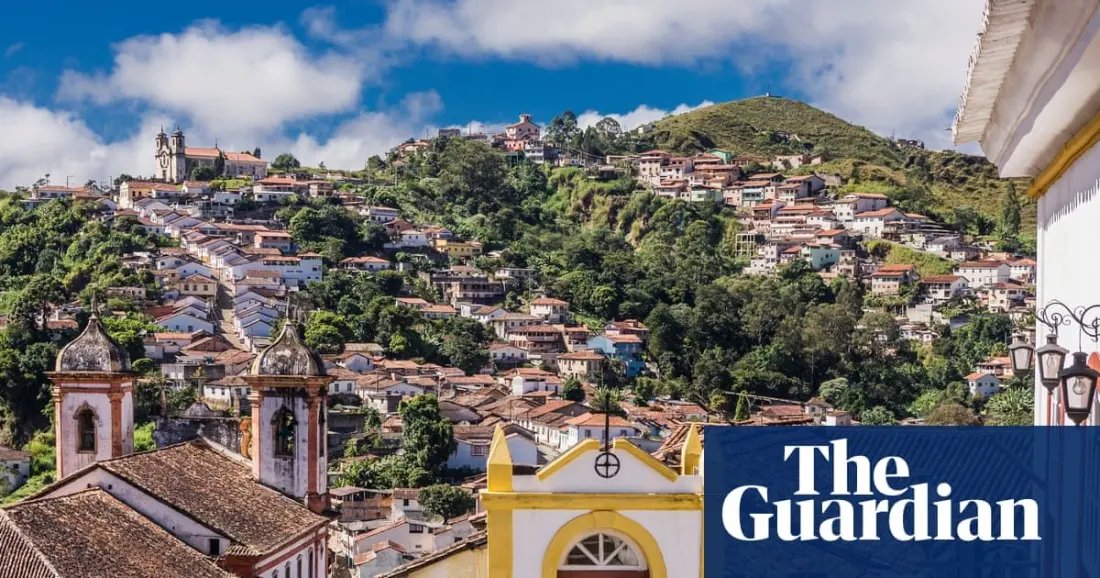
History runs deep here too. The baroque town of Ouro Preto, a product of the gold rush, is stacked with churches whose sculptures are caked in gold, much of it the work of Aleijadinho, an enslaved woman's son who became Brazil's greatest colonial sculptor. South of there, a quilombo village — founded by escaped slaves — offers a sobering visit to the fazenda the residents' ancestors fled, complete with the cellar where captives were held. Brazil abolished slavery only in 1888 and took more than four million captives, nearly half the transatlantic total.
For travellers, the practical route is straightforward: Sumak Travel and Viare Travel run five-night tailor-made tours from £1,050, covering Caraça birdwatching, an Ouro Preto city tour, the quilombo visit and Inhotim, with some meals included. TAP Air Portugal flies from London and Manchester to Belo Horizonte via Lisbon from £1,082 return. If you're going, pack a Brazilian birds field guide — the tapaculos alone justify it.