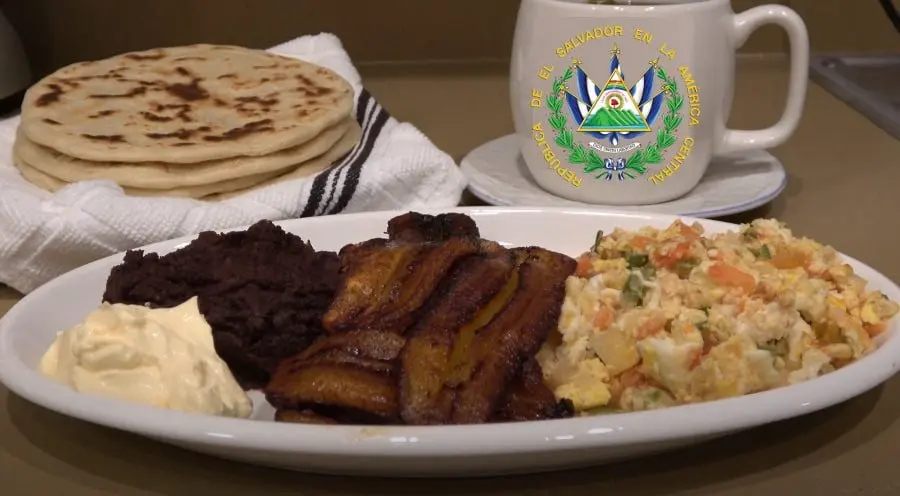
The desayuno típico is El Salvador's morning standard: eggs, red beans, fried ripe plantains, a spoonful of crema, fresh cheese and warm corn tortillas, all on one plate. It shows up everywhere — municipal market stalls, roadside comedores, sit-down restaurants — and no two kitchens plate it quite the same way.
The building blocks are simple but worth knowing before you order. Eggs come scrambled or fried, or as huevos rancheros with a tomato-based sauce. Beans appear either smooth (frijoles molidos) or thick and mashed (frijoles volteados), ideal for scooping with torn tortilla. Plantains are fried until caramelised at the edges, balanced by tangy crema and salty queso fresco. Watch the coffee: some places include it in the price, others charge separately.
Beyond the standard plate, breakfast options branch out. A heartier version adds sliced avocado or Salvadoran chorizo. Plenty of locals start the day with pupusas instead — revueltas (beans, cheese and chicharrón) or cheese with loroco, always with curtido, the pickled cabbage on the side. Tamales are another morning regular: tamal de elote is lightly sweet and good with crema, while tamal de gallina (chicken) is the more filling choice. For something light, bakeries sell Salvadoran quesadilla — not the savoury Mexican kind, but a sweet sesame-topped cheesecake that pairs perfectly with coffee.
Prices are refreshingly low by tourist standards. A basic desayuno típico at a market stall or local comedor runs roughly $2–4. The same meal in a sit-down restaurant is more like $5–9, depending on location and extras like chorizo, avocado or coffee. Check what's included before ordering so you're comparing like with like.
Why should a traveller bother seeking it out? Because it's a cheap, genuine window into everyday life. Beans cooked the previous day get reheated while eggs fry and tortillas warm — the kind of home-kitchen rhythm that defines Salvadoran cooking, where corn, beans and fresh dairy run through every meal from morning tortillas to evening pupusas. Sitting at a market comedor for breakfast puts you in the flow of vendors and shoppers starting their day, and gives you a base for exploring the rest of the country's food.
If you're heading to El Salvador, make market breakfasts a daily ritual: try the standard plate once, then work through pupusas, tamales and quesadilla on subsequent mornings. It's one of the cheapest ways to eat well anywhere in the Americas.