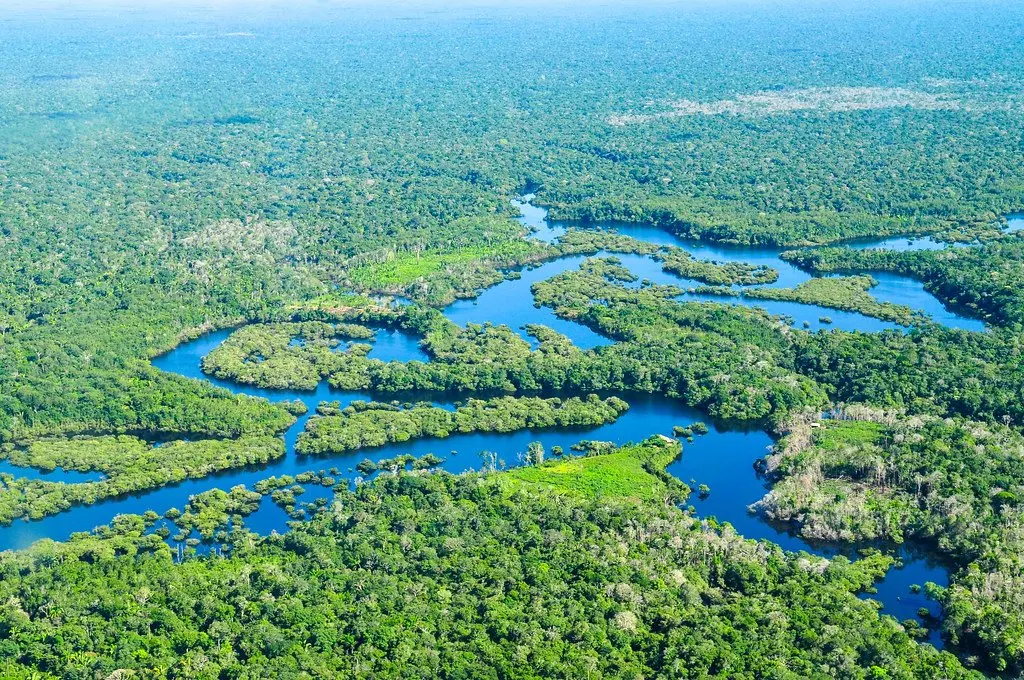
Lula's fourth-term victory has been read as a reprieve for the Amazon, but researchers are warning travellers and climate watchers alike that the rainforest's fate is far from settled. Speaking to Brazil Reports, Cristina Leme Lopes of the Climate Policy Initiative laid out why the presidential win only tells half the story.
The stakes are global. Roughly 60% of the Amazon sits inside Brazil, and scientists have long warned that unchecked deforestation and drought could push the forest past a tipping point — a state where it dries out and flips from absorbing carbon dioxide to releasing it.
There's good news on the executive side. Under Lula's current term, forest loss hit its lowest level since satellite monitoring began in 1988, with INPE data showing a 41.8% drop year on year. An analysis by Carbon Brief credits his policies with keeping at least 20,000 square kilometres of forest standing since 2023. That's a sharp contrast with the Bolsonaro years, when deforestation rose about 60%.
The problem is the legislature. Bolsonaro's Liberal Party won the most seats in both chambers, and the climate network Observatório do Clima found that nearly 70% of incoming lawmakers rate low on environmental commitment — every one of the PL's 28 senators scored "very low." Rules covering mining on Indigenous lands, protected areas, deforestation enforcement and land titles are all in the firing line. Worryingly, Lopes notes that even unpassed bills can do damage on the ground: just debating legalisation can embolden land grabbers to invade undesignated public forest — Brazil has about 48 million hectares of it, much of it in the Amazon.
Money complicates the picture further. Lula's COP30 in Belém put the Amazon centre stage, and climate finance has been flowing — the Amazon Fund approved a record R$1.3 billion in 2023, and the Netherlands recently pledged up to $500 million to the Tropical Forest Forever Facility. International donors are reassured by Lula's re-election, but a hostile Congress could dent their confidence.
Lopes also pushes back on the idea that protecting the forest costs the economy. Brazil's 2004 anti-deforestation plan saw Amazon destruction fall 82% over a decade while soybean production grew 94% and cattle numbers rose. The rainforest generates the rainfall that agribusiness itself depends on.
For travellers, this matters directly. The Amazon's health shapes river levels, wildlife encounters and Indigenous community visits in destinations like Manaus, Belém and the Rio Negro reserves — and ecotourism is itself one of the economic arguments for keeping the forest standing. With Lula sworn in January 5 and the new Congress seated in February, the next few months will show whether Brazil's environmental gains hold. Anyone planning a rainforest trip should watch that space, and consider spending their tourist dollars in communities whose livelihoods depend on an intact forest.