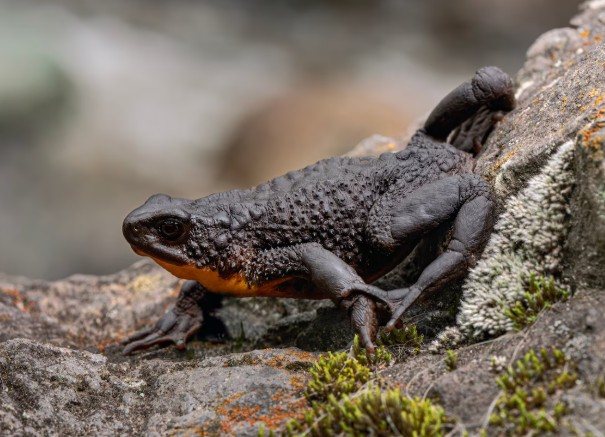
High in Ecuador's Cotopaxi province, a plan to widen the only road into the Angamarca River Basin has run into an unlikely obstacle: a small black toad with an orange-yellow belly, represented in court by its own legal team.
The Jambato harlequin toad was once so abundant that Spanish explorers and 1970s herpetologists described it in the hundreds and thousands. Then disease and hot, dry weather wiped it out — by the 1990s it was considered extinct, with the last confirmed sighting in 1988. In 2016, a 12-year-old boy from Angamarca found a live one, and the species became a symbol of hope. A 2021-22 survey by herpetologist Juan Guayasamín and colleagues counted just 71 toads in the valley; activists now estimate between 92 and 359 survive worldwide, all in this one basin.
The road project, approved in 2024, would link roughly 7,000 rural residents to markets, universities and emergency medical care. But blasting sent debris into the river that runs through the toad's only habitat. In September 2024, the conservation group Alianza Jambato, working with CEDENMA, asked a local judge to halt construction — filing not on behalf of residents, but on behalf of the toad itself. 'I'm the toad's lawyer. The toad is my client,' said Gustavo Redín, CEDENMA's vice president. Construction has been paused until proper environmental safeguards are in place.
The case matters because Ecuador's 2008 constitution grants nature itself rights to exist and thrive — a stronger legal footing than endangered-species laws elsewhere, which treat nature largely as a resource for human use. Around 24 countries had adopted some form of rights-of-nature law as of 2022, and places like Aruba and Ireland are weighing similar moves. But the Jambato case is a genuinely tricky test: earlier victories for nature usually also protected human interests, such as blocking a mine that threatened drinking water. Here, the community plainly needs the road, and rerouting it is expensive and impractical. Whether infrastructure and a species' survival can legally coexist is exactly what the courts must now untangle.
For travellers, the story is a window into a remote, little-visited corner of the Ecuadorian Andes — a landscape of steep slopes, farms and high páramo tundra — and into Alianza Jambato's community-based conservation, which includes local volunteers and 'toad day' celebrations for schoolchildren. Ecotourism-minded visitors interested in amphibian conservation will want to follow how this balance plays out; the outcome could shape how development and protection are reconciled across Ecuador.