If your image of Day of the Dead involves skeleton face paint and crowds, Cuenca will surprise you. Ecuador's Día de los Difuntos, held on 2 November, is a subdued, deeply felt occasion — and the city's historic Cementerio Municipal is the best place to experience it.
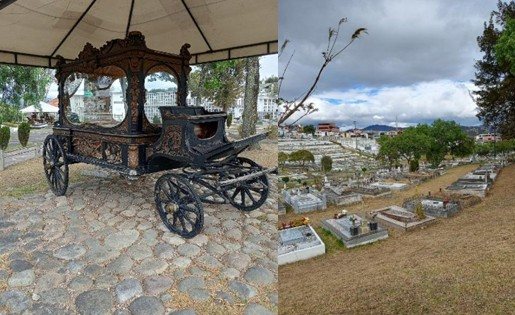
The cemetery dates to 1843, when it was created for residents who couldn't afford church burials or private plots. Its oldest section, the patrimonial cemetery, carries a blunt epitaph: greatness and pride end here, and equality begins. In 1930 it became the only permitted burial ground in Cuenca, and it was declared a National Heritage site in 2002. Today it covers nearly 18 acres, with paved walkways and signage that make it easy to wander unguided.
There's plenty to see beyond the graves. Antique horse-drawn hearses sit on display, alongside a pet crematorium and mausoleum, a Jewish cemetery, and a Greek-style ossuary where bones end up when families stop paying grave taxes — a common practice in Latin American cemeteries. The Eljuri family mausoleum looks like a miniature cathedral, complete with stained glass and mosaic tilework. Many tombs are multi-storey above-ground structures, some owned by families, neighbourhoods or even unions for taxi drivers, bus drivers and firemen.
Visit on or around 2 November and the streets outside fill with vendors selling flowers, candles, colada morada and guaguas de pan. The colada is a thick, warm purple drink made from mortiñas (tiny Andean blueberries), fruit pulp and purple corn flour; guaguas — Kichwa for babies — are bread rolls shaped like infants and decorated with icing, sold sweet or savoury in bakeries across Cuenca in the weeks before the holiday. After dark, families quietly clean and decorate graves amid candlelight, and the cemetery's Monumento de los Migrantes becomes the most moving sight: etched glass panels lit from below, showing endless lines of walking figures in memory of Cuencanos who emigrated and never came back.
Practicalities are simple. The main entrance is on Avenida Gonzales Suarez near Calle Octavio Diaz; not all gates are open at all times. Hours run roughly 8am to 6pm daily, extended on Día de los Difuntos. A guard at the entrance can answer questions, though he may check bags to guard against vandalism.
For travellers, this is a chance to see a South American Day of the Dead that's authentic rather than staged — no performance for tourists, just families, flowers, food and memory. Pair an evening visit with a cup of colada morada from a nearby bakery and you'll come away understanding Cuenca far better than any museum tour could manage.