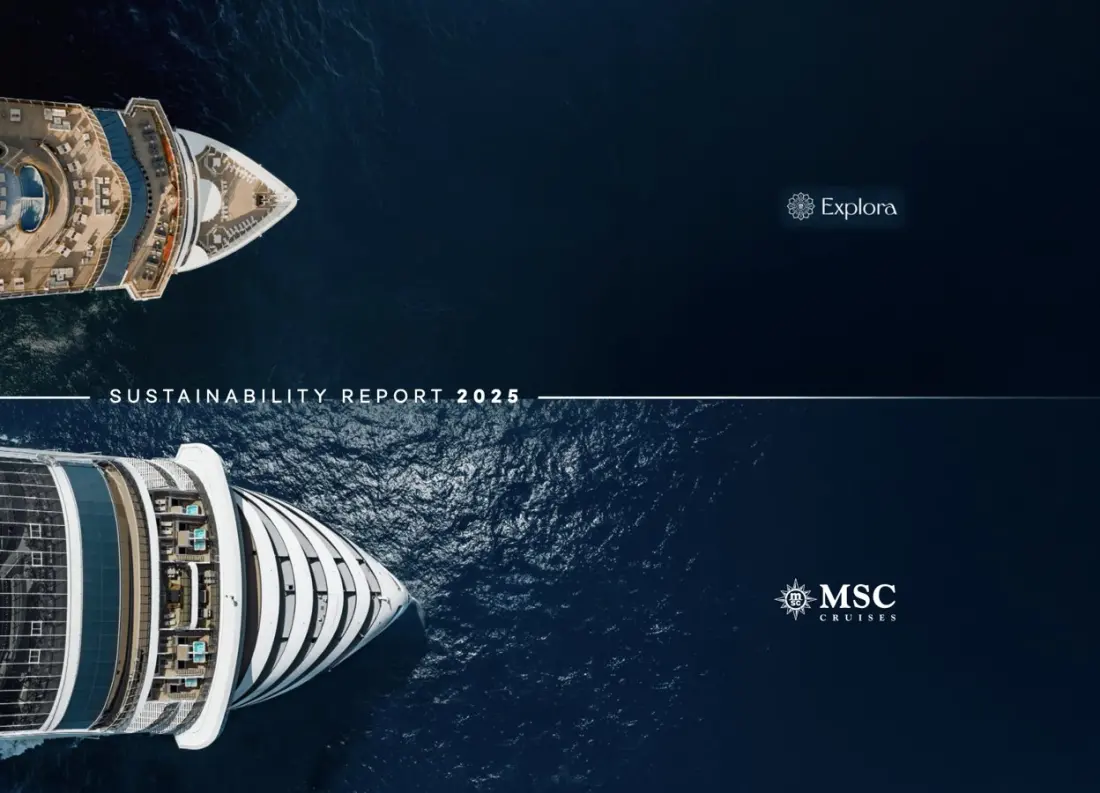
MSC Cruises and its luxury sister brand Explora Journeys have published their 2025 Sustainability Report, and the headline claim is a bold one: the cruise division of MSC Group says it is running five years ahead of schedule on its path to net-zero greenhouse gas emissions from marine operations by 2050.
Executive Chairman Pierfrancesco Vago framed the progress as part of a broader shift, pointing to the group's energy transition alongside investment in crew, closer work with the communities its ships visit, and a more structured approach to protecting marine biodiversity. In other words, the message to regulators and passengers alike is that the fleet can keep growing without abandoning its climate commitments.
So what does hitting a target early actually mean for the industry? Cruise decarbonisation is one of the hardest puzzles in travel. Ships can't plug into a grid mid-ocean, so lines are experimenting with a mix of tools: liquefied natural gas as a transitional fuel, shore power connections in port so engines can switch off at berth, more efficient hull designs, and bets on future fuels like biofuels, methanol and hydrogen-based options. When a giant like MSC — one of the world's largest cruise operators, with a young fleet that already includes gas-powered ships — reports it is beating its own timeline, it nudges rivals to keep pace and speeds up investment across the whole sector.
For Explora Journeys, MSC Group's upscale ocean line launched in 2023, the commitment matters at a more personal level. Luxury travellers increasingly ask hard questions about the footprint of a week at sea, and a brand that can show measurable progress — rather than vague pledges — has a genuine selling point. Expect the same scrutiny to shape how mainstream cruisers choose between lines in the coming years.
The honest caveat: 2050 is a long way off, intermediate milestones are what really test these promises, and emissions accounting in shipping is famously complex. Still, a major cruise group declaring itself ahead of plan is a better news cycle for the ocean than the alternative, and it gives travellers a concrete data point when comparing cruise lines on sustainability rather than marketing slogans.
If you're eyeing a cruise holiday and care about emissions, the practical takeaway is to look at the specifics: how new the ships are, whether the line uses shore power in ports, and whether it publishes detailed annual reporting like this one. MSC and Explora have just made that comparison a little easier.
This article is based on reporting by Porthole Cruise.