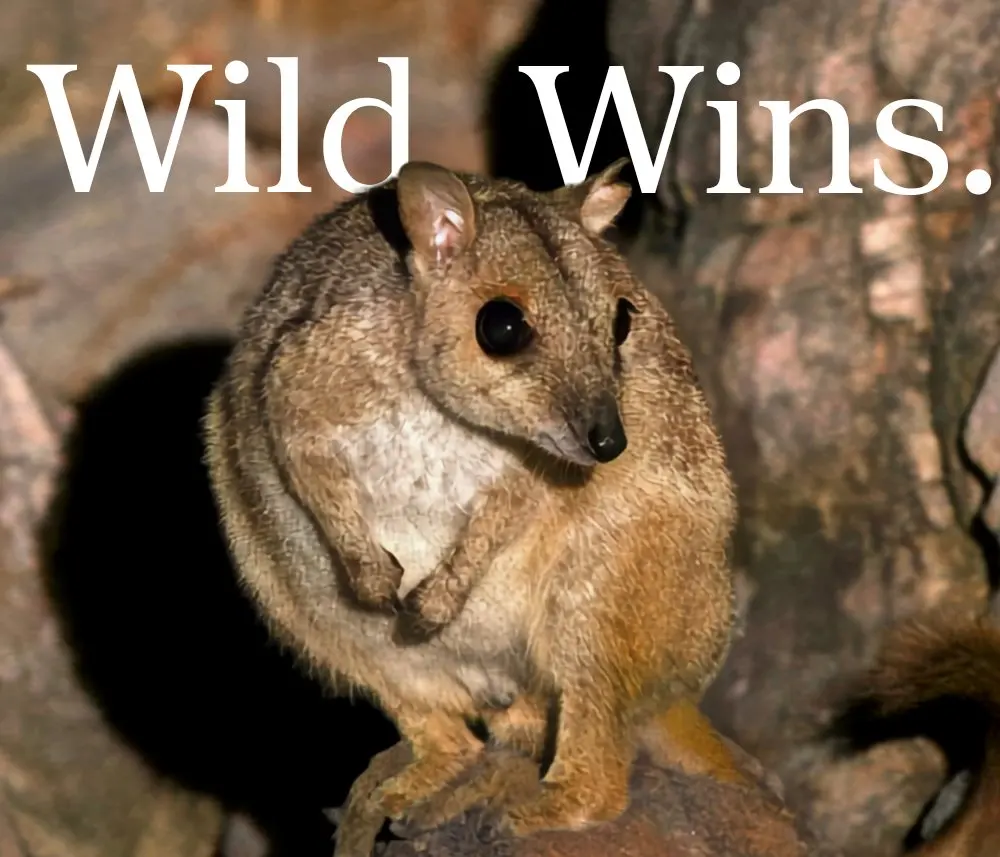
A wallaby the size of a loaf of bread has turned up alive on mainland Australia for the first time in half a century — and it's just one of several bright spots for the country's wildlife this month.
The nabarlek (Petrogale concinna), Australia's second-smallest wallaby at roughly 36cm and 1.2kg, hadn't been recorded on the mainland since the 1970s. Researchers from Australian Wildlife Conservancy, working with Dambimangari Aboriginal Corporation, confirmed it at two new sites on Dambeemangaddee Country along the Kimberley's west coast, including the Yampi Sound Training Area — a federal Threatened Species Action Plan priority zone. Confirming the finding took camera traps, scat collection and DNA analysis, since the species is nearly identical to two other rock-wallabies and lives in rugged, remote terrain. For travellers with an eye on the Kimberley, it's a signal this coastline remains one of Australia's healthiest and least-disturbed wild places.
The discovery anchors Australian Geographic's latest "Wild Wins" roundup, which also spotlights the Society's 2026 Awards for Nature. Announced at the Australian Museum in Sydney on 10 September, the awards distributed $150,000 across five projects — from the Australian Seed Bank Partnership's Gold-winning SeedReady Communities to Operation Crayweed restoring seaweed forests off Sydney — plus a surprise $50,000 to the Invasive Species Council for H5N1 bird flu preparedness. The program has now backed 13 projects with $400,000 since launching in 2024.
Two other wins touch travel and consumer habits directly. Coles and Woolworths have pulled krill oil supplements from their shelves, meaning two-thirds of Australia's supermarkets no longer stock the product. Krill populations near the Antarctic Peninsula may have fallen by as much as 80 per cent since the 1970s, and scientists point out algae-based omega-3 alternatives exist — though the tablets remain on sale at smaller retailers and pharmacies.
And in south-east Queensland, a lizard most Australians have never heard of is back from the brink. The Nangur spiny skink, found in just one patch of rainforest near Gympie, had collapsed to 26 wild individuals by 2023. A captive breeding program involving Queensland's environment department and Lone Pine Koala Sanctuary in Brisbane — which housed 35 of the lizards — has now produced more than 100 animals, with a wild release planned for later this year.
Why should holidaymakers care? Because these stories shape where you go and what you see. The Kimberley's nabarlek find reinforces the value of expedition cruises and Indigenous-guided tours on the Dampier Peninsula and west Kimberley coast. Lone Pine, a popular Brisbane day trip, now has a genuine conservation story behind its enclosures. And if you snorkel the waters off Sydney, Operation Crayweed is quietly rebuilding the kelp-like forests that make those dives worthwhile. Conservation dollars and visitor interest feed each other — the awards' supporters, including cruise line Coral Expeditions, are betting on exactly that.