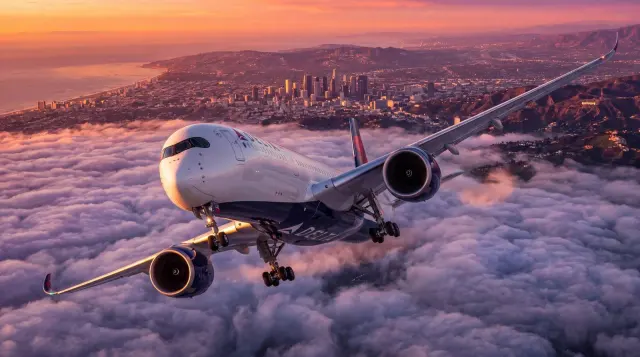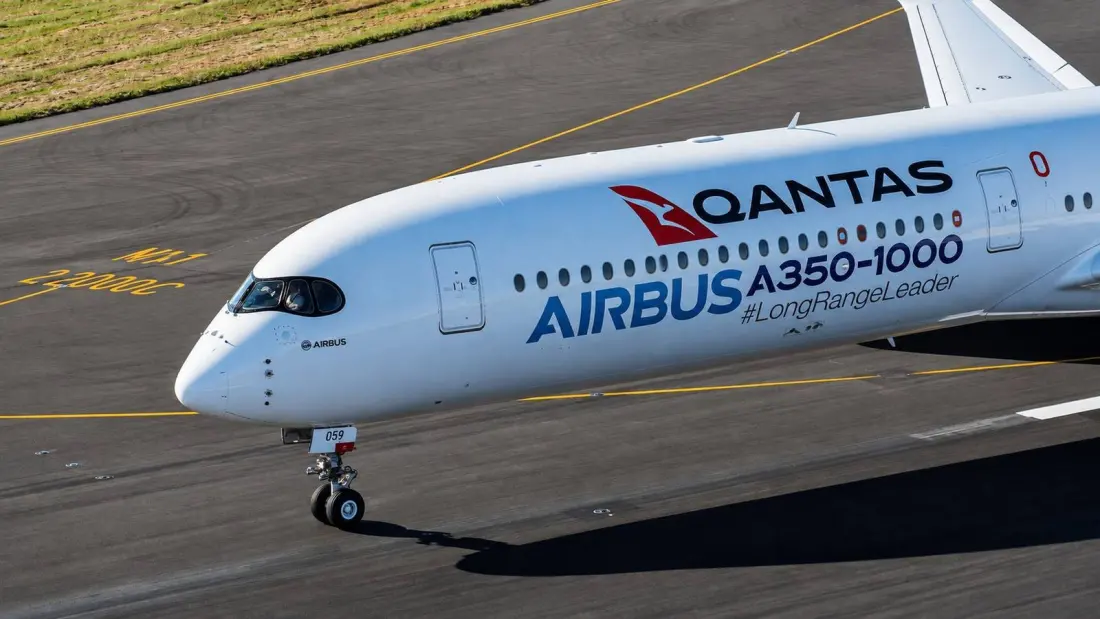
A record that stood for more than two decades has fallen. Airbus flew an A350-1000ULR nonstop from Melbourne to Toulouse in 24 hours and 24 minutes, covering a certified 14,388 miles (23,155 km) — enough to earn a Guinness World Record for the longest flight ever by a commercial airliner. The previous mark belonged to Boeing's 777-200LR demonstrator, 'Baby Blue 2', which flew 13,423 miles from Hong Kong to London in 2005. The timing was poetic: Airbus confirmed the new record exactly 21 years to the day after that 777 left Hong Kong.
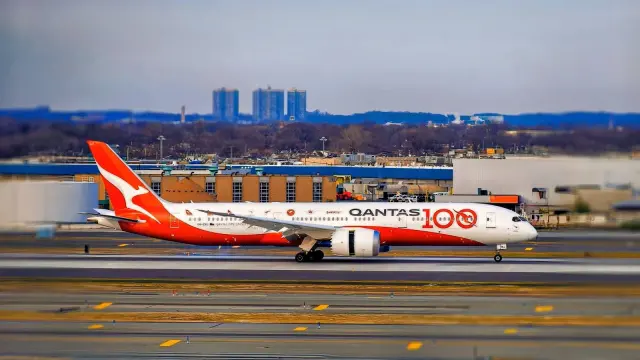
The record attempt, flown as AIB35LR on July 27–28, wasn't a stunt for its own sake — it was a key step in Qantas' Project Sunrise, the plan to connect Sydney with London and New York nonstop. The plane headed east over the Pacific, crossed North America and the Atlantic, and passed over London before landing in France, crossing three continents, two oceans, and giving its tiny onboard team two sunsets and two sunrises.
Just 13 people were aboard: Airbus test pilots, two Qantas pilots, engineers and a federation observer. The flight tested fuel management, cabin environmental systems and redesigned crew-rest areas, with pilots working staggered four-hour shifts — a dry run for the crew rosters Qantas will need on real 20-plus-hour services. Certification came after independent checks by the International Aeronautical Federation and Flightradar24; Airbus even had to correct its own figure upward by about 50 miles. The ULR variant gains roughly 1,000 nautical miles of range over the standard A350-1000 thanks to an added rear fuel tank holding about 20,900 litres.
For travellers, this matters because the aircraft doing laps of the planet in a day is the same one Qantas will put into scheduled service. The first delivery is expected in April 2027, with nonstop Sydney–London flights (QF1/QF2) launching in October 2027 — up to 22 hours in the air. Sydney–New York follows in mid-2028 at around 18 hours, killing off the traditional stopover entirely. Qantas has ordered 12 of the type, each with 238 seats, 98 of them premium, plus a dedicated Wellbeing Zone. The airline is training more than 360 pilots and 1,200 cabin crew, with simulator work already underway in Sydney, and expects roughly A$400 million in extra annual earnings once the routes mature.
If you've ever weighed a Singapore or Dubai stop against the exhaustion of a 22-hour direct flight, this is the story that decides how you'll fly between Australia and Europe by the end of the decade. The engineering question is settled; what remains is turning the world's longest flight into a comfortable, reliable daily operation.