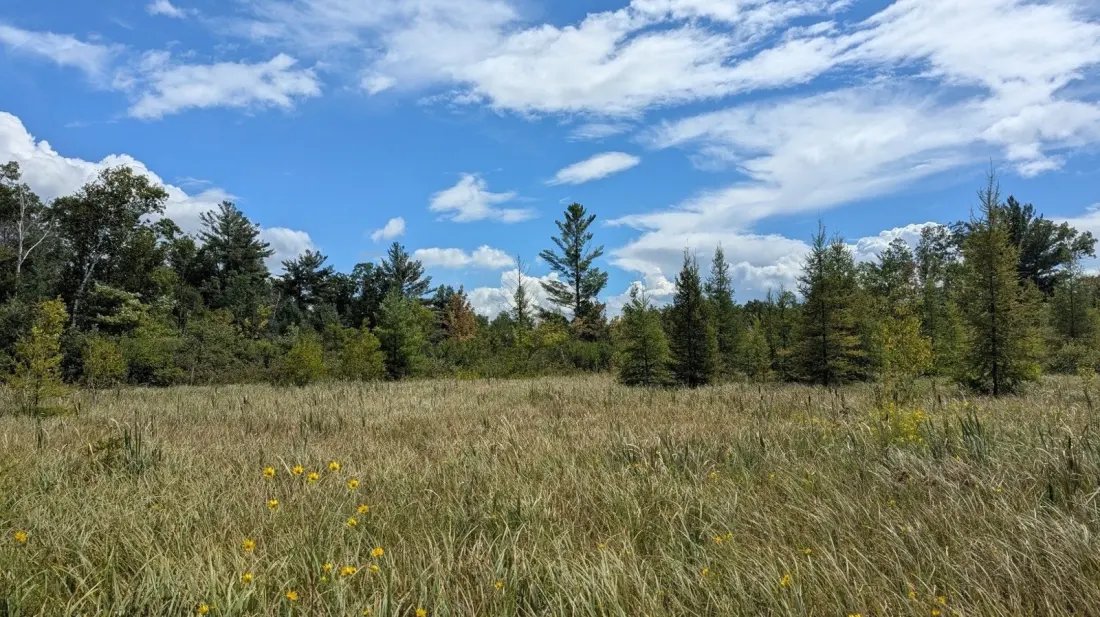
Wisconsin's reputation starts and ends with cheese for a lot of people, but northeastern part of the state hides one of its biggest patches of wild land just 45 minutes from Green Bay. Navarino Wildlife Area, spread across Shawano and Waupaca Counties, covers roughly 15,000 acres of public land that was once a glacial lakebed — and today it packs in oak, pine and aspen forest, cattail marshes, sandy uplands and managed grassland, all threaded by more than 100 miles of trails.
Start at the Navarino Nature Center, which opened in 1986 and acts as the front door to the whole area. Staff here can point you toward the best spots depending on the season, and the center itself runs guided hikes, foraging classes and family events like Halloween trolley rides, plus taxidermy displays of black bears and gray foxes. Hours are 8 a.m. to 4:30 p.m., closed Sundays and Mondays — so plan your visit for midweek or Saturday.
The headline act is the sandhill crane migration. In spring and fall, somewhere between 5,000 and 15,000 of these birds pass through, and they're hard to miss — three to four feet tall with wingspans around 6.5 feet. Fall is the prime window for both numbers and plumage. Even without a guide, you can hike a single mile from the nature center area to a viewing platform at Pikes Peak Flowage and watch the cranes come in to roost at dusk. Birders may also cross paths with great blue herons, northern harriers and black terns depending on the time of year.
If hiking isn't your thing, there's plenty of other ways in. A 40-mile, 26-stop self-guided auto tour lets you cover the wildlife area by car. The Wolf River offers paddling and fishing with two boat launches, and winter brings 12 miles of groomed cross-country ski trails plus snowshoeing — rentals available at the nature center — and sledding.
For a one-day trip, use the nature center as your base and stick to the 12 miles of trails inside the surrounding 1,000-acre refuge, which is closed to hunters during waterfowl season, making for a quieter walk. Trails are color-coded with several accessible options, a dedicated birding trail, and the mellow one-mile Grace Trail, designed with mindfulness stops along the way.
Two practical warnings worth taking seriously: outside the refuge you're sharing the land with hunters, so wear blaze orange or other bright colours (including your dog, and keep it leashed), and remember the trails are multi-use routes that also serve logging and maintenance vehicles. Download trail maps or snap a photo at the visitor center before setting out, since signage alone won't cover 100 miles of path.
It's an easy sell for anyone based in Green Bay or passing through: a proper dose of prairie, marsh and forest, a good nature center, and thousands of cranes in the sky, all within a 45-minute drive.