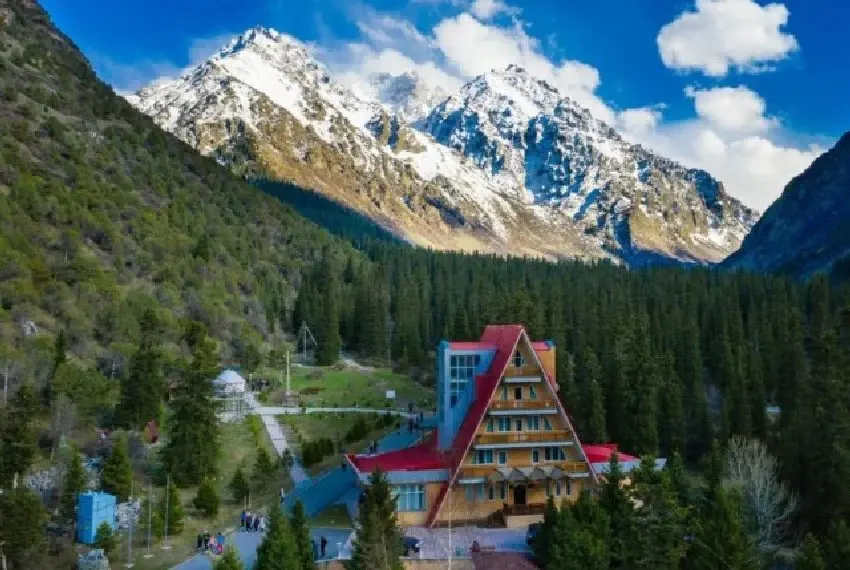
Kyrgyzstan's most popular hiking valley, just 30-odd kilometres from Bishkek, is quietly changing shape. A study from researchers at the University of Innsbruck, the Helmholtz Centre for Geosciences and the Central Asian Institute for Applied Geosciences, posted on the EGUsphere platform in late November, finds that glacier melt in Ala-Archa Gorge is spawning new high-altitude lakes — and some of them could one day unleash destructive floods or mudflows downstream.
The numbers behind the trend are stark. Between 1980 and 2019, average air temperatures in the valley climbed by 0.25°C per decade. The Golubin Glacier, one of the gorge's main ice bodies, has been shedding the equivalent of 314 millimetres of water in ice mass every year since 1969. That's a steady, measurable retreat — and as the ice pulls back, meltwater pools in the hollows it leaves behind.
Here's the twist: the picture isn't uniformly getting worse. In the Ak-Sai Valley, glacial lake outburst floods actually dropped from eight in the 1960s to just one in the 2000s, despite the warming. But next door in the Adygene Valley, the opposite story is unfolding — melt has created numerous new lakes there, and glacial lakes can burst years or even decades after they first form, with little warning. The team's conclusion is that risk depends on more than temperature: terrain, local geology and the internal structure of each glacier all matter.
Two caveats for anyone reading headlines: the study is still undergoing peer review, and the researchers haven't predicted when an outburst might happen or how badly Bishkek — which sits on the flood path below the gorge — could be affected. So this is a watch-and-monitor situation, not an evacuation notice.
For travellers, the practical upshot is simple: Ala-Archa remains open, stunning and very much worth a day trip or multi-day trek from the capital. But it's a good reminder that mountain valleys in Central Asia are dynamic places. Check conditions with local authorities or your guide before heading up, stick to marked trails, and pay attention to any posted warnings about the Adygene side valley. If you're planning a trekking trip to the Northern Tien Shan anyway, the science adds a reason to go with someone who knows the terrain — and to appreciate the glaciers while they're still there.